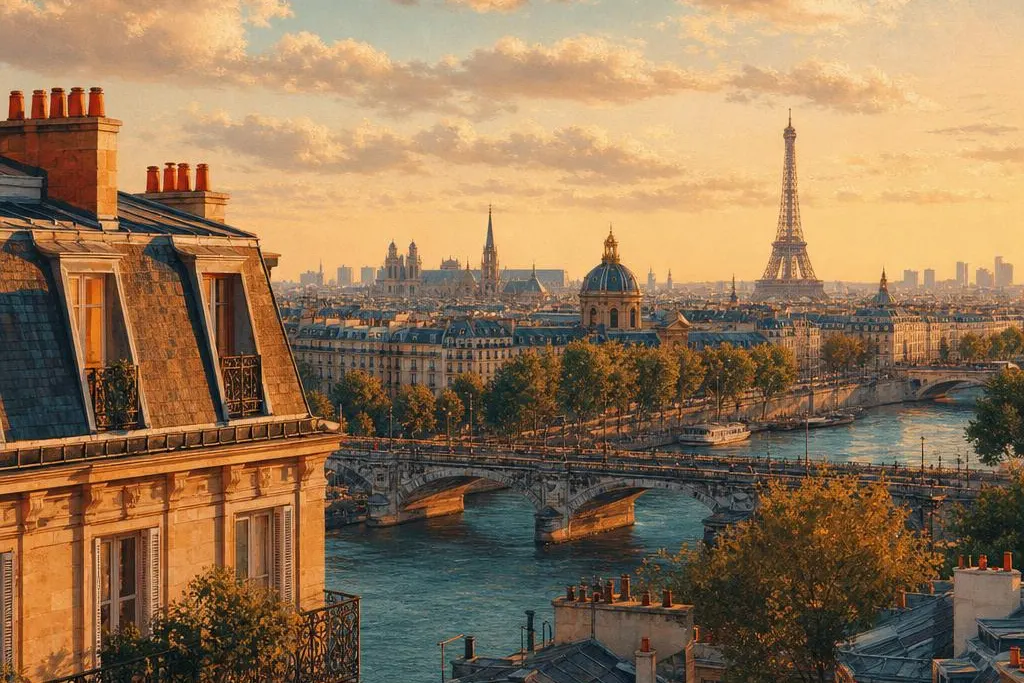
Credit: AI-generated illustration · Owned by Evago · Original AI-generated illustration commissioned for Evago; not documentary photography.
This is an editorial suggested three-day plan for Paris, not a guided tour, guarantee of availability, or a report of a firsthand visit. It uses local geographic groupings so you spend less time crossing the city. The itinerary notes one optional major booking each day and gives bad-weather or mobility-friendly alternatives. Paris can have demonstrations that affect museum openings and shared services; check official sites and the city transport planner for current closures before you book.
This is an original, source-based suggested itinerary—not a firsthand trip report, guided tour, hotel recommendation or guarantee of current availability. Opening arrangements, transport services and room terms must be checked for your dates.
Choose one hotel base before planning each day
Base A — Le Marais / Enfants-Rouges area
Staying near Le Marais places you very close to the Marché des Enfants-Rouges, the oldest covered market in Paris, making morning market strolls and short walks to Seine-side museums or Île Saint-Louis easier. From here a loop that starts in the Marais and heads to eastern central neighbourhoods is logical.
Base B — Parc Monceau / 8th arrondissement area
Staying near Parc Monceau situates you in the 8th/17th side of central Paris where Parc Monceau is a historic green space (site of Garnerin’s 1797 parachute jump). From this base a loop that begins northwest and moves south toward the Champs-Élysées / central museums is more efficient.
Day 1: Marais market, quiet galleries, Seine-side meander
Morning
Start at the Marché des Enfants-Rouges to browse stalls of prepared food and small producers; its status as Paris’s oldest covered market makes it a good place for a relaxed breakfast and people-watching. Aim for an early morning arrival to avoid the busiest times. If you are staying at Base B (Parc Monceau), reverse the day order and begin with a park walk at Parc Monceau then travel to the Marais as your mid-morning visit.
Afternoon
After the market, take a gentle stroll toward the Seine and the eastern Île de la Cité/Île Saint-Louis area, choosing quiet side streets and small private galleries rather than large museum hubs to keep the afternoon uncrowded. Rest: schedule a one-hour break in a café or your hotel to recharge before the evening.
Evening
Finish with a short riverside walk along the Seine as daylight fades; for dinner pick a small bistro off the main tourist stretches. Optional major booking: a small-group evening walking tour that focuses on Parisian neighbourhood life rather than monument interiors. Alternative for bad weather or mobility needs: spend the afternoon in a nearby covered passage or a calm contemporary art space with seating—confirm access and closures before you go.
Day 2: Parc Monceau, Montmartre approaches, rue Lepic
Morning
Begin the day at Parc Monceau to enjoy its lawns and history (the park is noted as the place above which André-Jacques Garnerin performed the first parachute jump in 1797). If you’re based at Base A (Le Marais), travel here in the morning and treat this as your first stop; if you’re at Base B, make this your natural, immediate start.
Afternoon
Move uphill toward Montmartre and approach the butte via rue Lepic: note that Montmartre and rue Lepic are referenced with several historic ascents, and rue Lepic is a logical route for a quieter arrival to the neighbourhood. Walk slowly, take local cafés, and allow a rest period of 45–60 minutes on a terrace to avoid rushing. Optional major booking: a guided local-walk that concentrates on Montmartre’s alleys and artists’ heritage. Alternative for bad weather or mobility needs: substitute with a longer stay at an accessible café and a short visit to a nearby cultural venue; avoid relying on a single attraction that could close due to demonstrations.
Evening
As the day cools, descend toward a less-trafficked part of central Paris for dinner. If the weather is poor, consider an indoor classical-music recital or a small exhibit space—check current listings and accessibility ahead of time.
Day 3: Museum highlight, Champs-Élysées overview, flexible finish
Morning
Reserve this morning for your principal museum visit. If you plan to visit the Musée du Louvre while in Paris, note two important points from official notices: the Louvre has periods when reservations are required (the site indicates reservations required from 17 October to 1 November 2026) and the museum can close exceptionally during demonstrations (the city has warned that numerous museums may close in those contexts). If you need guaranteed entry, make the official reservation where required and confirm the museum’s status the day before. Optional major booking: a timed museum ticket (book directly through the museum’s official channels).
Afternoon
After the museum, keep the afternoon light: walk or sit on a terrace that gives you a view toward the Champs-Élysées to get a sense of the city’s grand axis without committing to a long, crowded promenade. For travellers based at Base B, this is a short geographic continuation from Parc Monceau; for those based at Base A, plan the transit to avoid peak movement and use the afternoon as a rest-focused, lower-effort period.
Evening
Conclude with a flexible evening—either a calm dinner near your hotel or a final short walk to take in illuminated streets. If demonstrations or closures are in effect, treat this evening as your spare time to catch any missed items from earlier days. Alternative for mobility needs or bad weather: pick a venue with indoor seating and simple routing from your hotel; always check the official transport planner if you need to change modes.
Getting around without overloading the day
This plan groups sights so you can keep walking distances shorter and use regular local transport for longer hops. Demonstrations in the city can cause closures of shared services (for example, Vélib' stations have been closed in groups during events in the past); always check the current official city transport planner before you travel and before each day’s departures rather than relying on fixed route estimates.
Adjusting the plan
If museums close because of demonstrations, swap museum time for extended neighbourhood visits (longer market time, galleries, or park relaxation). If mobility is limited, concentrate on one neighbourhood per day and confirm venue access before booking. For bad weather, choose covered markets, indoor passages, and small gallery spaces that can be enjoyed seated.
Before booking your stay
- Check museum sites for reservation requirements and current closures (the Louvre noted reservations required between 17 Oct and 1 Nov 2026 and may close for demonstrations).
- Confirm any guided-walk or recital bookings directly with the organiser and ask about meeting points and seating.
- Check the city transport planner and official updates about demonstrations before each day; Vélib' and other services have been closed in sectors during events.
- Reserve a flexible dinner or cancellation-friendly table for evenings, especially if you expect day-time changes.
- If you need mobility accommodations, contact venues ahead to confirm facilities and entrance routes.
Frequently asked questions
Is the Marché des Enfants-Rouges open daily?
This itinerary references the Marché des Enfants-Rouges as Paris’s oldest covered market; for specific opening days and hours consult the market’s official source before you go.
Do I need to book the Louvre in advance?
Official notices show the Louvre required reservations during a specified period (17 October to 1 November 2026). Always check the museum’s official site for current reservation rules and any exceptional closures before booking.
What should I do if demonstrations affect my plans?
The city advises that demonstrations can cause museum closures and service interruptions (the city has previously listed multiple museums that may close and noted Vélib' station closures in affected sectors). If demonstrations occur, use the plan’s flexible/rest periods and alternatives: extend neighbourhood visits, move to covered indoor options, or consult the official transport planner for safe routing.
Research sources
Facts checked 2026-10-24. Suggested day order and hotel-base comparisons are Evago editorial planning, not a copied source itinerary.
- Paris - paris.fr (selected destination facts) — checked 2026-10-24
- Musée du Louvre — official site (excerpt) — checked 2026-10-24
Plan your Paris stay
Compare where to stay in Paris before choosing a room.