Algeria country guide Places and experiences
What should a first-time traveler see in Algeria beyond the obvious highlights?
The short answer
A fuller picture of Algeria includes Tipasa, Djémila and Timgad, not just the usual capital-city sights.
The answer, with local context
Tipasa — Roman and early Christian archaeological remains beside the Mediterranean, inscribed in 1982; Djémila — an inland Roman town inscribed in 1982. Together, these two Algeria destinations show separate aspects of its geography or culture.
Timgad — Roman urban remains inscribed in 1982; M’Zab Valley — five fortified ksour including Ghardaïa, inscribed in 1982. In Algeria, this pair belongs to the wider regional map rather than a single city walk.
Constantine — a city perched on a rocky gorge with bridges; Tassili n’Ajjer — Saharan sandstone landscapes and rock art, inscribed in 1982. In Algeria, these places add regional context beyond the better-known capital landmarks.
Picture the place
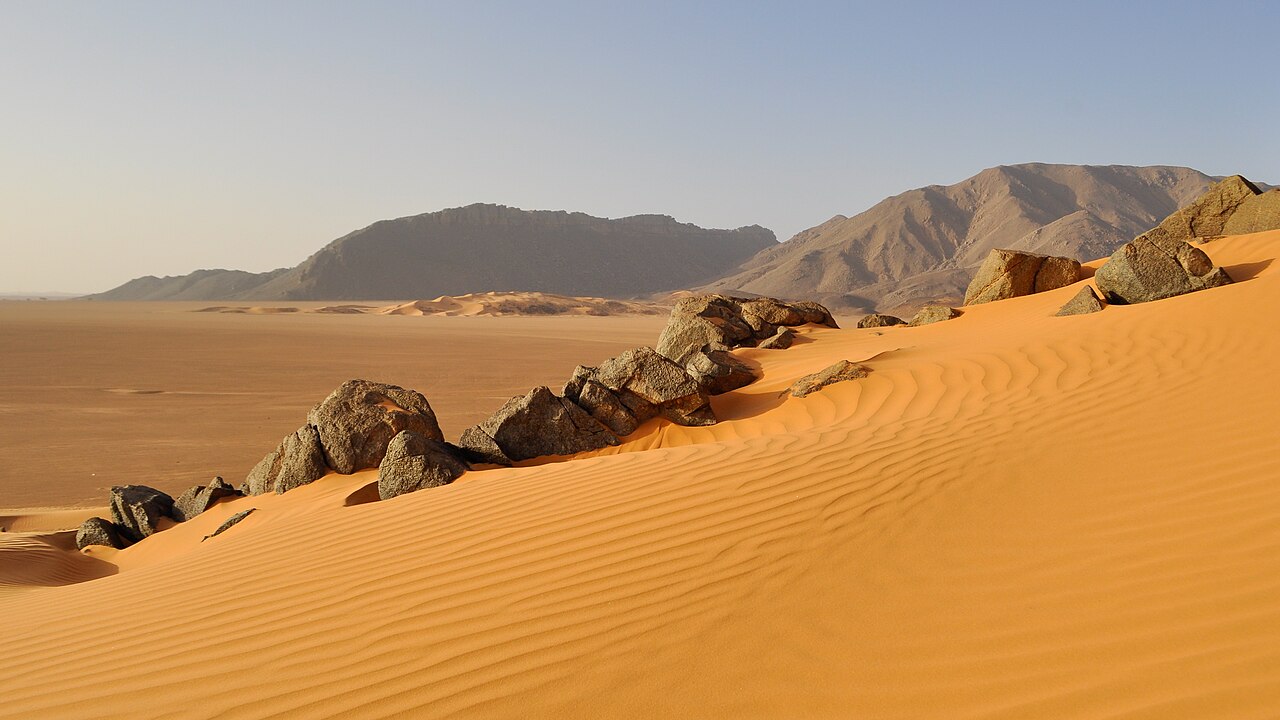
A country-wide heritage comparison places the white-walled coastal quarter beside inland Roman colonnades, the pentapolis of M’Zab and sandstone rock shelters in the Sahara.
The easily missed detail
UNESCO lists the Kasbah under its World Heritage Convention; Tipasa is a Mediterranean coastal archaeology property, while the M’Zab Valley preserves a five-ksour settlement system in the north Sahara. These are distinct settings with different access and conservation issues. For Algeria, the listed property boundaries help distinguish the landmark from nearby places outside that designation. Tipasa itself is inscribed under criteria (iii) and (iv) and is a serial property of three components — two archaeological parks and the Royal Mauritanian Mausoleum — about 70 kilometers west of Algiers.
A practical rhythm
- Historical landscape — Set aside a dedicated segment for Tipasa and its own cultural context.
- Regional comparison — Compare that setting with Timgad, not assuming the same terrain or climate.
- Nature or city — Use Constantine as a contrasting setting only when transport and access allow.
What could complicate the plan
The U.S. national travel-advisory rating for Algeria is Level 2 (August 25, 2026). The feasibility of linking Tipasa with Timgad depends on current local security and access, not simply their appearance on a tourist map.
What to do next
The food answer moves from couscous and chorba frik to eastern chakhchoukha and the date pastries associated with oasis agriculture. Continue with , “What local dishes should I try in Algeria, and where should I look for them?”
Sources
- UNESCO World Heritage Centre, Algeria State Party — inscribed and tentative heritage, designation dates and property scope
- U.S. Department of State, Algeria Travel Advisory — national and regional security advice (country listing dated August 25, 2026)
- U.K. Foreign, Commonwealth & Development Office, Algeria foreign travel advice — entry, safety and transport considerations
- UNESCO Intangible Cultural Heritage — 2020 multinational recognition of couscous production and consumption practices
- UNESCO World Heritage Centre, Tipasa — inscription criteria, serial components and distance from Algiers