Ambergris Caye / Belize When to visit
When should I visit Ambergris Caye, Belize, for the best experience?
The short answer
Come in February, when San Pedro is in the heart of the dry season, the sea is clear for the reef, and both lobster and conch are still in season.
The answer, with local context
Ambergris Caye is a 25-mile-long island off Belize's Caribbean coast, and almost everything visitors come for happens on or in the water on its eastern, reef side. The Belize Barrier Reef runs only about 1,000 feet (300 m) offshore from San Pedro in the north — one of the shortest swims to a barrier reef anywhere — so sea conditions, not sightseeing, decide the trip. February sits in the driest stretch of the year: San Pedro averages about 1.2 inches of rain in February, against 6.3 inches in October, and the trade winds that rough up the reef crossing in other months are at their most settled. Air highs run in the low-to-mid 80s°F and the sea is around 79°F, warm enough for long snorkels without a wetsuit top.
February is also the last full month of the spiny lobster season. The Belize Fisheries Department closes the fishery from March 1 to June 30 each year, so grilled lobster tails leave San Pedro's menus at the end of February, while queen conch — open October 1 to June 30 — is still being served as ceviche. Arriving in February gets both on the same plate, something no month after April can guarantee.
The months to weigh carefully are June through November, the Atlantic hurricane season, when rainfall climbs from June onward and September and October are the wettest and most storm-exposed months of the year. Warm months can also bring sargassum seaweed onto Ambergris Caye's windward (eastern) beach; February largely avoids that too.
Picture the place
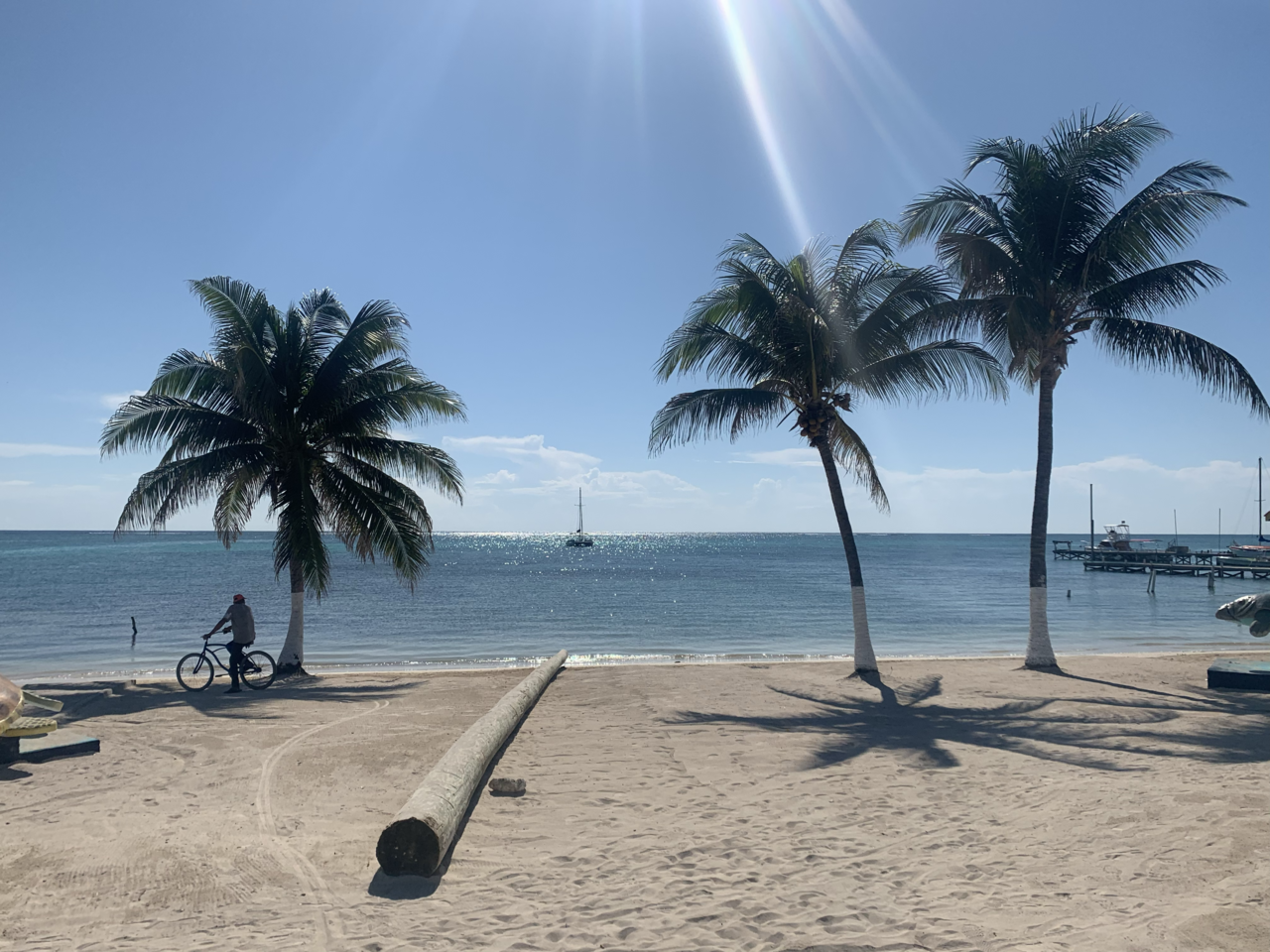
Stand on the dock at San Pedro at breakfast and you can see the white line of breakers where the reef meets the open Caribbean, close enough that the boat ride to it is measured in minutes, over water that shades from pale sand-flat green to deep blue at the reef cut.
The easily missed detail
Belize's dry season is shorter and later than the Caribbean norm many travelers assume: the reliable dry window on Ambergris Caye is roughly February to May, not December to April. A December or January trip can still catch the tail of the rains and "northers" — cold fronts that drop temperatures into the 60s°F and churn the reef — while a late-February trip lands after those fronts fade.
A practical rhythm
- Anchor the trip on reef days — Book Hol Chan and dive trips for the first calm mornings, keeping later days as weather backups
- Eat the season — Order lobster before February ends and conch ceviche while the season is open, rather than assuming both are year-round
- Leave one leeward day — Spend a windier afternoon on the island's west side at Secret Beach, where the water stays flat when the reef side is rough
What could complicate the plan
Lobster disappears from menus by law on March 1, and conch can close early in any year the national quota is reached — in the 2025–26 season the Fisheries Department closed conch on April 6, almost three months early. March also brings spring-break crowds to San Pedro, and the island runs almost entirely on golf carts and water taxis, so the compact town center gets congested at peak weeks.
What to do next
Pick February dates, stay in or near San Pedro town for walkable docks and restaurants, and reserve reef trips for the start of the stay.
Sources
- Belize Fisheries Department — lobster closed season (March 1–June 30) and conch season rules, including the early quota closure
- WeatherSpark climate data for San Pedro — monthly rainfall and temperature averages showing February among the driest months
- NOAA — Atlantic hurricane season dates, June 1 to November 30
- UNESCO World Heritage Centre — Belize Barrier Reef as the largest barrier reef in the northern hemisphere, running about 1,000 feet offshore in the north