Amsterdam / Netherlands When to visit
When should I visit Amsterdam, Netherlands, for the best experience?
The short answer
April and May — the Dutch meteorological service's 1991–2020 normals for its reference station at De Bilt give April the driest month of the year at 41.6 mm of rain (1.64 inches) across 12.4 wet days, and May the sunniest at 217.5 hours.
The answer, with local context
Amsterdam has no dry season, only a less wet one. KNMI's normals for De Bilt, the service's principal inland reference station for the central Netherlands, record 854.7 mm of precipitation a year (33.6 inches) spread over 185.6 days — which is to say rain falls on roughly half the days of the year, in small amounts. The wettest months are July at 85.2 mm (3.35 inches) and December at 83.8 mm (3.30 inches), and the months with the most wet days are November at 18.8 and December at 18.7.
Temperature narrows the choice further. De Bilt's mean maximum is 6.1°C in January (43.0°F) and 23.1°C in July (73.6°F), with a July mean minimum of 13.0°C (55.4°F). The city never gets properly hot, and its winters are gray rather than severe: the annual sunshine total is 1,714.6 hours, of which January contributes only 66.6 and December 55.5. April's 189.2 hours and May's 217.5 are the point at which the canal ring stops being a wet-weather proposition.
Those canals are the reason season matters so much here. UNESCO inscribed the Seventeenth-Century Canal Ring Area of Amsterdam inside the Singelgracht in 2010, under cultural criteria (i), (ii) and (iv), by Decision 34 COM 8B.30 at the Committee's 34th session in Brasília. The inscribed property is an outdoor urban landscape — a planned system of concentric waterways and the quays, bridges and house frontages along them — and it is experienced on foot or from a boat, not indoors.
The city's indoor fallback is unusually dependable. The Rijksmuseum opens daily from 09:00 to 17:00 and closes on no day of the year, including public holidays, which makes it the one guaranteed wet-afternoon option in any month.
Picture the place
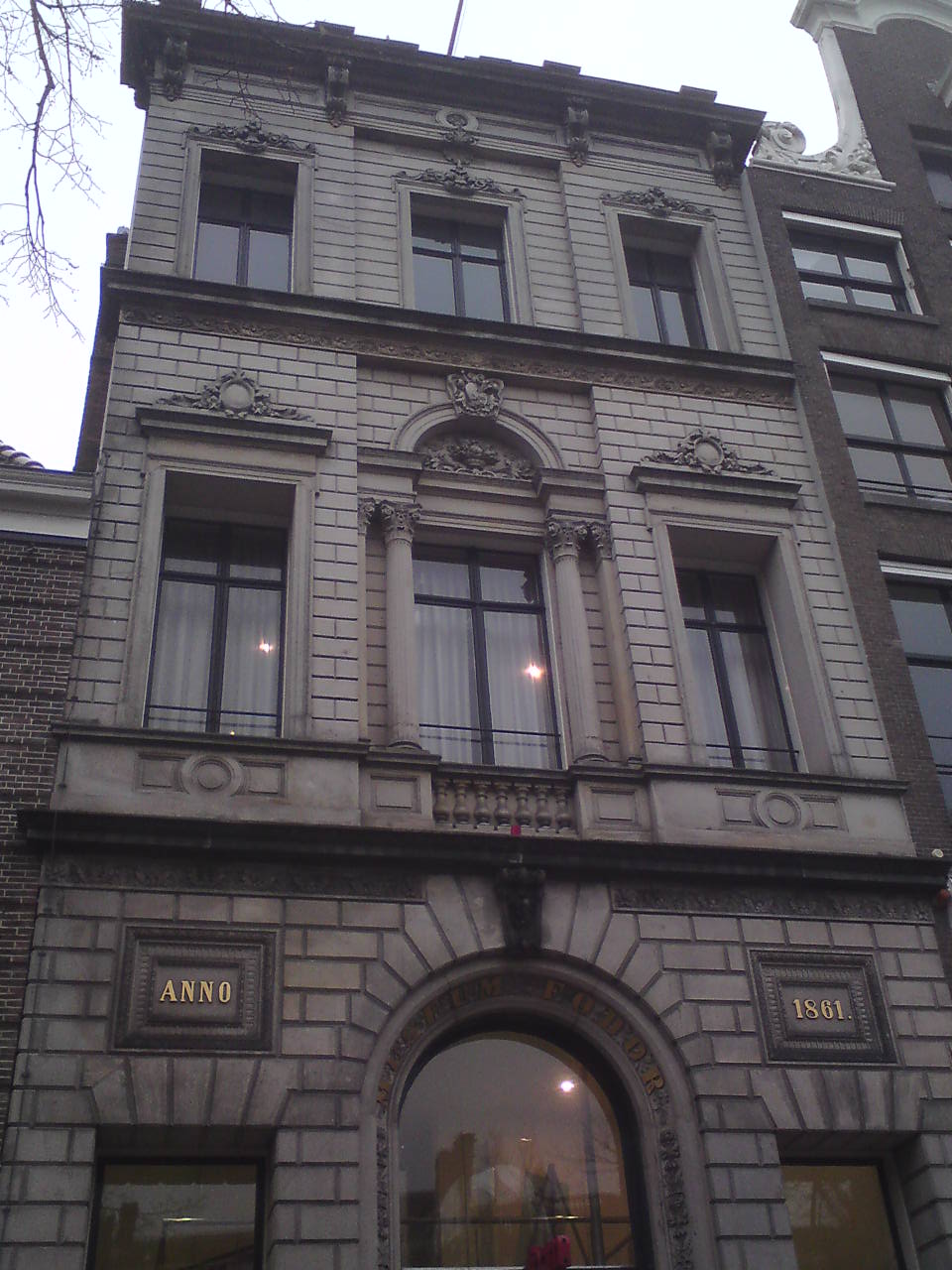
The canal ring is laid out as a set of nested arcs rather than a grid, so walking outward from the center you cross one waterway after another at regular intervals, and the brick frontages along each are set at the same narrow plot widths — the rhythm of the streetscape comes from the seventeenth-century parceling rather than from the architecture.
The easily missed detail
The inscribed area is defined by the Singelgracht, not by the city limits or by the modern center, and that boundary is the thing worth understanding before you choose a base. Everything UNESCO listed in 2010 lies inside that outer canal; the museum quarter, the nineteenth-century districts and the harbor front do not. A hotel described as central may sit outside the property entirely, which changes what you step out into in the morning.
A practical rhythm
- April — The year's driest month by the De Bilt normals, at 41.6 mm over 12.4 days.
- May — The sunniest, at 217.5 hours, with a mean maximum of 18.3°C (64.9°F).
- November and December — The two wettest months by number of wet days, at 18.8 and 18.7; build the day around the Rijksmuseum's daily 09:00 to 17:00 opening.
What could complicate the plan
Rain is frequent rather than heavy, so the real planning problem is that an outdoor property is damp on roughly half the days of any month, and a 185.6-day annual wet count means no month escapes it. Daylight is the other limit: with 55.5 sunshine hours in December and 66.6 in January, midwinter afternoons over the canals are short and dim. The Rijksmuseum requires every visitor to book a start time in advance, so a spontaneous wet-afternoon diversion is not actually spontaneous.
What to do next
The Amsterdam things-to-do question in this group covers the museum booking rules and prices in detail, and the food question explains where in the city the markets sit relative to the inscribed canal ring.
Sources
- KNMI, climate normals table for De Bilt 1991–2020 — monthly temperature, precipitation, wet days and sunshine normals
- UNESCO World Heritage Committee, Decision 34 COM 8B.30 — 2010 inscription at the 34th session in Brasília
- UNESCO World Heritage Centre, Seventeenth-Century Canal Ring Area of Amsterdam inside the Singelgracht — official property name and criteria (i)(ii)(iv)
- Rijksmuseum, opening hours and prices — daily 09:00 to 17:00, open every day of the year, start-time booking requirement