Arenal / Costa Rica When to visit
When should I visit Arenal, Costa Rica, for the best experience?
The short answer
February to April, the back end of Costa Rica's December-to-April dry season, with Arenal Volcano National Park open from 8:00 to 16:00 every day of the week.
The answer, with local context
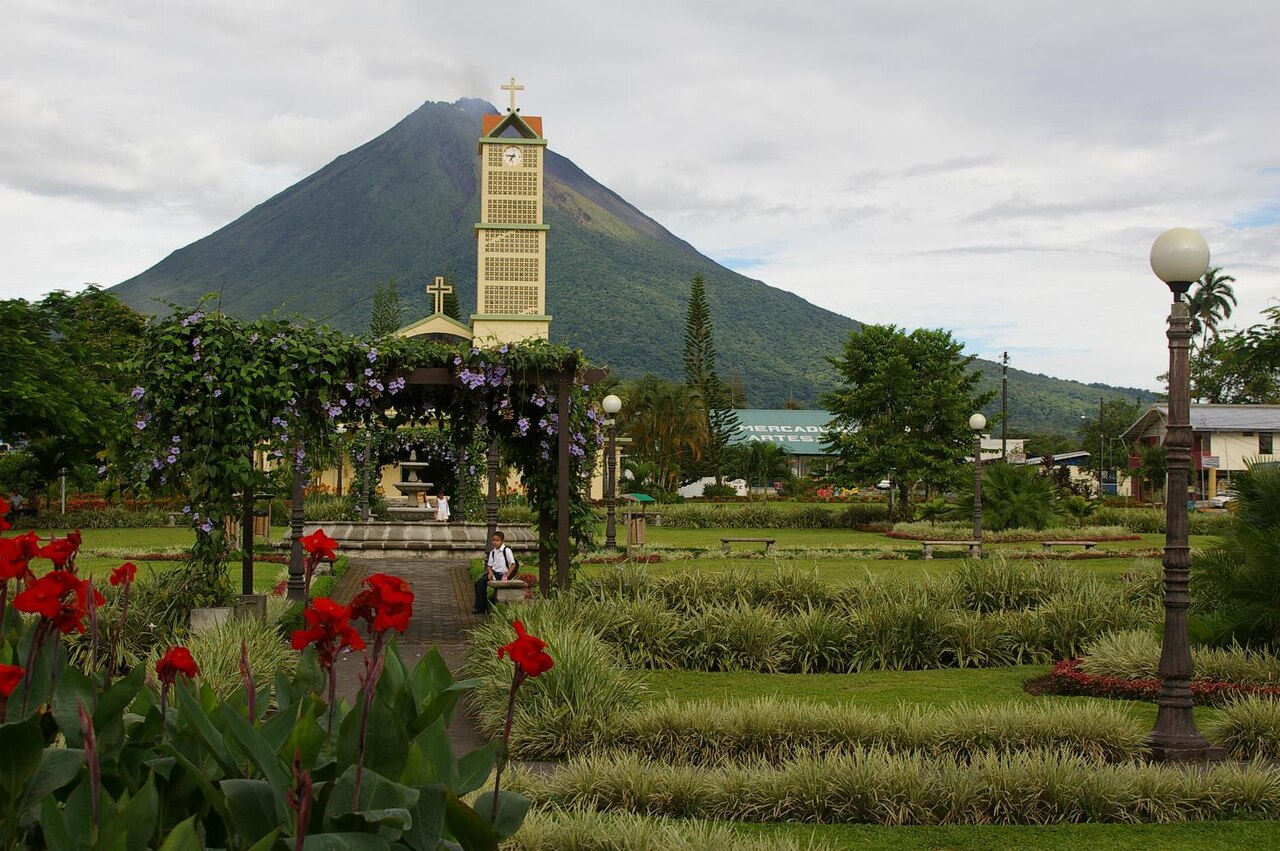
Arenal's draw is a view, and the view depends on cloud. The cone stands on the wet Caribbean side of Costa Rica's central cordillera, and the national tourism board's own calendar puts the country's dry season between December and April — the only stretch when a clear summit is a reasonable expectation rather than a lucky break. Even then, mornings are better than afternoons, because the park's hours are 8:00 to 16:00 and the cone tends to collect cloud as the day warms.
What you will not see is lava. The Smithsonian Institution's Global Volcanism Program records that Arenal's long open-vent eruption, which began on the night of 29 July 1968 and produced more than 40 discrete lava flows by 1983, declined after September 2010; sporadic Strombolian explosions continued through December 2010 and then ceased. Pyroclastic flows had punctuated the preceding decades, in 1987, 1993, 2001, 2003, 2006, 2007 and 2010. Anyone booking Arenal on the promise of a red glow at night is booking a volcano that stopped performing more than a decade ago.
The park compensates with ground you can walk. The Costa Rica Tourism Board's park sheet puts its altitude range at 500 to 1,633 meters, with the Global Volcanism Program giving the summit itself as 1,670 meters (5,479 feet). The Las Coladas trail runs 1.7 kilometers one way to a viewpoint over hardened lava, with 20 minutes allowed at the viewpoint itself.
Picture the place
The 1968 flows left a surface of black blocky rubble on the western flank, loose and sharp-edged, with scrub recolonizing the gaps — it reads as geology rather than landscape. Lake Arenal lies below to the west, and the gap between cone and water funnels wind hard enough that the afternoon is reliably breezier than the morning.
The easily missed detail
Bring a card and bring your passport. The tourism board's park sheet states that tickets are bought at the entrance by credit or debit card only, with no cash accepted, and that entry requires a passport or identity document. Both catch travelers who arrive from La Fortuna with colones in hand and nothing else. The same sheet sets out the conduct rules: stay on the trails, no pets, no bonfires, and carry your rubbish out.
A practical rhythm
- 8:00, at opening — Go straight to the lava-field trail. The cone is most often visible in the first two hours of the park's day.
- Mid-morning — Heliconias, at 1 kilometer and about 25 minutes, is the short option if cloud has already closed the summit.
- Early afternoon — El Ceibo, 2.3 kilometers and around an hour and a half, keeps you under canopy when the open ground is hottest.
What could complicate the plan
The gates close at 16:00, so sunset from inside the park is not available. Card-only payment means a failed terminal is a failed visit. The US Department of State advises travelers to exercise increased caution in Costa Rica due to crime. A yellow fever vaccination certificate is required on entry to Costa Rica for travelers arriving from certain countries in South America or Africa, and US citizens need a return ticket even though no visa is required for stays under 180 days.
What to do next
The things-to-do answer in this group goes trail by trail with the published distances and walking times; the food answer covers eating in La Fortuna around the park's 8-to-4 day.
Sources
- Costa Rica Tourism Board (ICT), Parque Nacional Volcán Arenal park sheet — opening hours, altitude range, trail lengths and times, card-only payment, identity requirement, park rules
- Smithsonian Institution, Global Volcanism Program, Arenal — summit elevation, 1968 eruption onset, number of lava flows, pyroclastic flow years, end of activity
- US Department of State, Costa Rica — visa-free stay, return ticket, yellow fever certificate requirement
- US Department of State, Costa Rica travel advisory — advisory wording