Banff / Canada Food and drink
Where should I eat in Banff, and which local food or drink is worth trying?
The short answer
Eat in the Banff townsite and drink Alberta — the province runs the largest beef cattle herd in Canada and sets the legal drinking age at 18, which is younger than almost anywhere a US visitor will have come from.
The answer, with local context
Alberta's food identity is cattle country rather than anything you would associate with eastern Canada, and Banff sits inside it. Statistics Canada's livestock inventories have long shown Alberta holding the largest provincial share of the national beef herd, which is why a steakhouse in a mountain town 80 miles from Calgary is a regional dish and not a tourist import. The drinking age is the other provincial fact worth knowing: Alberta sets it at 18 under its provincial liquor legislation, two years below the United States and one year below Ontario, British Columbia and Quebec.
What Banff is not is maple country. Agriculture and Agri-Food Canada's 2025 statistical overview of the maple industry records production from four provinces only — Quebec at 90.0% of the Canadian total, New Brunswick at 6.1%, Ontario at 3.7% and Nova Scotia at 0.2%. Alberta does not appear. Canadian maple syrup sold in a Banff gift shop came from roughly 2,000 miles east, and the country's total 2025 harvest of about 113.4 million kilograms, worth CAD 840.5 million, was overwhelmingly a Quebec crop. Canada accounts for more than 75% of world maple syrup production and exported to 69 countries in 2025, with 64.2% of the export value going to the United States.
Where you eat in Banff is constrained by the fact that the restaurants sit inside a national park. The commercial core is concentrated in the townsite, with a second cluster at Lake Louise, and there is no roadside sprawl between them because the park does not permit it. That concentration is a planning advantage: a first-time visitor does not need to hunt, and a day built around a reserved shuttle can be bookended by meals in the townsite.
Picture the place
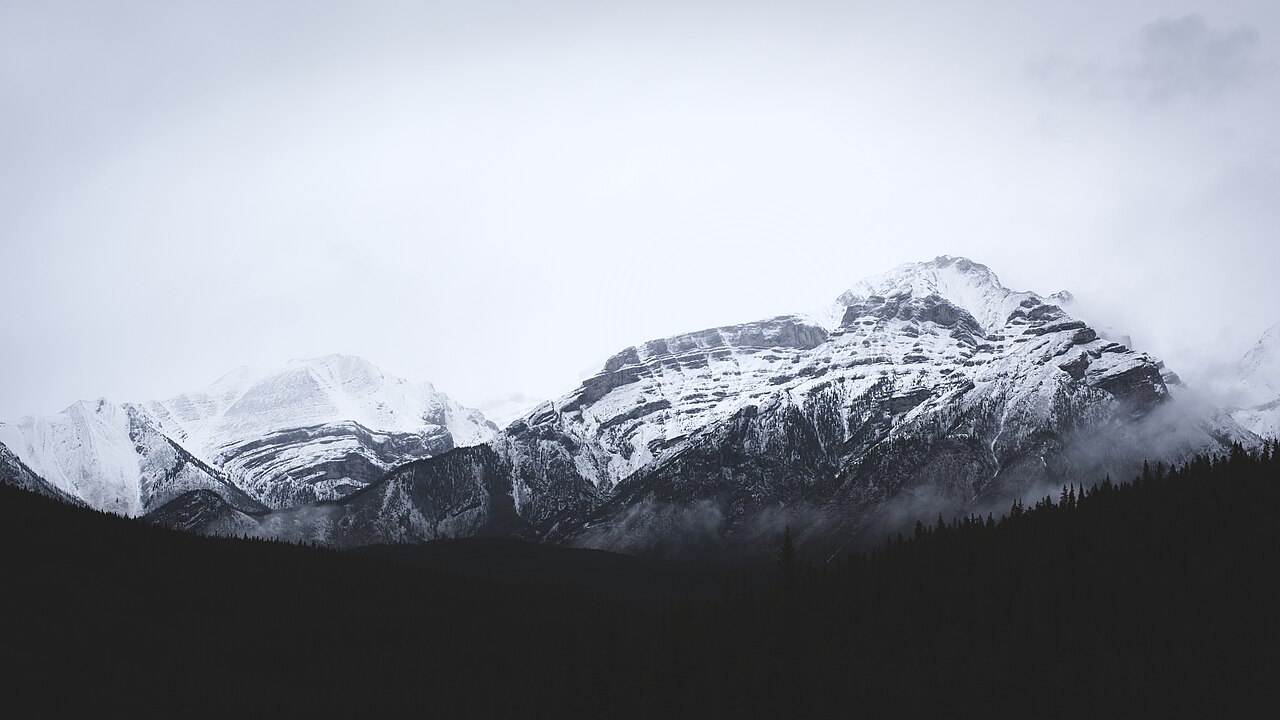
The townsite is a few walkable blocks hemmed in on every side by the Bow Valley and the peaks that rise straight out of it, with the restaurant frontage concentrated along one main avenue because the national park does not allow it to spread. Dinner here comes with a view of the same limestone walls UNESCO lists the property for.
The easily missed detail
Food in Banff is regulated as a wildlife attractant, not just as a meal. Parks Canada requires food, cooking equipment and anything scented to be stored secured — in a hard-sided vehicle or a park-provided locker — rather than left at a campsite or a picnic table, and that applies to a cooler in a car at a trailhead as much as to an overnight camp. A takeout lunch carried onto a trail is covered by the same expectation. This is the practical reason picnic plans in Banff need more thought than they would in a city park.
A practical rhythm
- Breakfast — Eat in the townsite before a shuttle day. Reserved Parks Canada shuttles to Lake Louise and Moraine Lake do not wait.
- On the trail — Carry food sealed and take every wrapper out. Park wildlife-attractant rules make this a requirement rather than good manners.
- Evening — Alberta beef in the townsite, where the park's commercial zoning concentrates the restaurants.
What could complicate the plan
Banff's restaurants are inside a park whose daily admission is charged separately — CAD 12.25 for an adult — so a dinner trip from outside the park gates still involves an entry fee. The townsite's capacity is finite and peaks with the summer shuttle season, which ran to 12 October in 2026. Anyone planning to drink should remember that Alberta's 18 minimum is provincial, not national, and the rules change at the British Columbia boundary a short drive west. US citizens need no visa for stays under 180 days and are exempt from Canada's electronic travel authorization, so no paperwork stands between a flight and a dinner reservation.
What to do next
The things-to-do question in this group explains how Banff fits into the four-park World Heritage property, which matters if you plan to eat on one side of the Continental Divide and sleep on the other.
Sources
- Agriculture and Agri-Food Canada — 2025 production volume and value, provincial shares, world share, export markets
- Government of Alberta — minimum legal drinking age of 18
- Statistics Canada — Alberta's position as the largest provincial beef cattle herd
- Parks Canada — adult daily admission fee
- Parks Canada — 2026 shuttle season end date
- Immigration, Refugees and Citizenship Canada — US citizens exempt from the eTA
- US Department of State — 180-day visa-free stay