Bangkok / Thailand Food and drink
How can I explore Bangkok street food safely and respectfully?
The short answer
Buy from stalls that cook to order in front of you, and treat the religious and royal sites threaded through the food districts as the Bureau of the Royal Household describes them — places of reverence, with a dress code to match.
The answer, with local context
Safety on a Bangkok street first means watching the sequence of work rather than the stall's appearance. A vendor who grills, fries or blanches each order on demand is handing you food that has just been through heat; a tray of pre-plated items sitting at the city's ambient temperature has not. That matters more in some months than others, because the officially designated summer runs mid-February to mid-May and is the period the national classification associates with maxima of 95°F to 102°F (35°C to 39°C) and above.
Respect is more concrete than it sounds, and the clearest published standard comes from the royal sites embedded in the same neighborhoods you will be eating in. The Grand Palace's visitor rules refuse sleeveless and see-through tops, crop tops, very short shorts, torn or tight trousers, miniskirts and sleepwear, and prohibit drones overhead. Those are the thresholds for a royal temple; a neighborhood wat beside a noodle lane will not check your clothes, but the expectations behind them are the same ones your hosts hold.
Two health and entry facts belong in any street-food plan. The CDC's Global Measles travel health notice, Level 1, dated May 28, 2025, names Thailand among affected destinations. And the Thailand Digital Arrival Card must reach the Thai Immigration Bureau within three days before you land — every non-Thai national, including infants and children, with no exception for a short eating trip.
The practices you will be moving through are themselves documented heritage. Songkran was inscribed by UNESCO in 2023; Nuad Thai in 2019; Khon in 2018. A street in mid-April is not a street having an unusual day. It is a street doing something a UN agency has formally listed.
Picture the place
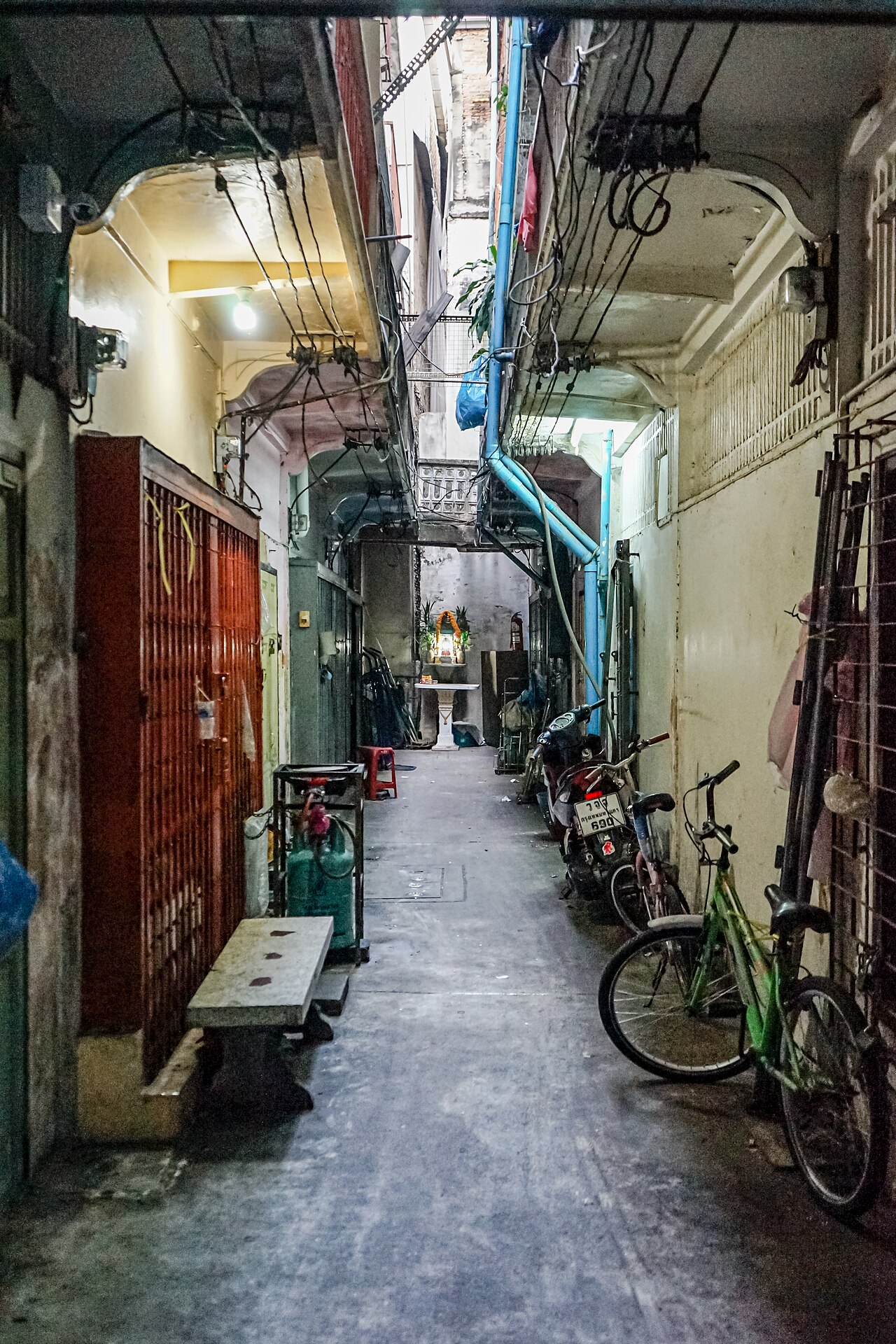
A working stall is a compact machine: one burner, one cutting surface, a stack of bowls, a box of ice, and a queue that forms along the kerb rather than in front of the cook. The ground is often wet, the lane narrow, and the traffic does not stop for diners.
The easily missed detail
The Grand Palace's own page frames the compound as a place of reverence for Thai people, which is the sentence that explains the entire etiquette layer. The feet-and-head conventions, the quiet in front of a Buddha image, the care around any depiction of the monarchy — these are not tourist superstitions. They are the same standard the Bureau of the Royal Household publishes at its gate, applied informally everywhere else.
A practical rhythm
- Watch before ordering — Spend a minute confirming the stall cooks to order rather than reheats.
- Dress for the whole route — Shoulders and knees covered if a wat is anywhere on your walk, since the published royal-site standard refuses sleeveless tops and short shorts outright.
- Time it to the official seasons — Mid-February to mid-May is the hottest stretch by national classification; cold dishes and evening eating make more sense then than a midday grill crawl.
What could complicate the plan
Mid-April street eating collides with Songkran, when water-throwing makes an open bowl of soup impractical for days at a stretch. Thailand's State Department advisory is Level 1 as of July 7, 2026, with specific regions at Level 2 — relevant if your food trip extends to the far south. And the arrival-card deadline is a hard three-day window, not a formality to complete in the taxi.
What to do next
Read the Bangkok eating question in this group next for the districts themselves, and the when-to-visit question for the rainfall and heat figures behind the seasonal advice here.
Sources
- The Royal Grand Palace, Bureau of the Royal Household — published dress code, drone prohibition, description of the compound as a place of reverence
- US Centers for Disease Control and Prevention — Global Measles notice level and date, Thailand listed
- Thai Immigration Bureau — arrival card scope and three-day deadline
- Royal Thai Government portal (Public Relations Department, citing the Thai Meteorological Department) — official summer dates and temperature bands
- UNESCO Intangible Cultural Heritage, Representative List — Songkran, Nuad Thai and Khon inscription years
- US Department of State — advisory level, date, regional ratings