Barbados country guide Places and experiences
What should a first-time traveler see in Barbados beyond the obvious highlights?
The short answer
St. Ann's Garrison — the World Heritage Committee called it the finest brick Garrison ensemble in the British Atlantic World, and its fortifications have stood essentially unchanged for about 200 years.
The answer, with local context
Historic Bridgetown and its Garrison was inscribed in 2011 under Decision 35 COM 8B.42 on criteria (ii), (iii) and (iv), and the Committee's reasons point at things most visitors walk past. The town's 17th-century street plan follows an early English medieval or market-town pattern, which the Committee described as a narrow, serpentine configuration of streets and alleys — and it has kept that footprint for almost 4 centuries.
Three specific structures carry the inscription's weight. The 18th- and 19th-century warehouses along the Careenage and Hincks Street were built to withstand hurricanes and to protect goods in a tropical climate. The Bridgetown Dry Dock was built between 1889 and 1893, at the meeting point of sail and steam. And Bay Street, the road connecting the historic town center to the Garrison, is among the oldest in Barbados.
Barbados's other UNESCO listing is newer and harder to see on a map. The social and cultural traditions associated with landships in Barbados were inscribed in 2025 on the Urgent Safeguarding List — the list reserved for elements judged at risk, not the Representative List. Barbados ratified the 2003 Convention on 2 October 2008, and a second nomination, road tennis, is pending for 2026.
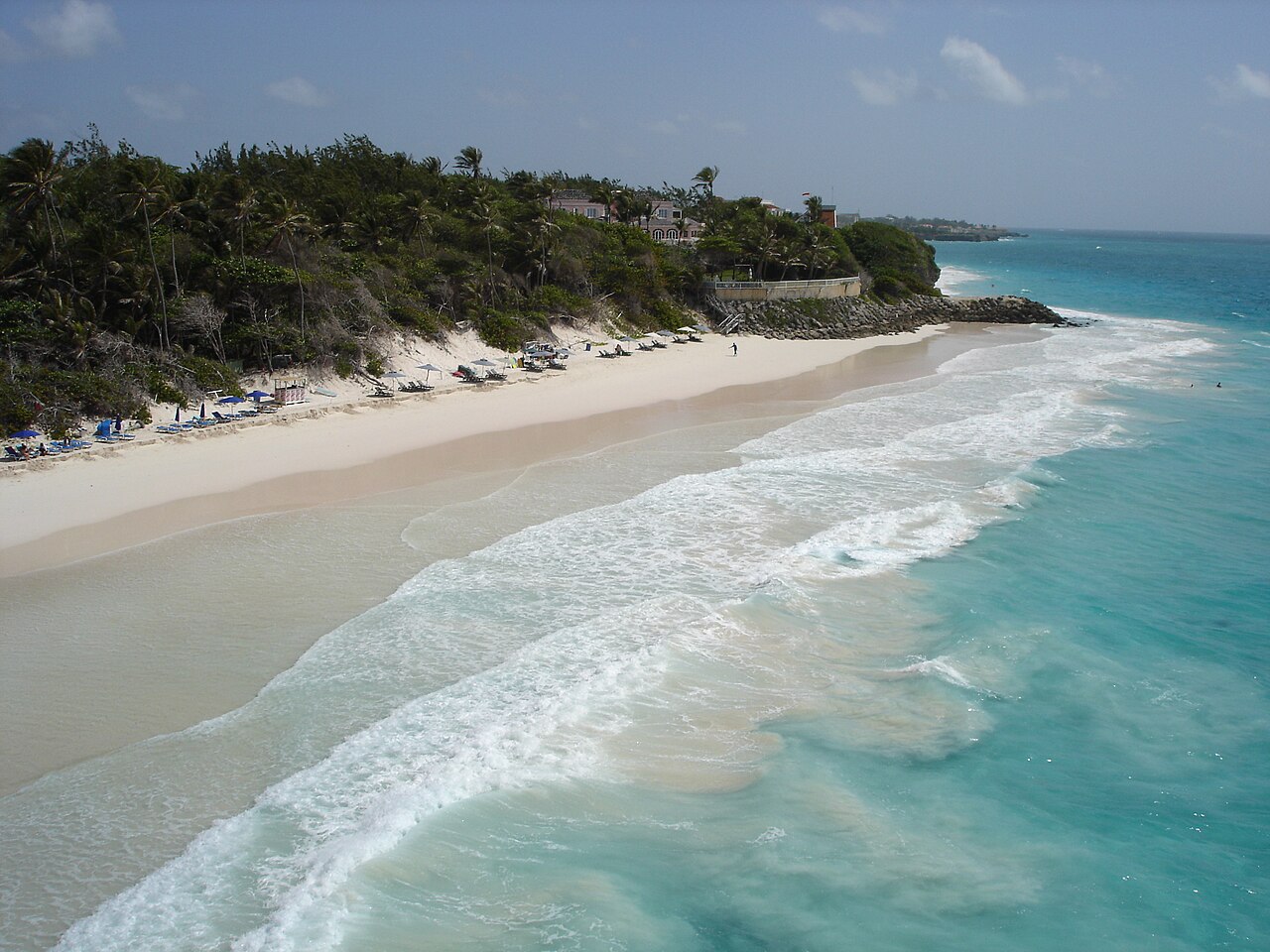
Beyond the designations, the coast itself divides the island into visitor zones and working ones. The Barbados Government Information Service records a sea egg no-harvest zone along the south-eastern shoreline between Atlantic Shores and Ragged Point — a stretch of coast defined by what is not taken from it.
Picture the place
The Garrison's brickwork is the detail the Committee singled out, and it reads as a single ensemble rather than a scatter of forts, because 200 years have left the fortifications largely as they were. Down at the Careenage, the warehouse walls were built thick for hurricanes, which is why they are still there to be looked at.
The easily missed detail
An Urgent Safeguarding List inscription is a warning, not a laurel. Barbados's landship tradition went onto that list in 2025, which means UNESCO judged it to need active intervention to survive — a different signal from the Representative List, where most of the Caribbean's inscriptions sit. Seeing a landship perform is therefore closer to catching something endangered than visiting a monument.
A practical rhythm
- Bridgetown on foot — The serpentine 17th-century street pattern has held for almost 4 centuries and is best read at walking pace.
- The Careenage — Hurricane-resistant warehouses from the 18th and 19th centuries line it, with the 1889 to 1893 dry dock nearby.
- Bay Street — Among the oldest roads on the island, and the link between the town center and the Garrison.
What could complicate the plan
The Bridgetown property is a living commercial district, so the inscribed fabric sits among working buildings rather than behind a boundary fence. The protected south-eastern shoreline carries harvest restrictions that affect what local fishers and divers can do, not what visitors can see, but it is worth not misreading an empty reef as a quiet one. On entry, the FCDO requires every traveler to complete an online immigration and customs form before arrival, and proof of yellow fever vaccination from anyone coming via a transmission-risk country.
What to do next
The Barbados when-to-visit question covers Bathsheba and the winter swell on the Atlantic coast; the food question explains the sea egg closure and what it means for eating here.
Sources
- UNESCO World Heritage Centre — inscription year and criteria, street plan, Garrison, warehouses, dry dock dates, Bay Street; landship inscription year and list, Convention ratification date
- Barbados Government Information Service — the named sea egg no-harvest zone
- UK Foreign, Commonwealth and Development Office — immigration form and yellow fever requirement