Copenhagen / Denmark When to visit
When should I visit Copenhagen, Denmark, for the best experience?
The short answer
May through early September — the Danish Meteorological Institute's Copenhagen station records its sunniest month in May, at 230.2 hours, and its warmest in July, at a mean of 65°F (18.1°C).
The answer, with local context
DMI's 1981–2010 normals for station 06186, Landbohøjskolen in Copenhagen, describe a city that is mild rather than hot. July's figure of 18.1°C and August's 17.7°C are mean air temperatures across the whole 24 hours, not daytime highs, so afternoons run warmer and nights cool quickly. The annual mean is 48°F (9.1°C).
Light, not heat, is what actually separates the Copenhagen year. December delivers 40.6 hours of sunshine for the entire month. May delivers 230.2, July 228.1 and June 213.3. Across the year the station records 1,629.7 hours. That is why the city feels like a different place in late May than it does in late November, and why outdoor life here is compressed into a short, intense window.
Rain is spread thinly and evenly. April is the driest month at 1.41 inches (35.8 mm) and August the wettest at 2.66 inches (67.5 mm), with the full year at 25.4 inches (645.7 mm). No month is dry and no month is a washout, so the sensible planning question is how much daylight you want rather than how much rain you can dodge.
Picture the place
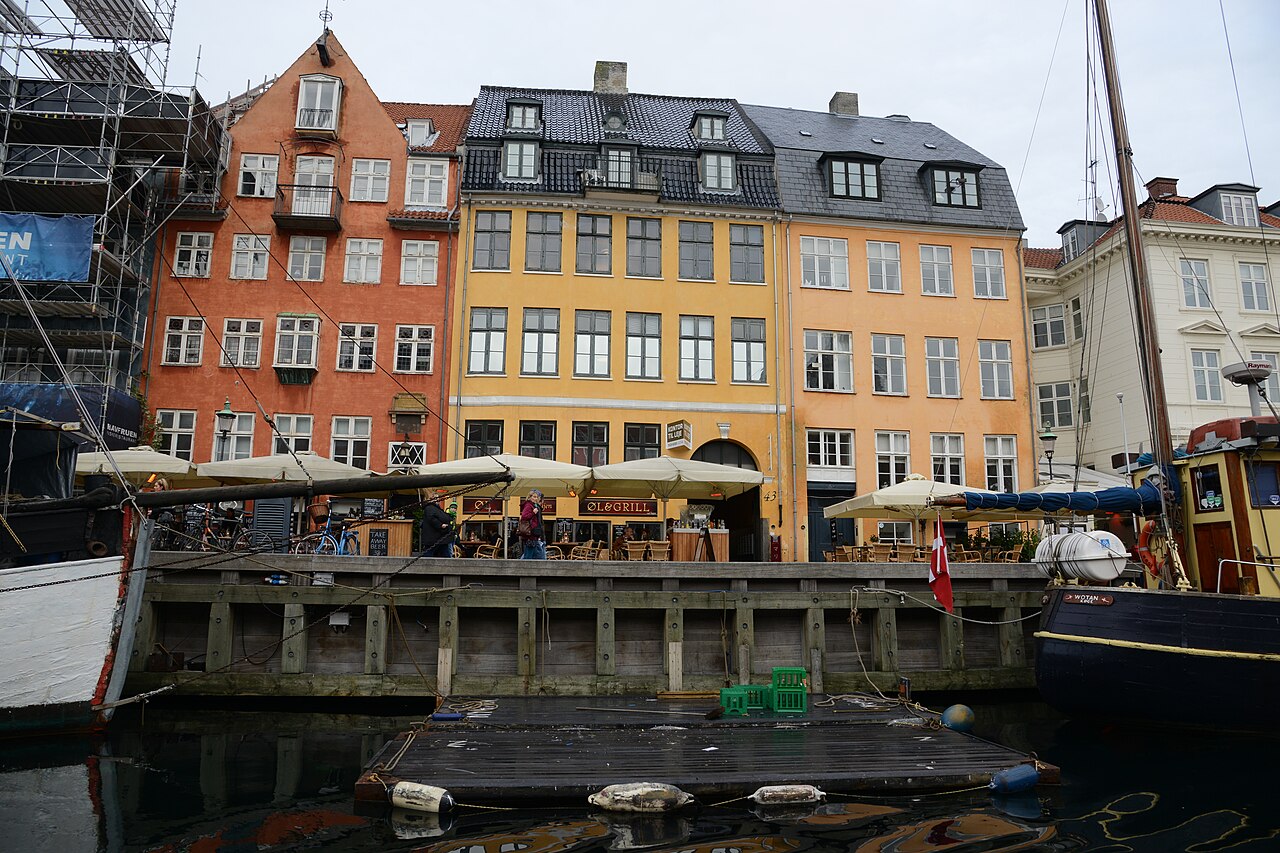
In late June the sky over the harbor never fully darkens, and the low northern sun keeps raking across the water until well after dinner. By early December the same stretch of quay is lit almost entirely by shopfronts and strung lights, because the month's entire sunshine allowance would fit into a single long summer afternoon.
The easily missed detail
Copenhagen itself contains no UNESCO World Heritage property. The closest one is Kronborg Castle at Helsingør, inscribed in 2000 and about 28 miles up the Øresund coast, reachable on an ordinary regional train. That matters for scheduling: a heritage day trip here means leaving the city, and the cold months shorten the usable daylight at the far end of that journey far more than they shorten your time in town.
A practical rhythm
- Late May to June — The sunshine normals peak and the evenings stretch; this is the window for harbor swimming, canal routes and anything that depends on being outdoors late.
- July to August — Warmest means of the year, but also the wettest month on the record at 2.66 inches; carry a shell rather than reorganize the day.
- November to February — Sunshine collapses toward December's 40.6 hours, which pushes the trip indoors, toward museums, interiors and long meals.
What could complicate the plan
Denmark sits inside the Schengen area, and since 10 April 2026 the EU's Entry/Exit System has been fully operational across the 29 participating countries, registering fingerprints and a facial image for non-EU travelers and replacing passport stamping. The practical consequence is a first-crossing enrollment step at the border rather than a quick stamp. Denmark also keeps the Danish krone rather than the euro, so cash and card settlement differs from neighboring eurozone stops on the same trip.
What to do next
For what to fill those long May evenings with, read the Copenhagen things-to-do question in this group; for how the national picture differs from the capital, see the Denmark country guide.
Sources
- Danish Meteorological Institute (DMI), Climatological Standard Normals 1981–2010 — monthly mean temperature, precipitation and sunshine normals for the Copenhagen station
- UNESCO World Heritage Centre — Denmark's inscribed properties, including Kronborg's 2000 inscription
- European Commission, Entry-Exit System — EES scope, data collected and 10 April 2026 full operation