Cyprus country guide Places and experiences
What should a first-time traveler see in Cyprus beyond the obvious highlights?
The short answer
The painted churches of the Troodos mountains — a single World Heritage property made up of 10 monuments scattered across separate mountain villages, holding about 500 years of Byzantine and post-Byzantine wall painting.
The answer, with local context
Cyprus has only 3 properties on the World Heritage List, plus 11 sites on its Tentative List, having accepted the Convention on 14 August 1975. Paphos, inscribed in 1980, takes nearly all the attention. The other two are the ones worth building a trip around.
The Painted Churches in the Troodos Region were inscribed in 1985 and extended in 2001, on criteria (ii), (iii) and (iv). UNESCO counts 10 monuments, and one of them — Ayios Ioannis Lambadhistis at Kalopanayiotis — is a monastery rather than a church. The murals they hold span roughly the 11th to the 16th century, a stretch of about 500 years. All but 1 of the 10 lie in the district of Nicosia; the exception, Timios Stavros at Pelendria, falls in the district of Limassol. The full set runs: Ayios Nikolaos tis Stegis at Kakopetria, Ayios Ioannis Lambadhistis at Kalopanayiotis, Panayia Phorviotissa at Asinou near Nikitari, Panayia tou Arakou at Lagoudera, Panayia at Moutoullas, Archangelos Michael at Pedhoulas, Timios Stavros at Pelendria, Panayia Podhithou at Galata, Stavros Ayiasmati at Platanistasa and Ayia Sotira at Palaichori.
The third property is Choirokoitia, inscribed in 1998 — a neolithic settlement that predates every other structure named in this answer by thousands of years.
Living heritage adds a parallel list. UNESCO records 8 Cypriot intangible heritage elements, with the island ratifying the 2003 Convention on 24 February 2006. Lefkara laces, or Lefkaritika, were inscribed in 2009 and tie a craft to one specific village; Tsiattista poetic duelling followed in 2011; Byzantine chant, which is exactly what the Troodos churches were built to hold, in 2019; the art of dry stone construction in 2024; and Commandaria wine in 2025.
Picture the place
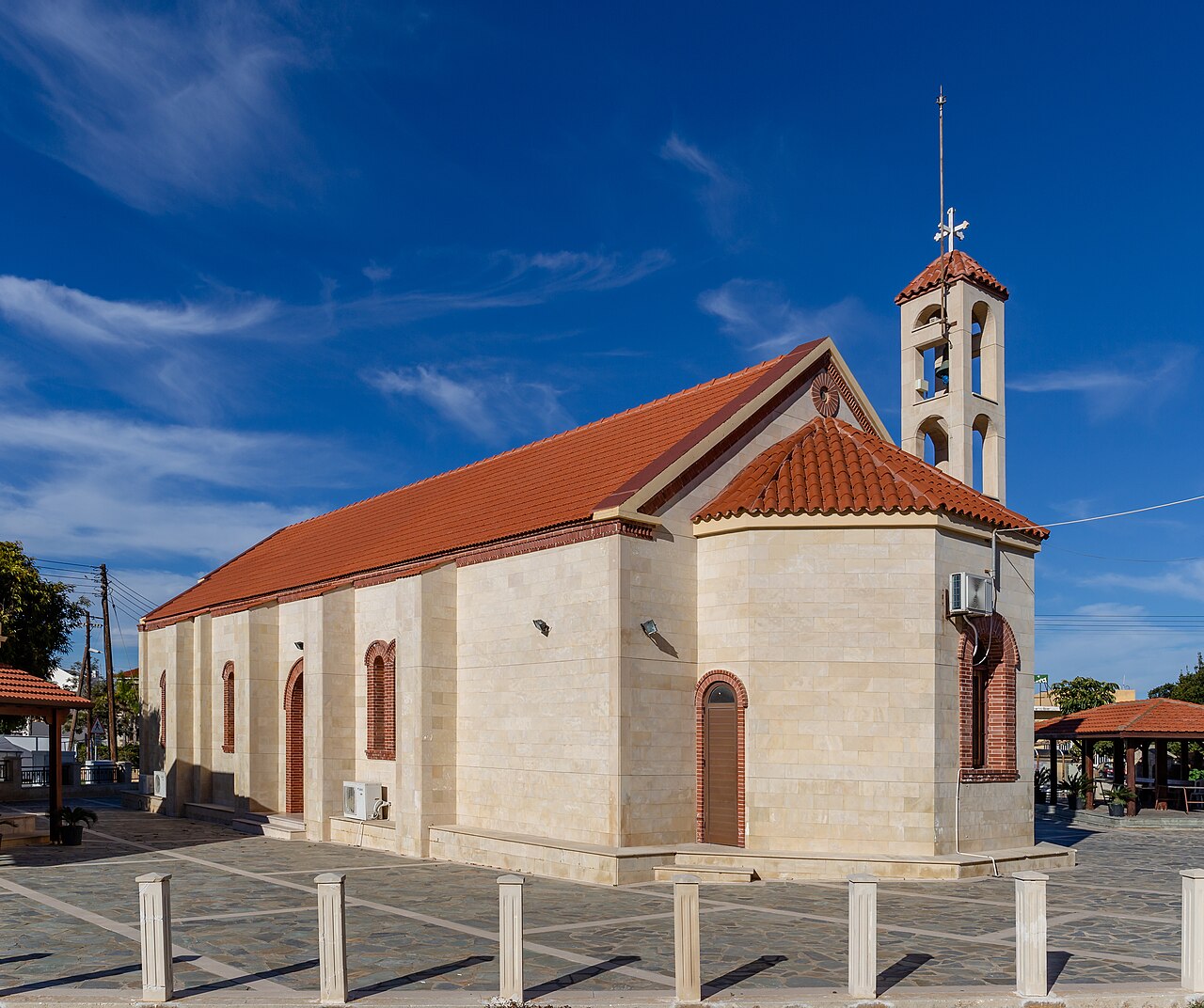
Several of the painted churches are small barn-roofed buildings with steep pitched shelters built over them, which is why they survive — the wooden second roof shed Troodos snow off frescoes that would otherwise have been lost centuries ago.
The easily missed detail
These 10 monuments are village churches, not a museum circuit. They are spread over mountain roads across 2 administrative districts, several are kept locked with a keyholder in the village, and no single ticket covers them. A Department of Antiquities card, sold by the Deputy Ministry of Tourism at 8.50 euros for 1 day, 17.00 euros for 3 days or 25.00 euros for 7 days, covers that department's museums and monuments and is the sensible purchase for anyone combining the mountains with the coast. Realistically, 3 or 4 churches is a full day.
A practical rhythm
- Solea and Marathasa valleys — Kakopetria, Galata, Kalopanayiotis, Moutoullas and Pedhoulas sit close enough to link in one driving day.
- Pitsilia — Lagoudera, Platanistasa and Palaichori form a second cluster on the eastern side of the range.
- Down to the plain — Choirokoitia, inscribed in 1998, sits between the mountains and the south coast and makes a natural last stop.
What could complicate the plan
Public transportation across Cyprus is limited — the State Department records few buses and no rail lines at all — so the Troodos circuit effectively requires a car, and modern motorways connect the major cities rather than the mountain villages. The island's political division shapes any wider itinerary: the Republic of Cyprus has controlled the south since 1974, Turkish Cypriots administer the north, which declared itself in 1983 and is recognized only by Turkey, and a United Nations peacekeeping force patrols the buffer zone between them. Entering the buffer zone anywhere other than a designated crossing point is strictly enforced against. The FCDO adds that Ledra Palace and the Ledra and Lokmaci Street crossings are pedestrian-only.
What to do next
The Cyprus when-to-visit answer in this chapter gives the Paphos park's seasonal hours; the food answer covers Commandaria, halloumi and the Mediterranean diet inscription.
Sources
- UNESCO World Heritage Centre, Painted Churches in the Troodos Region and Cyprus States Parties page — criteria, the 10 named monuments, mural dating, district split, inscription years, national counts, Convention acceptance date
- UNESCO Intangible Cultural Heritage, Cyprus — element list with years and list type, Convention ratification date
- Deputy Ministry of Tourism of the Republic of Cyprus — Department of Antiquities card tiers
- US Department of State and UK Foreign, Commonwealth and Development Office, Cyprus — transport limitations, buffer zone rules, pedestrian-only crossings