Darjeeling / India When to visit
When should I visit Darjeeling, India, for the best experience?
The short answer
October–November suits Darjeeling’s mountain views; March–May favors tea scenery and moderate sightseeing weather.
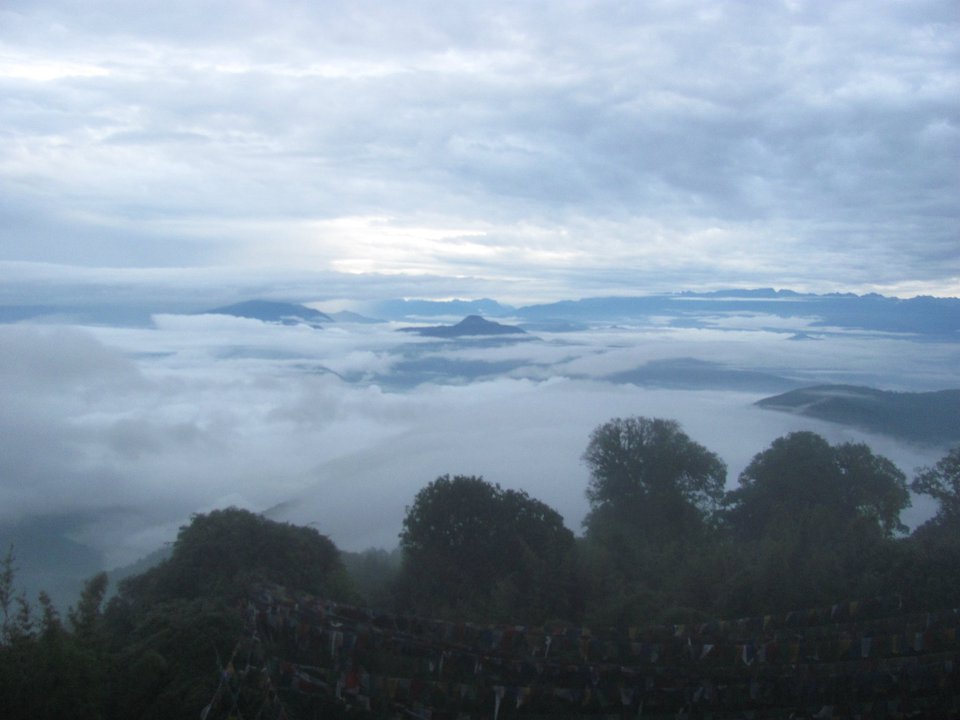
The answer, with local context
Tiger Hill is around 2,590 meters above sea level and 13 kilometers from Darjeeling. Monsoon rains June–September can disrupt hill roads. Happy Valley Tea Estate dates to 1854.
Darjeeling lies high above the West Bengal plains. October–November commonly brings clearer post-monsoon Himalayan views, with March–May another period suited to tea gardens and sightseeing. Tiger Hill rises around 2,590 m and is about 13 km from town; sunrise views may include Kangchenjunga when visibility permits. Happy Valley Tea Estate has heritage dating to 1854. The tea industry that shapes the hillsides is large and legally defined: 87 tea gardens covering nearly 17,400 hectares, planted between 200 m and 2,000 m above sea level, employing over 52,000 permanent workers plus 15,000 more in the plucking season and producing more than 10 million kilograms of Darjeeling tea a year, with the Tea Board's Darjeeling logo in use since 1983 and a compulsory certification system since 2000. The other fixed point in the calendar is the Darjeeling Himalayan Railway, on the World Heritage List as part of the Mountain Railways of India since 1999, whose narrow-gauge trains run to the same timetable logic as the weather. The June–September monsoon often brings low cloud, landslide risks and interrupted mountain roads. Winter is much cooler and requires warm clothing for dawn excursions. Tea plantations and mountain views are different experiences and require their own weather allowances.
Picture the place
Steep streets overlook patterned green tea slopes beneath snow-capped Himalayan horizons.
The easily missed detail
A clear morning in town does not guarantee that distant Kangchenjunga is visible above separate cloud banks.
A practical rhythm
- Visit Tiger Hill before sunrise.
- Explore a working tea estate later in the day.
- Walk Darjeeling's Mall Road and historic district.
What could complicate the plan
Landslides disrupt monsoon travel; viewpoint crowds and cold dawn weather need early preparation.
What to do next
Continue with in the Darjeeling / India group for the related question.
Sources
- Ministry of Tourism, Government of India (Incredible India) — Darjeeling's setting, Tiger Hill at around 2,590 m and 13 km from town, Happy Valley Tea Estate dating to 1854, and the monsoon's effect on hill roads
- World Intellectual Property Organization, case study on Darjeeling tea — 87 tea gardens over nearly 17,400 hectares at 200 to 2,000 m, over 52,000 permanent workers and 15,000 seasonal pluckers, over 10 million kilograms produced a year, the Tea Board's Darjeeling logo created in 1983 and its compulsory certification system begun in 2000
- UNESCO World Heritage Centre — the Darjeeling Himalayan Railway within the Mountain Railways of India property, decision 23COM VIIIC.1 of 1999