Dominica country guide Places and experiences
What should a first-time traveler see in Dominica beyond the obvious highlights?
The short answer
The park's high lakes and peaks — Morne Trois Pitons rises to 1,342 m inside a World Heritage property of 6,857 hectares, about 9% of Dominica's land area, and the freshwater lakes up there are a different island from the coast.
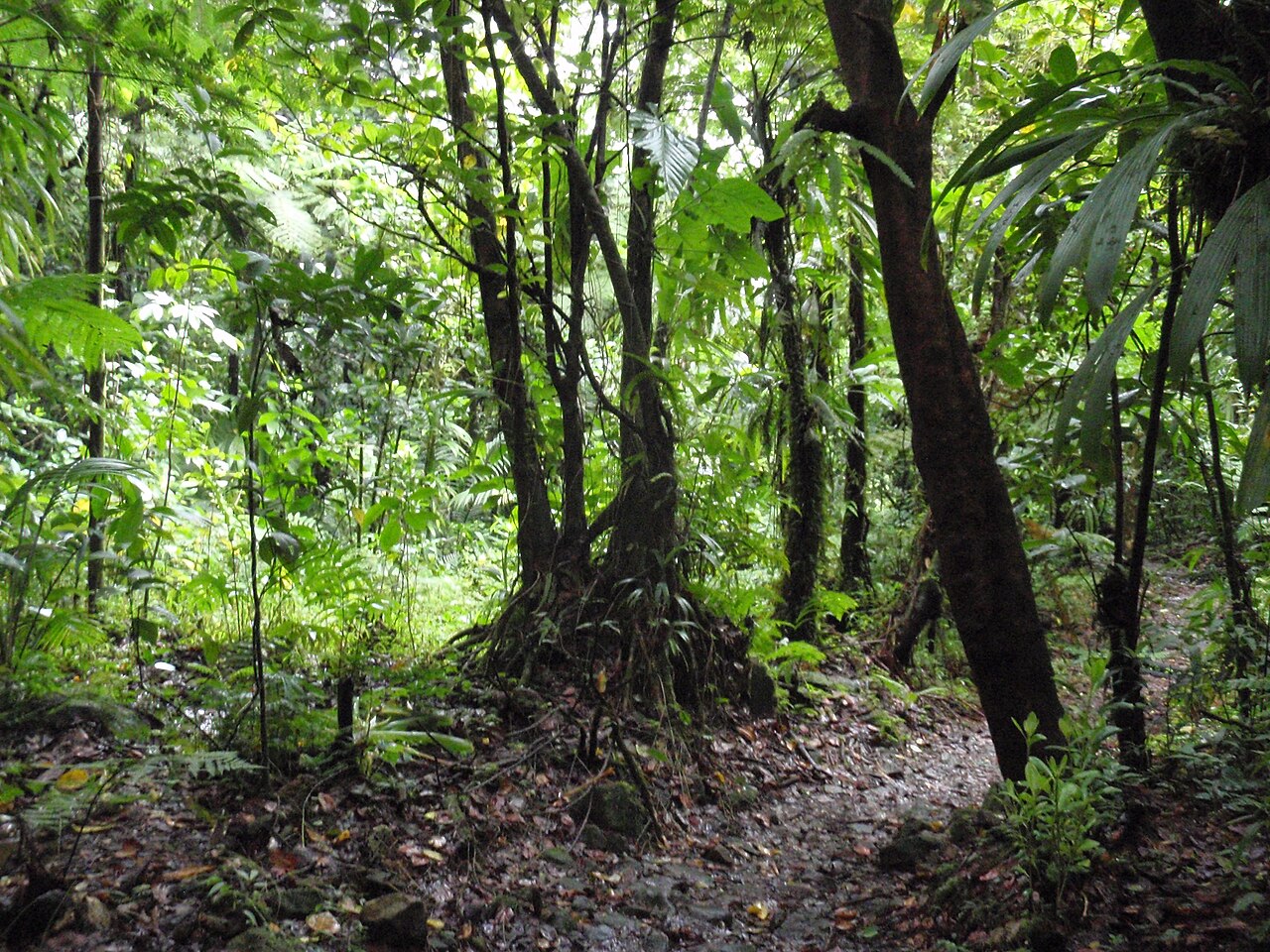
The answer, with local context
Morne Trois Pitons National Park was inscribed in 1997 on criteria (viii) and (x), and had already been Dominica's first national park since 1975, after being proposed as a forest reserve in the 1950s. UNESCO's record names 5 live volcanic centers inside it, 50 fumaroles, and 3 freshwater lakes — Boeri Lake and Freshwater Lake among them, the largest in the country.
What makes the park unusual is vertical rather than horizontal. At least 5 forest types are stacked across its slopes, ending in elfin or cloud forest at the highest elevations, and UNESCO describes the property as holding the richest biodiversity in the Lesser Antilles with many endemic vascular plants. The Imperial Parrot and the vulnerable Red-necked Parrot are both named in the record.
The IUCN's World Heritage Outlook assessment, finalized on 11 October 2025, rates the park's conservation outlook as good with some concerns — a better grade than most Caribbean natural properties receive. Its threat table is where the detail lives: recreation and tourism areas are rated a very high current threat affecting 15 to 50% of the site, severe weather events a high threat affecting over 50%, shifts in temperature and rainfall regimes a high threat also affecting over 50%, and mining and quarrying a high threat whose extent inside the site is not yet known.
Access is through the same park system that governs Boiling Lake, with the Forestry, Wildlife and Parks Division publishing non-resident passes at 8, 20 and 50 US dollars for a site visit, a day and a week.
Picture the place
Height does the work here. Below, rainforest; at the top of the ridges, elfin forest — low, wind-cut, cloud-soaked — with 3 freshwater lakes sitting among 5 volcanic centers and 50 fumaroles venting through it all. The 2 parrots named in UNESCO's record move through the canopy between them.
The easily missed detail
The IUCN rates tourism itself as the park's highest current threat, affecting between 15 and 50% of the site. That is an unusual finding for a property with a good outlook, and it argues for the less-walked parts of the park — the high lakes and ridge forest rather than the single famous crater — which is exactly what a second-time-around itinerary would do anyway.
A practical rhythm
- Low slopes — Rainforest, where most of the park's 5 forest types begin.
- The lakes — Boeri and Freshwater are the country's largest, sitting among 5 live volcanic centers.
- The ridge — Elfin forest at the top, the park's highest band, below the 1,342 m summit of Morne Trois Pitons.
What could complicate the plan
Weather is the park's own biggest stressor: the IUCN rates severe weather events as a high threat affecting over 50% of the site, and UNESCO records that major hurricanes in 1979 and 1980 caused heavy forest damage. Invasive species — opossum, agouti, feral cats, pigs and rats — are listed in the same record. On the ground, the State Department notes Dominica's major roads are in average to poor condition, which lengthens every transfer between trailheads, and that medical facilities do not meet US standards.
What to do next
The Dominica when-to-visit question covers the Boiling Lake hike and its 10:00 a.m. start rule; the food question follows the bay oil distilleries of the island's south-east.
Sources
- UNESCO World Heritage Centre — inscription year, criteria, area and land-share, summit elevation, volcanic centers, fumaroles, lakes, forest types, named parrots, 1975 designation, hurricane damage, invasive species
- IUCN World Heritage Outlook — outlook rating, assessment date, current threat ratings and extents
- Dominica Forestry, Wildlife and Parks Division — site pass tiers
- US Department of State — road conditions and medical care