Edinburgh / United Kingdom Things to do
What are the most worthwhile things to do in Edinburgh on a first visit?
The short answer
Edinburgh Castle, the National Museum of Scotland and a walk between the two UNESCO-inscribed towns cover the city's three distinct characters in a single day, and only the first of them charges admission.
The answer, with local context
Historic Environment Scotland prices adult castle entry at £23.50 online and £26 bought in person, with concessions for ages 65 and over at £19 and £21 and children aged 7 to 15 at £11.50 and £13. The online rate is the cheaper one and the one that disappears first. Buying before you fly is not a convenience, it is the difference between getting in and not.
Ten minutes downhill, National Museums Scotland charges nothing. The National Museum of Scotland on Chambers Street, postcode EH1 1JF, is free to enter and open daily 10:00 to 17:00, with paid tickets only for specific exhibitions. A first-time visitor who has budgeted for one paid attraction can therefore spend the saved money on the castle and still fill an afternoon.
The walking itself is the third attraction, and it is a designated one. UNESCO records that Edinburgh has been Scotland's capital since 1437, that the New Town was laid out between 1767 and 1890 on the glacial plain north of the Old Town, and that the architects involved included John and Robert Adam, Sir William Chambers and William Playfair. The inscribed property covers roughly 3,288 hectares, and about 75 percent of the buildings inside it are listed in categories A, B or C. You are not walking past old buildings; you are walking through a protected ensemble where three-quarters of the frontages carry statutory protection.
Picture the place
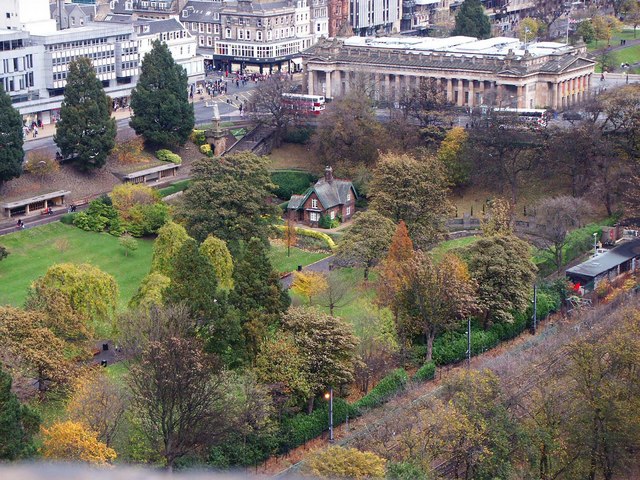
The Old Town's street plan is what UNESCO calls a fishbone: a spine along the ridge with narrow closes dropping away on either side, some of them stepped, some ending in a wall. The New Town answers it with long straight terraces and uniform cornice lines. Crossing between them over the Mound you feel the change underfoot before you see it — the gradient flattens and the sightlines open.
The easily missed detail
The castle and the museum sit inside the same inscribed property but belong to different institutions with different rules, and only one of them lets you turn up on impulse. Historic Environment Scotland warns that once the advance allocation sells out it cannot be purchased at the castle at all. The free national museum has no such constraint, which makes it the right fallback for a wet morning or a sold-out castle slot rather than an afterthought.
A practical rhythm
- Morning — Castle first, booked online at the £23.50 adult rate, before the esplanade fills.
- Afternoon — Downhill to Chambers Street for the free national collections, open until 17:00.
- Evening — Cross the Waverley Valley on the North Bridge or the Mound into the Georgian New Town, where the terraces hold the last light.
What could complicate the plan
Gradient is the real constraint in the Old Town. The closes off the spine are stepped and steep, and there is no lift between the ridge and the valley floor. Conservation work also moves around the castle: during one cleaning week the Great Hall remained open but with scaffolding and barriers in several areas. And the castle shuts completely on 25 and 26 December, so a late-December visit needs the museum and the New Town carrying the itinerary.
What to do next
The Edinburgh when-to-visit answer in this group sets out the castle's summer and winter closing times and the Fringe dates; the Edinburgh food answer covers the legal definition of Scotch whisky and Scotland's protected fish.
Sources
- Historic Environment Scotland, Edinburgh Castle prices and times — adult, concession and child admission; online versus in-person pricing; sell-out and conservation notices
- National Museums Scotland, plan your visit — free admission, daily hours, Chambers Street address
- UNESCO World Heritage Centre, Old and New Towns of Edinburgh — capital since 1437, New Town 1767–1890, named architects, property area, proportion of listed buildings