Goa / India When to visit
When should I visit Goa, India, for the best experience?
The short answer
November through March is the most suitable period for a first coastal holiday in Goa, especially for visiting North Goa's beach towns, South Goa's quieter shorelines and the heritage monuments of Old Goa.
The answer, with local context
Goa lies on India's western coast beside the Arabian Sea. Its climate follows a tropical monsoon pattern, with a dry-season tourism peak and a substantially wetter period during the southwest monsoon.
Incredible India identifies November through March as the preferred season for Velsao Beach in South Goa, citing cooler coastal conditions. This period also works well for visiting Panaji, Old Goa and the state's beaches farther north.
North Goa includes well-known coastal destinations such as Calangute, Baga, Candolim, Vagator and Anjuna. South Goa contains areas including Colva, Majorda, Velsao, Agonda and Palolem. These are different stretches of coastline, not one continuous beach district.
Goa's monsoon normally intensifies from June through September. The Goa Tourism Development Corporation advises avoiding the heaviest monsoon showers of July and August, while identifying September as a potentially rewarding month for green inland scenery and waterfalls.
The inland environment changes significantly during the rains. Forests become greener and waterfalls carry more water, but the sea can be rough and some beach-based businesses reduce operations.
The historical monuments of Old Goa are another major reason to visit. UNESCO inscribed the Churches and Convents of Goa in 1986, under cultural criteria (ii), (iv) and (vi).
Within a chosen month, the clock matters as much as the calendar. Incredible India lists the Basilica of Bom Jesus as open 9 a.m. to 6:30 p.m. on weekdays and 10:30 a.m. to 6:30 p.m. on Sundays, so a Sunday morning in Old Goa begins later than a weekday one and is better spent on the ramparts of the Mandovi or in Panaji.
Picture the place
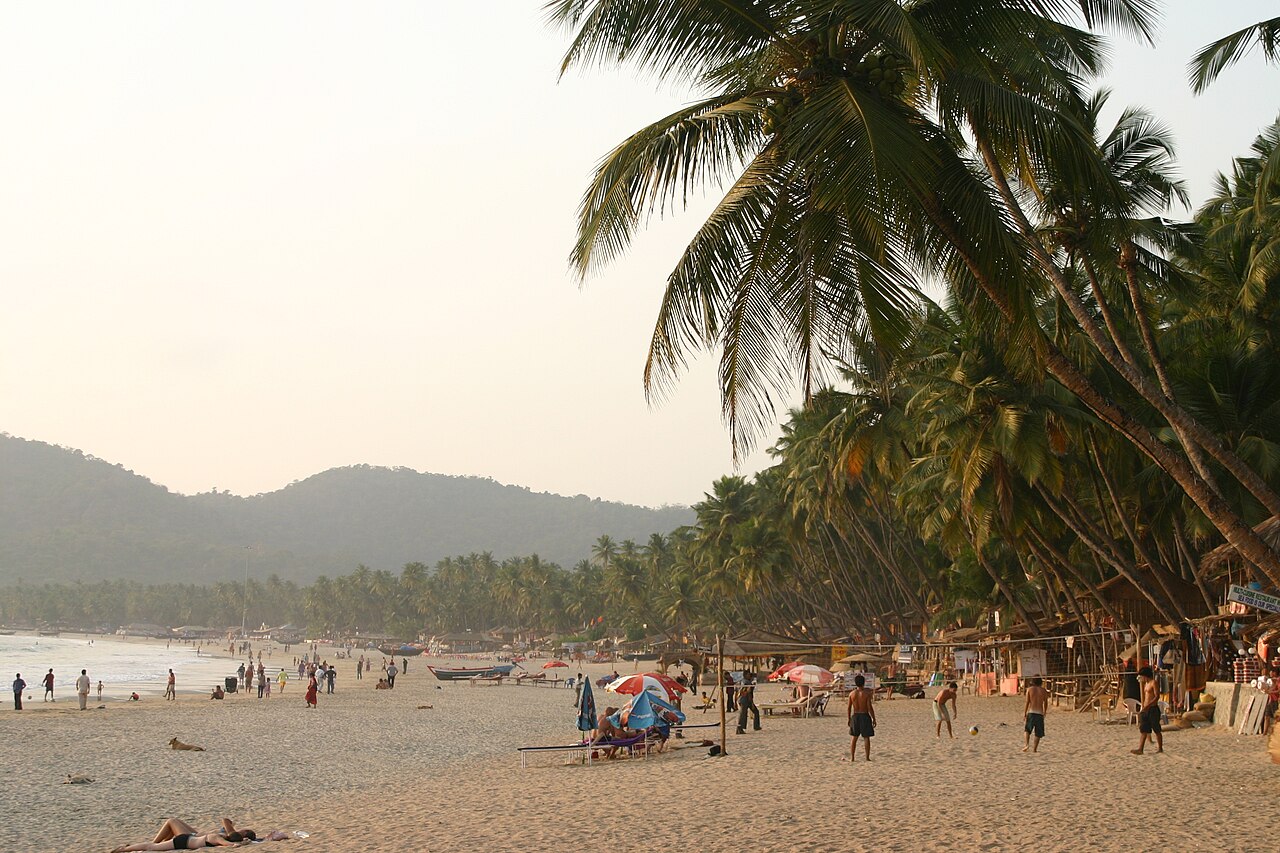
Goa's landscape combines beaches, coconut palms, estuaries, laterite hills and historic churches. Inland areas become lush during the monsoon, while the dry-season coastline supports a different rhythm of outdoor activity.
The easily missed detail
A good month for waterfalls is not necessarily a good month for swimming. Monsoon rain can make inland Goa attractive while simultaneously creating dangerous surf and currents along the coast.
A practical rhythm
Morning — South Goa: Explore a quieter beach such as Velsao or Palolem.
Afternoon — heritage: Visit Panaji or the monuments of Old Goa.
Another day — North Goa: Explore Vagator, Anjuna or the Candolim coast.
What could complicate the plan
Swimming conditions vary by beach and season. Monsoon currents can be dangerous, and travelers should follow local lifeguard warnings rather than assuming that every beach is safe because it is accessible.
What to do next
explores the historical sites, beaches and inland landscapes that distinguish Goa's regions.
Sources
- Incredible India — South Goa beaches and recommended season.
- Goa Tourism Development Corporation — monsoon conditions and inland activities.
- UNESCO — Old Goa's World Heritage designation.
- Incredible India, Basilica of Bom Jesus — published weekday and Sunday opening hours.