Helsinki / Finland Things to do
What are the most worthwhile things to do in Helsinki on a first visit?
The short answer
The two cathedrals and Senate Square, Suomenlinna's fortress islands done slowly, the Rock Church and the Sibelius pipes, an afternoon on Seurasaari, and a public-sauna evening — Helsinki's essentials are a harbor city thinking in granite, water and steam.
The answer, with local context
Work outward from Senate Square. The square is Engel's neoclassical stage set (laid out after Helsinki became capital in 1812): the white Lutheran cathedral above its grand stairs (arrive before the cruise groups), the Government Palace and the University's main building flanking it, the National Library's frescoed reading rooms (free, and the finest interior the square hides), and Alexander II's statue of 1894 at the center. Five minutes east across the harbor inlets stands the city's other confession: Uspenski Cathedral (1868), red-brick and gold-domed above Katajanokka, the largest Orthodox church in western Europe when it opened and still the landmark every harbor arrival reads first. Between the two, the Market Square runs the city's daily theater — orange tents selling strawberries, peas by the liter and fried fish under the gulls, the 1835 Empress's Stone (Helsinki's oldest public monument) and the Havis Amanda fountain (1908) at its west end.
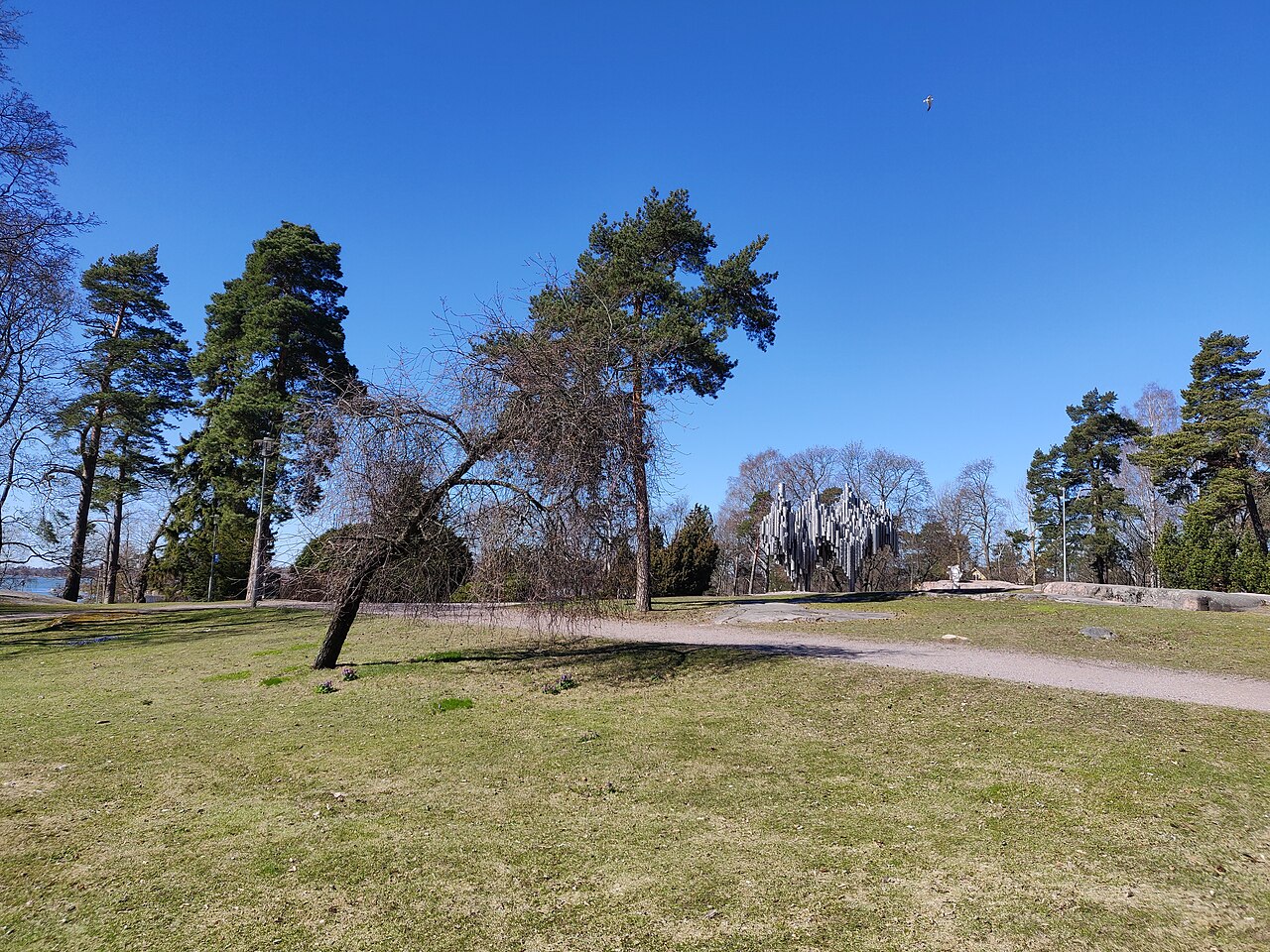
Then take the water. Suomenlinna deserves its own half-day minimum: the fortress Sweden began in 1748 as Sveaborg spreads across six linked islands, holds about 800 permanent residents, a working dry dock among the world's oldest, the King's Gate, the great courtyard and Ehrensvärd's tomb — and repays the visitor who walks past the museum cluster to the south shores' batteries and swims off the rocks. Entry to the islands is free; the HSL ferry from the Market Square runs every 20–40 minutes and a standard transit ticket covers it. Back on the mainland, the modern pair: Temppeliaukio, the Rock Church (1969), blasted out of solid granite by the brothers Timo and Tuomo Suomalainen and roofed with a copper dome that turns the interior into a concert hall of stone and light; and in Töölö, Eila Hiltunen's Sibelius Monument (1967) — more than 600 steel pipes welded into a sounding wave — beside the composer's bust in Sibelius Park. End the sightseeing arc on Seurasaari, the open-air museum island where 87 historic farm buildings from across Finland have stood since the museum's founding in 1909 — the city exhales there.
The evenings belong to Helsinki's true civic religion. The sauna circuit for a first visit: Löyly's design landmark on the Hernesaari shore by day, or the beloved institutions — Kotiharju (1928, the city's last wood-heated public sauna, in Kallio), the art-deco Yrjönkatu swimming hall (1928, where swim sessions are nude and gender-separated by day) — finished with a harbor dinner. Layer in the art pair if the days allow: the Ateneum (1887), the national gallery of Finnish golden-age painting (Gallen-Kallela, Schjerfbeck), and across the tracks Kiasma (Steven Holl, 1998), the contemporary counterweight, with the copper-shingled chapel of silence, Kamppi Chapel (2012), quiet between them.
Picture the place
The Rock Church on a bright morning: sun falling through the dome's ring of windows onto bare granite, an organist rehearsing, and the stone still cool as a cave.
The easily missed detail
The Market Square's second harbor hides Helsinki's finest small ritual: the old covered Market Hall's neighbour quay is where the vintage wooden boats of the "herring fleet" tie up during the Baltic Herring Market each October — but year-round, the same quay (the Kolera-allas basin) is where locals buy fish straight off working boats on Saturday mornings. Pair it with coffee and a korvapuusti at the hall, and you have done Helsinki's Saturday exactly right. If October is your month, the herring market (held since 1743) is the city's oldest food festival.
A practical rhythm
- Square and cathedrals first morning — Senate Square, both cathedrals and the National Library before 11 a.m., when the light and the quiet coincide
- Suomenlinna as a half-day — Ferry out by 10 a.m., walk to the King's Gate and the far batteries, swim if it is summer, ferry back at golden hour
- Sauna to close — One institutional sauna (Kotiharju or Yrjönkatu) on the final evening converts the trip's Helsinki from seen to lived
What could complicate the plan
The big sights keep Finnish hours: museums close Mondays (Ateneum and Kiasma both rest early in the week), the Rock Church closes to tourists during services and weddings without much notice, and Uspenski shuts for Orthodox services on weekends. Winter changes the island math — the Suomenlinna ferry still runs, but daylight for the fortress walk is a 10 a.m.–3 p.m. ration and the wind off the ice is serious. And the cathedral square's summer cruise peak (11 a.m.–2 p.m.) will tax your patience: edges of the day are Helsinki's gift to the early riser.
What to do next
Lay the trip in rings: square and harbor, fortress islands, granite churches and Töölö, Seurasaari and sauna — one ring a day, in that order.
Sources
- Helsinki Cathedral Parish / City of Helsinki — Senate Square's ensemble and the Lutheran cathedral; Uspenski Cathedral (1868) and its Orthodox parish
- Suomenlinna World Heritage Site (suomenlinna.fi) — the fortress begun in 1748 across six islands, its resident population and the free entry by HSL ferry
- Seurasaari Foundation / National Museum of Finland — the open-air museum founded in 1909 with 87 relocated historic buildings
- National Gallery (Ateneum, est. 1887) and Museum of Contemporary Art Kiasma (1998) — the national collections