Hungary country guide When to visit
When is the best time to visit Hungary for Budapest?
The short answer
Late April into early June, or the first three weeks of September — HungaroMet's 1991–2020 normals put Hungary's wettest stretch in May through July, so the shoulder edges give you the long warm days without sitting in the middle of the country's rainiest run.
The answer, with local context
Hungary is small enough that one national rainfall pattern really does describe the whole trip. HungaroMet puts the country's annual total at roughly 500 to 800 millimeters — about 20 to 31 inches — and the spread inside that range is geographic rather than random. The driest belt, along the Zagyva, Tisza and Hármas-Körös rivers, gets only about 500 to 550 millimeters (20 to 22 inches) a year. The southwest and the higher ground of the Bükk Mountains clear 800 millimeters (31 inches).
January is the driest month in the 1991–2020 normal period, which is a reversal: February held that place in earlier reference periods. That matters if you are weighing a winter city break, because the cold here is dry cold rather than a soaking.
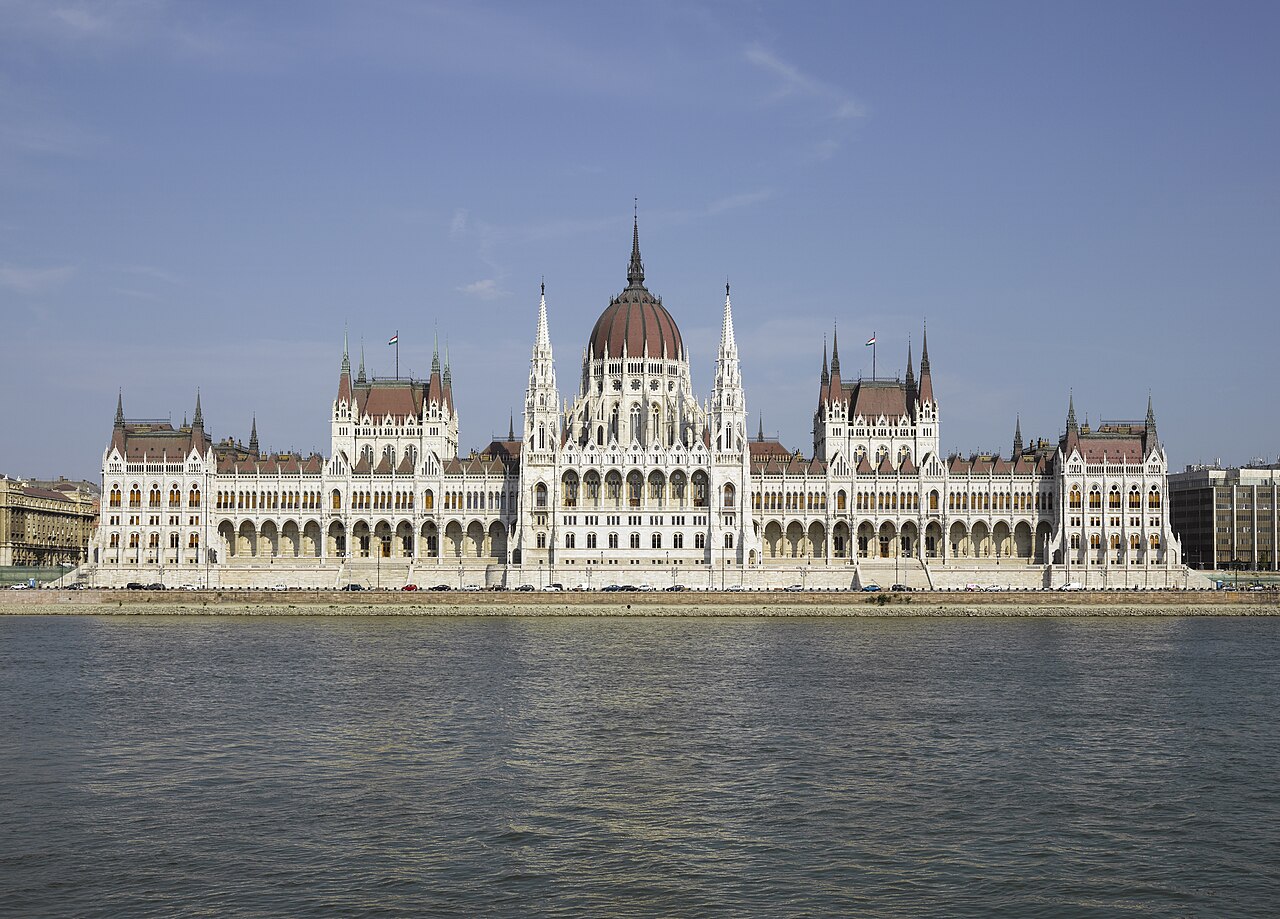
Budapest is the reason most first trips happen, and the city carries a World Heritage designation that tells you how to spend your days. UNESCO lists the property as "Budapest, including the Banks of the Danube, the Buda Castle Quarter and Andrássy Avenue" — a river frontage, a hill district and a boulevard, not a single building with a ticket desk. It is one of eight Hungarian properties on the World Heritage List, and Hungary accepted the World Heritage Convention on 15 July 1985.
Picture the place
The inscribed area is split by water: the Buda side rises on a hill, the Pest side spreads flat along the boulevard, and the Danube sits between them. In May and June that river frontage is where the rain shows up as sudden afternoon downpours rather than all-day gray, and the two banks give you very different footing — a climb on one side, level pavement on the other.
The easily missed detail
Because the Budapest designation covers river banks, a castle quarter and a boulevard rather than one monument, the single most useful thing you can do with your dates is pick a season when walking between those three zones is pleasant. There is no gate to queue at and no admission that governs your timing; the weather and the daylight do all of it. That is unusual among European capitals and it means a shoulder-month trip loses you almost nothing.
A practical rhythm
- Late April to early June — Warming, with the heaviest-rain months only just beginning. Good for the long walk along the Danube frontage.
- July and August — Inside the May-to-July wet run and the hottest part of the year. Plan indoor afternoons.
- September — The wet run has passed its peak and the Buda hill walking is at its easiest.
What could complicate the plan
Hungary is a Schengen state, so the limit that binds Americans is the Schengen short-stay rule: a maximum of 90 days within any 180-day period, counted across all Schengen countries rather than Hungary alone. The EU's Entry/Exit System has been fully operational across all Schengen countries since 10 April 2026, which means biometric registration at the border on first entry. ETIAS, the separate travel authorization, is scheduled to start in the last quarter of 2026 at a fee of EUR 20, with applicants under 18 or over 70 exempt from the fee.
What to do next
For the five Hungarian World Heritage landscapes outside the capital — Tokaj, the Hortobágy puszta, the Aggtelek caves and Fertő — read the Hungary places-and-experiences answer in this group.
Sources
- HungaroMet (Hungarian Meteorological Service) — national precipitation normals 1991–2020, regional range, wettest and driest months
- UNESCO World Heritage Centre — Hungary's property count, the official name of the Budapest property, date of acceptance of the Convention
- European Commission, Migration and Home Affairs — Schengen 90/180 short-stay rule
- European Commission, Migration and Home Affairs — ETIAS fee and exemptions