Kakheti / Georgia When to visit
When should I visit Kakheti, Georgia, for the best experience?
The short answer
September and early October are compelling months for Kakheti’s vineyards and harvest traditions, while May–June is appealing for a greener Alazani Valley landscape before the most intense summer heat.
The answer, with local context
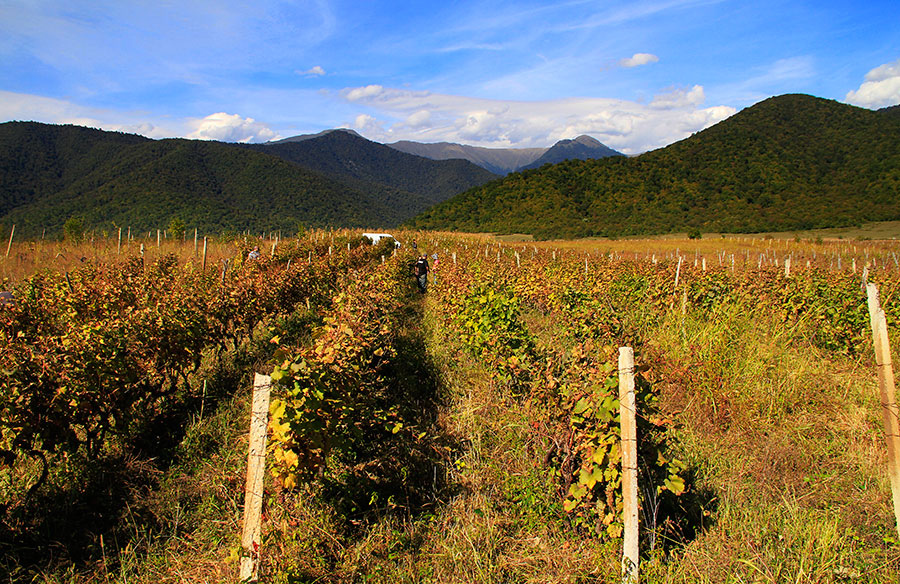
Kakheti is Georgia’s principal eastern wine region, but its scenery changes across the Alazani Valley, the foothills of the Greater Caucasus and the lower, drier landscapes toward Vashlovani. For a first wine-focused trip, concentrate on Telavi, the valley’s key town, and Sighnaghi, a hilltop settlement known for views toward the vineyards. The traditional rtveli grape harvest occurs in autumn, with actual dates varying by grape, vineyard and year; it is not a single festival held on one fixed day.
Wine is connected here to a specific recognized practice. UNESCO added ancient Georgian traditional qvevri wine-making to its Intangible Cultural Heritage list in 2013. A qvevri is a large earthenware vessel usually buried in the ground, where grape juice, skins, pips and sometimes stems ferment and mature. The heritage description records prolonged contact with grape solids, in some traditions for about five to six months, rather than a technique identical to conventional stainless-steel wine production.
Kakheti is larger than a compact collection of cellars. Lagodekhi is associated with protected forest and mountain landscapes; Alaverdi Cathedral and Bodbe add religious heritage; Vashlovani is known for distinctly drier scenery. The Georgia tourism authority names Saperavi, Rkatsiteli, Kakhuri Mtsvane and Khikhvi among wines and grapes relevant to this region. A September visit may align with harvest activity, but a vineyard tour still requires an appointment where appropriate.
Picture the place
In early autumn, vines cover the valley floor beneath distant mountain slopes, and the hilltop streets of Sighnaghi look over a wide patchwork of agricultural land.
The easily missed detail
The UNESCO inscription protects knowledge and social practice, not a particular Kakheti winery. A cellar can explain qvevri methods without every wine it sells being made in qvevri.
A practical rhythm
- Morning — Use Telavi or Sighnaghi as the starting point for a planned winery or heritage visit.
- Midday — Eat a regional meal before the afternoon tasting schedule.
- Afternoon — Visit a second vineyard or cultural site, arranging a designated driver for wine tastings.
What could complicate the plan
Harvest schedules vary and some cellars receive guests only by prior booking. Since January 1, 2026, Georgia requires incoming visitors to carry health and accident insurance with coverage of at least GEL 30,000, according to the U.S. State Department; travel advisories for conflict areas do not describe Kakheti itself.
What to do next
identifies activities beyond the harvest, and outlines the food traditions to pair with a wine trip.
Sources
- UNESCO Intangible Cultural Heritage — 2013 designation and qvevri method
- Georgia National Tourism Administration — Kakheti towns, grape varieties, foods and landscapes
- U.S. State Department — 2026 tourist insurance and restricted regions
- Georgia National Agency for Cultural Heritage Preservation — domestic traditional-winemaking designation, 2012