Libya country guide Places and experiences
What should a first-time traveler see in Libya beyond the obvious highlights?
The short answer
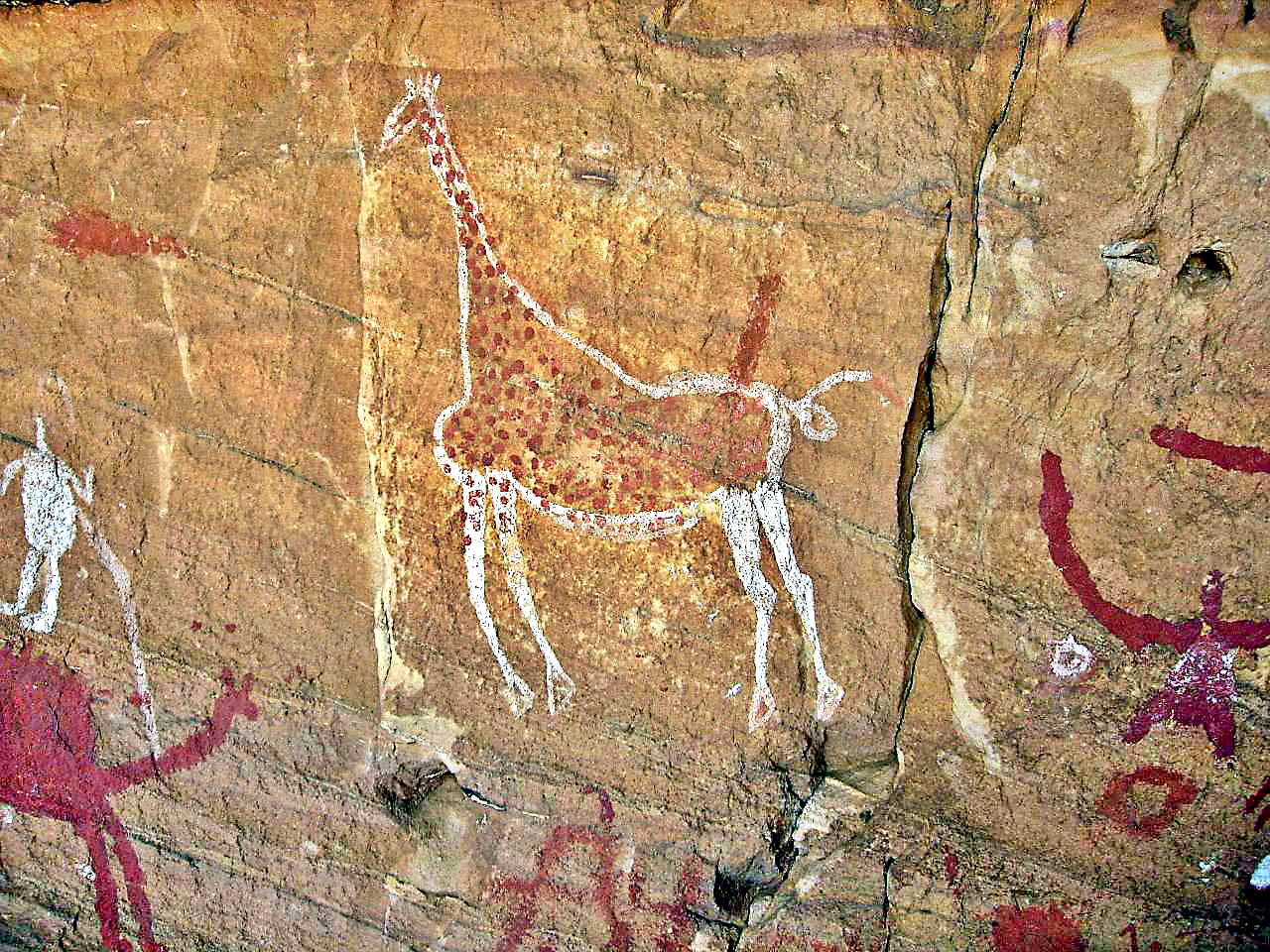
The Saharan rock art of Tadrart Acacus and the oasis town of Ghadamès — both World Heritage properties, and both, like every Libyan site on the list, carried onto the List of World Heritage in Danger in 2016.
The answer, with local context
Libya's heritage is not concentrated on the coast. The Rock-Art Sites of Tadrart Acacus, reference C 287, lie deep in the southwest near the Algerian border; the Old Town of Ghadamès sits at the edge of the Sahara in the far west; Cyrene and Sabratha bracket the coast east and west of Leptis Magna. All four, with Leptis Magna, were placed on the danger list in 2016.
UNESCO's state-of-conservation reporting on Tadrart Acacus is unusually bleak and worth reading as a description of the place, not just of its paperwork. The 2016 report lists deliberate destruction of heritage, illegal activities and a shortage of human resources as the active threats, with vandalism recorded in earlier years. Total international assistance approved for the property up to 2016 stood at zero US dollars. The only mission on the record is a Reactive Monitoring mission in January 2011, and UNESCO notes that none of its recommendations had been implemented and that the State Party had not submitted the progress report the Committee requested. Libyan heritage professionals reported that migrants from sub-Saharan Africa cross the Acacus mountains and that the resulting human presence threatens the engravings and paintings.
In the northeast, the Jabal al Akhdar — the Green Mountain — is the one part of Libya with reliably wetter uplands, and it holds designations of a different kind. Ramsar lists Ain Elzarga, site number 1027, in the Jabal al Akhdar district near Darnah, designated on 5 April 2000 and covering 50 hectares (124 acres). It is a natural sebkha, a salt depression with at least one connection to the sea, wet year-round, ringed by mudflats and salt marsh with dunes and rocky hills behind. Ramsar describes it as one of the most important wetlands in the area of Kouf National Park for migratory waterbirds, and the site lies within that park.
Picture the place
The Acacus is sandstone cut into towers and arches by wind, with the painted and engraved panels sheltered in the overhangs — which is also why a single act of vandalism in a rock shelter removes a surface that has survived several thousand years of weather.
The easily missed detail
Zero dollars of approved international assistance by 2016 is the number that explains the condition of these sites. A danger listing is a statement of risk, not a funding mechanism, and in Libya's case it arrived without accompanying resources and without the monitoring access that would normally follow. Anything you read about facilities, guarding or interpretation at Tadrart Acacus predates that gap.
A practical rhythm
- Coast — Cyrene and Sabratha are the two coastal classical sites besides Leptis Magna, both danger-listed since 2016.
- Western desert — Ghadamès is an oasis town rather than a ruin, which makes it the one Libyan World Heritage property that is also a lived-in settlement.
- Jabal al Akhdar — Kouf National Park, which contains the Ain Elzarga wetland, is the greenest ground in the country.
What could complicate the plan
The FCDO's regional advice names Al-Bayda, Derna and the Jebel Akhdar region, specifically the coastal and desert roads between and including Al-Maqrun and Al-Tamimi — which is to say the access to Cyrene and the Green Mountain. It also requires that a passport remain valid for the whole of a stay and states that entry will be refused if a passport has been reported lost or stolen. Tadrart Acacus is a long desert journey from any airport, in a border region, with no functioning visitor infrastructure described in recent UNESCO reporting.
What to do next
The Libya when-to-visit answer in this group covers Leptis Magna's inscription history and seasonal access; the trip-planning answer covers visas, registration and currency.
Sources
- UNESCO World Heritage Centre, state of conservation, Rock-Art Sites of Tadrart Acacus — property reference, 2016 threats, zero approved international assistance, January 2011 mission, outstanding progress report
- Ramsar Sites Information Service, Ain Elzarga — site number, designation date, area, sebkha description, Kouf National Park
- UK Foreign, Commonwealth and Development Office — named regions and roads in the regional advice
- UK Foreign, Commonwealth and Development Office — passport validity and refusal conditions