Mauritania country guide When to visit
When is the best time to visit Mauritania for Chinguetti?
The short answer
The calendar matters less here than the map and the paperwork — Chinguetti sits inside Mauritania's permitted zone, south of the Tropic of Cancer, but since 5 January 2025 there is no visa on arrival, so the trip has to be assembled before you book anything.
The answer, with local context
Two official documents shape a Chinguetti trip more than any seasonal average. The first is the US Department of State advisory, which on 15 July 2025 placed Mauritania at Level 3: Reconsider Travel, and drew three Do Not Travel zones inside it — any area the Mauritanian military has marked off-limits, everything north of the Tropic of Cancer, and everything within 100 kilometers of the Mali and Algeria borders. Chinguetti lies in the Adrar, south of that latitude line, which is why it remains the one historic ksar most trips are built around.
The second is entry policy. The UK Foreign, Commonwealth and Development Office states that from 5 January 2025 it is no longer possible to obtain a visa on arrival in Mauritania; applications now go through the Mauritanian National Agency for the Population Register and Secure Titles before departure, and the printed approval has to be produced at the border. Fees are then settled on arrival in exact cash, in euros or US dollars, with no change given and no receipt issued. A passport must expire at least six months after the arrival date.
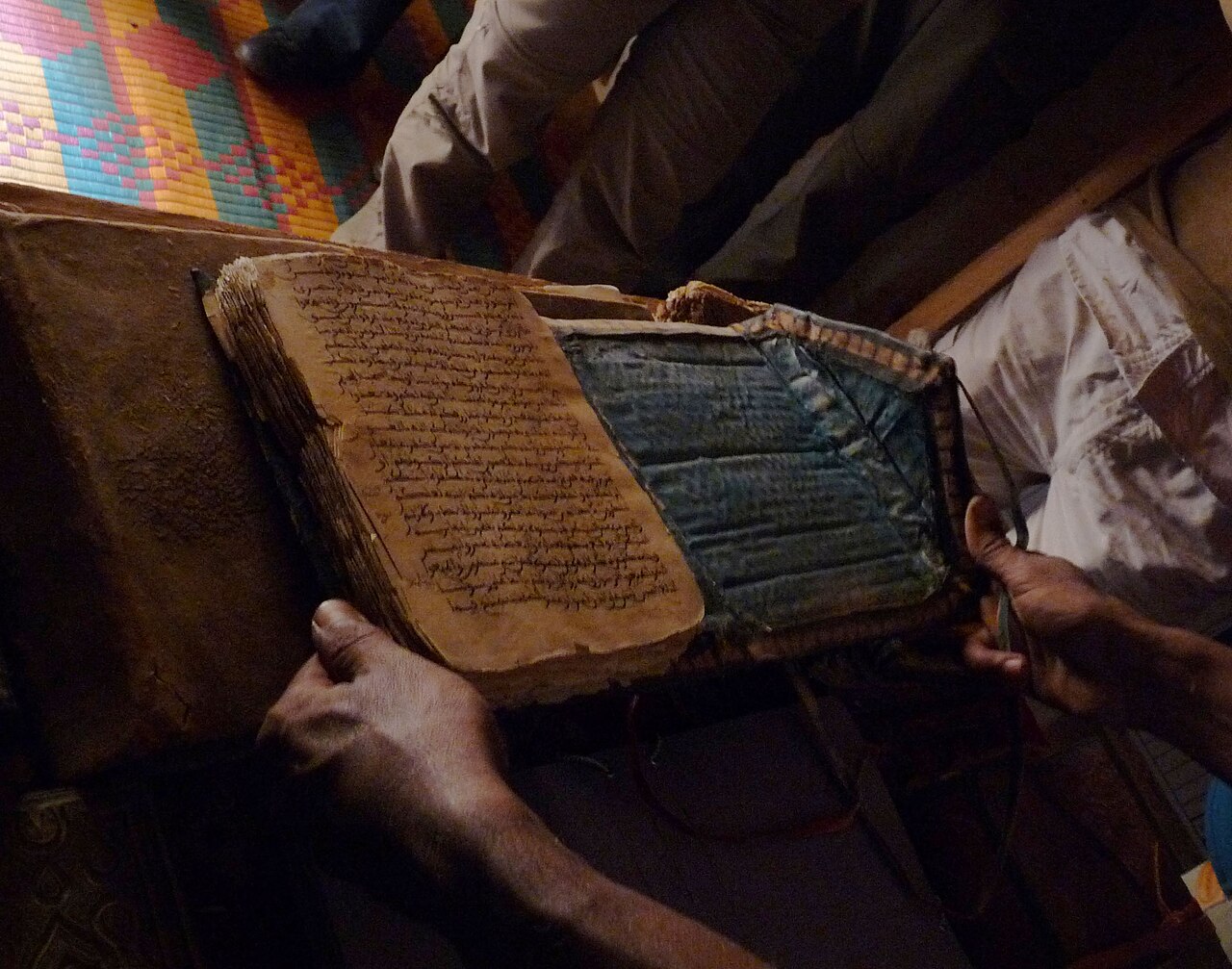
Chinguetti is one of four settlements in a single UNESCO inscription. The World Heritage Committee added the Ancient Ksour of Ouadane, Chinguetti, Tichitt and Oualata in 1996 under decision 20COM VIIIC, describing them as trading and religious centers founded in the 11th and 12th centuries to serve the caravans crossing the Sahara. That origin explains the town's shape: it was a staging post, not a capital, and its value lies in fabric and manuscripts rather than in a single monument with a ticket window.
If a season does pull on your dates, it is the one published for the coast rather than the desert. The Ramsar Secretariat records that more than two million waterbirds winter at Banc d'Arguin, which makes the boreal winter the meaningful window for anyone pairing the Adrar with the Atlantic shore.
Picture the place
Chinguetti is built of dry-laid stone and mud on a sand plain at the edge of the Adrar escarpment, and the dune field presses directly against the older quarter — the ksar's lanes run between low walls that the sand has part-buried, so the floor level you walk on is not the floor level the caravans used.
The easily missed detail
The inscription is for four ksour, not one, and they are far apart. Ouadane sits north of Chinguetti, Tichitt and Oualata lie east and southeast across very different terrain. A visitor who treats "the UNESCO site" as a single stop will see a quarter of it. The listing also says nothing about opening hours, because there is no gate — the ksar is a living settlement, and the manuscript libraries are family holdings rather than a state museum, so access depends on arrangement rather than on a published timetable.
A practical rhythm
- Before you fly — Secure the e-visa approval and print it; the arrival desk expects the document and the fee in exact euro or dollar notes.
- In the Adrar — Treat Chinguetti as a base rather than a day trip, since the other three inscribed ksour are separate journeys across the plateau.
- On the coast — Build the Banc d'Arguin leg into the winter months, when the Ramsar-recorded wintering flocks are present.
What could complicate the plan
The advisory geography is the real constraint. Everything north of the Tropic of Cancer is a Do Not Travel zone in US guidance, as is any ground within 100 kilometers of the Mali or Algeria frontier, and the FCDO states that it advises against all travel to parts of Mauritania. A yellow fever certificate is required of anyone arriving from a country listed as a transmission risk. Cash is not a convenience here but a requirement at the border itself, and a lost or stolen passport will see entry refused outright.
What to do next
The Mauritania trip-planning question in this chapter works through the e-visa and cash sequence in order, and the places question covers Banc d'Arguin and the three ksour beyond Chinguetti.
Sources
- UNESCO World Heritage Centre — 1996 inscription, decision 20COM VIIIC, 11th–12th century caravan-trade origin
- US Department of State, Mauritania Travel Advisory — Level 3 designation of 15 July 2025 and the three Do Not Travel zones
- UK Foreign, Commonwealth and Development Office — end of visa on arrival from 5 January 2025, e-visa procedure, cash fees, passport validity, yellow fever rule
- Ramsar Sites Information Service, Parc National du Banc d'Arguin — more than two million wintering waterbirds