Mexico City / Mexico When to visit
When should I visit Mexico City, Mexico, for the best experience?
The short answer
Choose your days of the week before you choose your month — the Templo Mayor archaeological zone runs Tuesday to Sunday, 09:00 to 17:00, so a Monday arrival loses the single most important excavated site in the capital.
The answer, with local context
Mexico City's heritage status is unusual in that it covers two places at once. The World Heritage property is listed as the Historic Centre of Mexico City and Xochimilco, inscribed in 1987 — one designation stretched across a dense colonial grid and a working landscape of canals and cultivated plots in the south of the city. Planning a visit means scheduling 2 very different kinds of day.
The downtown half is governed by museum and archaeological-zone timetables. Templo Mayor, excavated beside the cathedral, admits visitors Tuesday through Sunday on a 09:00 to 17:00 schedule, and foreign visitors pay 210 pesos. Mondays are the standing closure, which reshapes any short trip: a Friday-to-Monday weekend gives you 3 usable days downtown, not 4.
The southern half runs on an agricultural clock instead. The Food and Agriculture Organization designated the Chinampas Agricultural System in Mexico City as a Globally Important Agricultural Heritage System in 2017, noting that the plots can be harvested up to 5 times a year. That is why there is no off-season for Xochimilco's produce — the system is built for continuous cropping rather than a single harvest window. The same designation records frost and shifting rainfall as the threats growers organize against, so cold snaps matter more to the chinampas than to anything downtown.
Picture the place
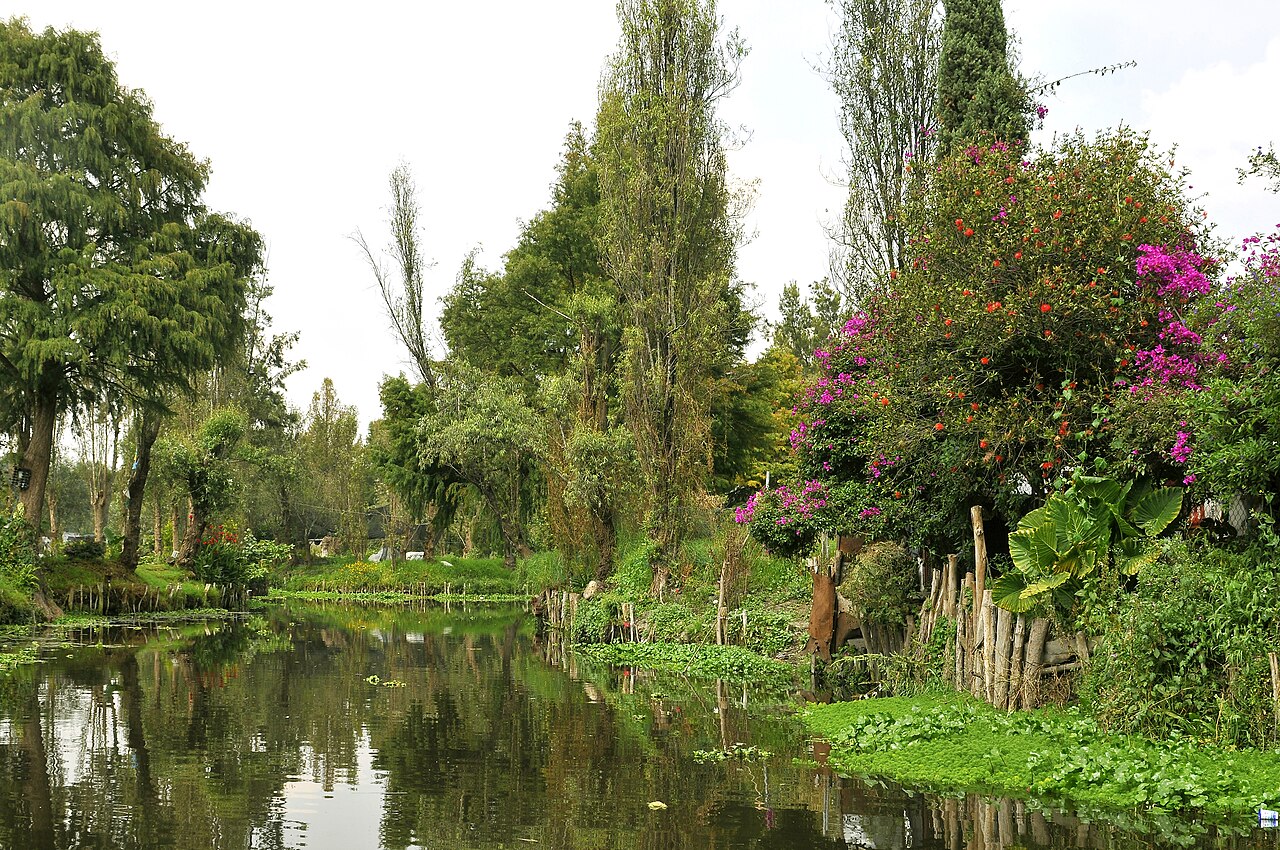
The chinampa plots are edged by rows of ahuejote willows, Salix bonplandiana, planted along the canals and ditches as windbreaks and insect barriers, their roots holding the soft margins of each plot in place. The division between field and canal here is a line of trunks rather than a fence.
The easily missed detail
Because the 1987 inscription treats the historic center and Xochimilco as one property, the "city" on the World Heritage List includes farmland that is still farmed. The knowledge of how to build a chinampa has been passed on orally rather than written down, which is why the plots are maintained by the families working them rather than by a heritage agency with a restoration schedule.
A practical rhythm
- Tuesday to Sunday — Keep the excavated sites for these days, since the Templo Mayor gate does not open on Mondays and 17:00 is the hard stop.
- Early in the week — Use a Monday for Xochimilco, which runs on growing seasons rather than museum hours.
- Late afternoon — Downtown closures at 17:00 push the rest of the day toward the streets of the inscribed center, which stay open.
What could complicate the plan
The Monday closure is the trap most short itineraries fall into. Beyond that, the chinampas are a production landscape and not a park, so access depends on the growers whose plots you are passing; the designation describes an articulated set of artificial islands reached by water, not a site with a gate and a timetable. Frost is a recorded hazard for the growing system, and the city sits high in a mountain basin, so winter nights are colder than the latitude suggests.
What to do next
Read the Mexico City things-to-do answer in this group for the Teotihuacán timings, and the food answer for how the chinampa system reaches the city's markets.
Sources
- UNESCO World Heritage Centre — 1987 inscription year
- Instituto Nacional de Antropología e Historia — Templo Mayor days, hours and foreign admission
- UN Food and Agriculture Organization, GIAHS — 2017 designation, harvest frequency, ahuejote willows, frost and rainfall threats