Monaco country guide Food and drink
What local dishes should I try in Monaco, and where should I look for them?
The short answer
Barbagiuàn, Monegasque fougasse and stocafi — a pastry stuffed with rice and chard, the Principality's signature dessert, and a stockfish dish that the French tourism board identifies as quintessentially Monegasque and locates in the old town's restaurants.
The answer, with local context
Monaco's cooking is small in scope and specific in character, and the three dishes above are the ones an official source will actually name. Barbagiuàn is the one most worth seeking out: a filled pastry built on rice and chard rather than meat, and the dish most often presented as the national one. Monegasque fougasse is the dessert counterpart. Stocafi, the Monegasque treatment of stockfish, is served at Castelroc and at La Montgolfière and appears across the restaurants of the old town — which is to say, in Monaco-Ville, on the rock, rather than in Monte-Carlo.
Beyond the plates, Monaco produces more of its own food and drink than its size suggests. Perles de Monte-Carlo farms oysters in Fontvieille, alongside clams and bream. Brasserie de Monaco brews craft beer on site using organic malts. La Distillerie de Monaco makes spirits locally, including L'Orangerie liqueur, and La Maison du Limoncello produces limoncello. For sweets, the Chocolaterie de Monaco was founded in 1920 and is described as "Official Supplier of H.S.H. the Sovereign Prince," making Monegasque crowns, Prince's rocks and gianduiotti chocolates.
Socca and pissaladière also appear on Monaco tables, but the French tourism board presents them as the taste of the wider Côte d'Azur rather than as Monegasque in origin, and it is worth keeping that distinction.
Picture the place
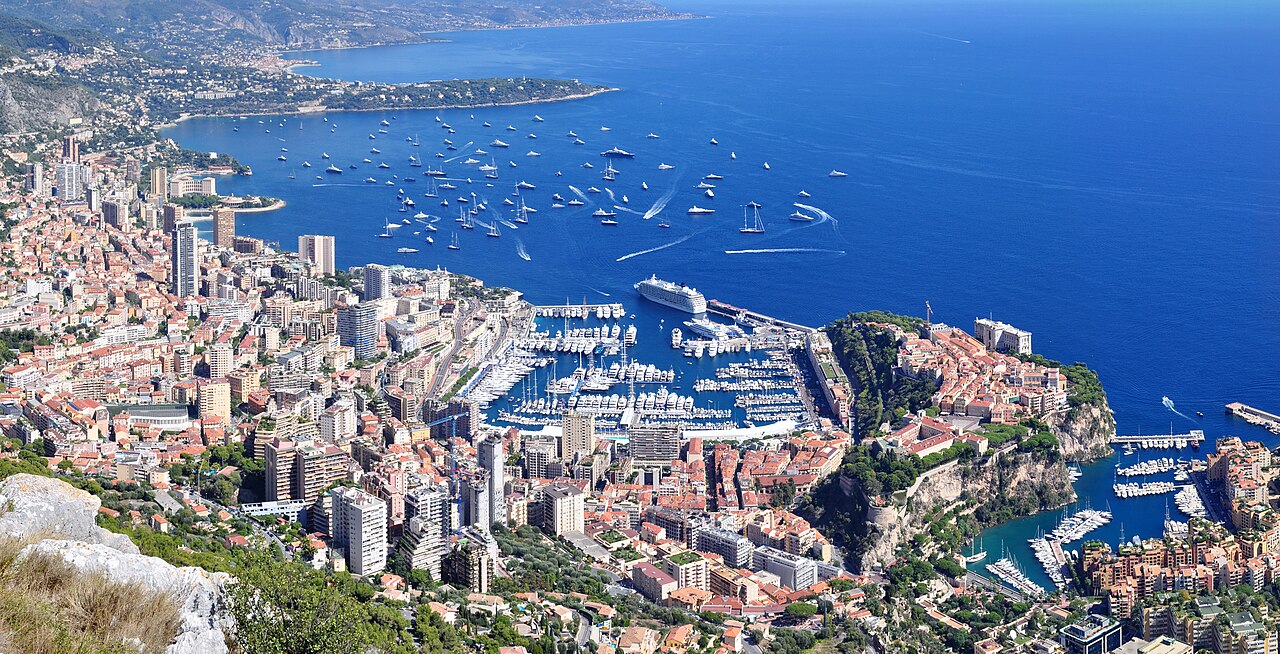
Perles de Monte-Carlo works the water at Fontvieille, down beside the harbor, while the restaurants serving stocafi are up on the rocky outcrop of the old town above it. The supply chain for one plate of fish here runs vertically rather than across any distance.
The easily missed detail
The producers are clustered rather than scattered, and the reason is that Monaco has very little ground. Fontvieille holds the oyster farm and also the Terrasses de Fontvieille, where the Prince's Government publishes the Museum of Philately and Coinage as open 10:00 to 17:00 from 1 October to 30 June and 10:00 to 18:00 from 1 July to 30 September. A single district can therefore carry a morning's sightseeing and the source of your lunch, which is not true of many countries.
A practical rhythm
- Monaco-Ville — Stocafi is an old-town dish, and the old town is where barbagiuàn is easiest to find.
- Fontvieille — The oyster farm and the brewery are both here, and so is a museum with published hours to fill the gap.
- Take something home — The Chocolaterie de Monaco has been making its crowns and Prince's rocks since 1920.
What could complicate the plan
The most consequential rule for a food-focused visit is an import ban, not an opening hour. The FCDO's Monaco entry-requirements page, last updated 10 December 2025, states that meat, milk and products containing them cannot be brought into Monaco, with exceptions only for powdered baby milk, baby food and special medical foods or pet feed — and because France sets customs rules for the Principality, that applies regardless of where you crossed in. Cash or travelers' cheques worth 10,000 euros or more must be declared, and without a certified declaration the money could be seized when you leave. On health, the CDC's Yellow Book 2026 puts raw or undercooked shellfish among its higher-risk foods and fully cooked foods served hot among the lower-risk ones, which is directly relevant to a destination that farms its own oysters. Note also that the article naming these dishes and producers was published on 3 July 2022, so individual venues should be confirmed.
What to do next
The Monaco when-to-visit answer covers the Prince's Palace season and the daily 11:55 guard change, and the places-and-experiences answer lists the Fontvieille and Moneghetti museums by their published hours.
Sources
- Atout France (France.fr, the official French tourism board), article published 3 July 2022 — barbagiuàn, fougasse, stocafi and the venues serving it, Perles de Monte-Carlo, Brasserie de Monaco, La Distillerie de Monaco, La Maison du Limoncello, Chocolaterie de Monaco founded 1920
- UK Foreign, Commonwealth and Development Office — meat and milk import ban and its exceptions, cash declaration rule, French customs responsibility
- Prince's Government of Monaco, MonServicePublic — Museum of Philately and Coinage location and seasonal hours
- CDC Yellow Book 2026, Food and Water Precautions for Travelers — shellfish and cooked-food risk categories