Monteverde / Costa Rica Things to do
What are the most worthwhile things to do in Monteverde on a first visit?
The short answer
A full day on the reserve's trails and a separate guided night walk — the Costa Rica Tourism Board suggests six to seven hours for a full hiking visit, and lists guided day and night walks as the activities on offer.
The answer, with local context
The reserve is the reason to come, and it is bigger than a morning. Its integrated management plan puts the protected area at 4,125 hectares under the Centro Científico Tropical, and the tourism board's suggested six to seven hours is a realistic figure for covering the trail system rather than the entrance loop. The gate opens at 7:00 and closes at 16:00, which leaves exactly enough daylight for that and nothing more, so a reserve day should not be shared with anything else.
A guide is worth paying for here, and the reserve's own published species lists show why. Its research program's fauna list, updated in July 2023, records 91 mammal species, 89 bird species, 39 amphibian species and 37 reptile species in the reserve. The bird list builds on Michael Fogden's 1992 list and is explicitly a list of common species, not a complete one. Among the birds, the resplendent quetzal (Pharomachrus mocinno) is recorded as Near Threatened and the three-wattled bellbird (Procnias tricarunculatus) as Vulnerable. Those are the two most-asked-after birds in the country, and nothing published by the reserve commits to when either can be seen, so treat any guaranteed sighting as a sales claim rather than a schedule.
Beyond the reserve boundary, the geography itself is the second attraction. The management plan describes the Pájaro Campana Biological Corridor, which rises to 1,830 meters and contains 11 life zones — the corridor, named for the bellbird, links the Monteverde highlands with lower ground, and moving down it is the fastest way to see how much changes with altitude in Costa Rica.
Picture the place
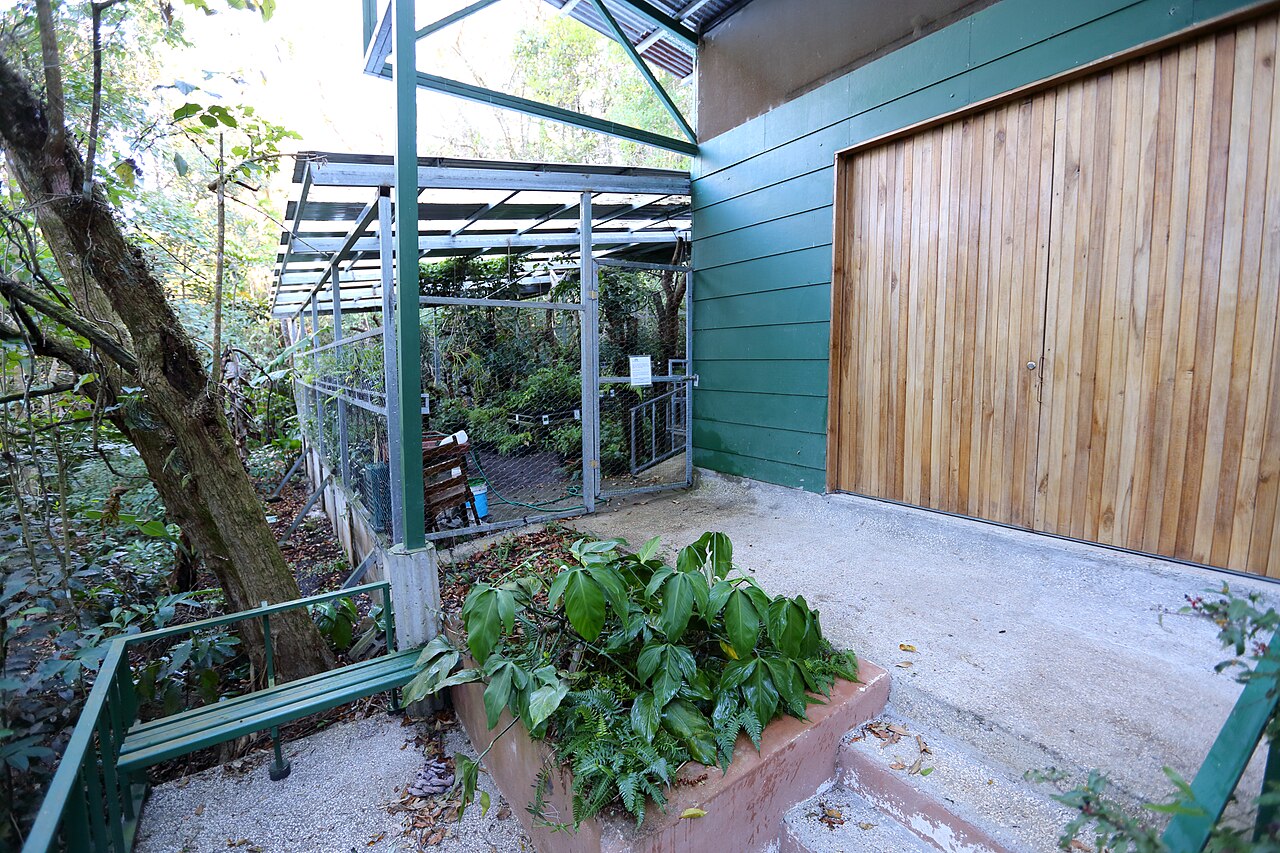
Trails here are duckboard and packed earth under a canopy that holds water long after rain has stopped, so drips continue in still air. Moss grows on the handrails. Away from the entrance the forest noise is mostly wind in the canopy rather than birdsong, which is why guides stop and listen rather than walk and talk.
The easily missed detail
Nothing about this reserve is governed by Costa Rica's national park service. The property belongs to the Centro Científico Tropical and sits inside its Sistema de Reservas Privadas, which means its ticketing, its guiding arrangements and its rules are the CCT's own. Practically: tickets can be bought online or at the gate with no advance purchase required and cards are accepted, there are no free days or hours, visitors may bring their own food and drink, alcohol is neither served nor permitted, service animals are admitted and other pets are not, and bags are checked on entry.
A practical rhythm
- 7:00 to 10:00 — Trails with a guide, while the reserve is at its quietest and the tourism board's recommended early window is open.
- 10:00 to 16:00 — The longer routes, pacing the six-to-seven hours the reserve's own listing suggests for a full hike.
- After dark — The guided night walk, the only scheduled way into the forest outside the 7-to-4 day.
What could complicate the plan
There is no first aid station in the reserve and it is not wheelchair accessible, which matters on a six-hour day at altitude. Around 100,000 visitors a year pass through, concentrated into nine-hour days, and the tourism board describes the reserve as usually crowded. Entry to Costa Rica requires a yellow fever vaccination certificate from travelers arriving from certain countries in South America or Africa, and leaving by air carries a US$29 departure tax, normally included in the fare. British passport holders need a passport valid for at least one day beyond their planned departure.
What to do next
The when-to-visit answer in this group covers the season and the 7:00 opening in detail; the food answer explains how to provision a day this long.
Sources
- Monteverde Cloud Forest Biological Reserve, Research Program, common bird list (updated July 2023) — species totals for mammals, birds, amphibians and reptiles; the 89 common bird species; IUCN categories for the resplendent quetzal and three-wattled bellbird; basis in Fogden's 1992 list
- Monteverde Cloud Forest Biological Reserve / Centro Científico Tropical, integrated management plan — reserve area, ownership and private reserve system, annual visitor numbers, Pájaro Campana corridor elevation and life zones
- Costa Rica Tourism Board (ICT), Monteverde Cloud Forest listing — opening hours, guided day and night walks, suggested visit length, ticketing and payment, food and alcohol rules, pets, security checks, accessibility and first aid, crowding
- US Department of State, Costa Rica — yellow fever certificate requirement
- UK Foreign, Commonwealth & Development Office, Costa Rica entry requirements — air departure tax, passport validity for British citizens