Namibia country guide When to visit
When is the best time to visit Namibia for Sossusvlei?
The short answer
May through September offers the most manageable daytime conditions for a Sossusvlei-centered Namibia trip, with cool desert mornings and a generally dry season; September can also connect well with Etosha wildlife viewing.
The answer, with local context
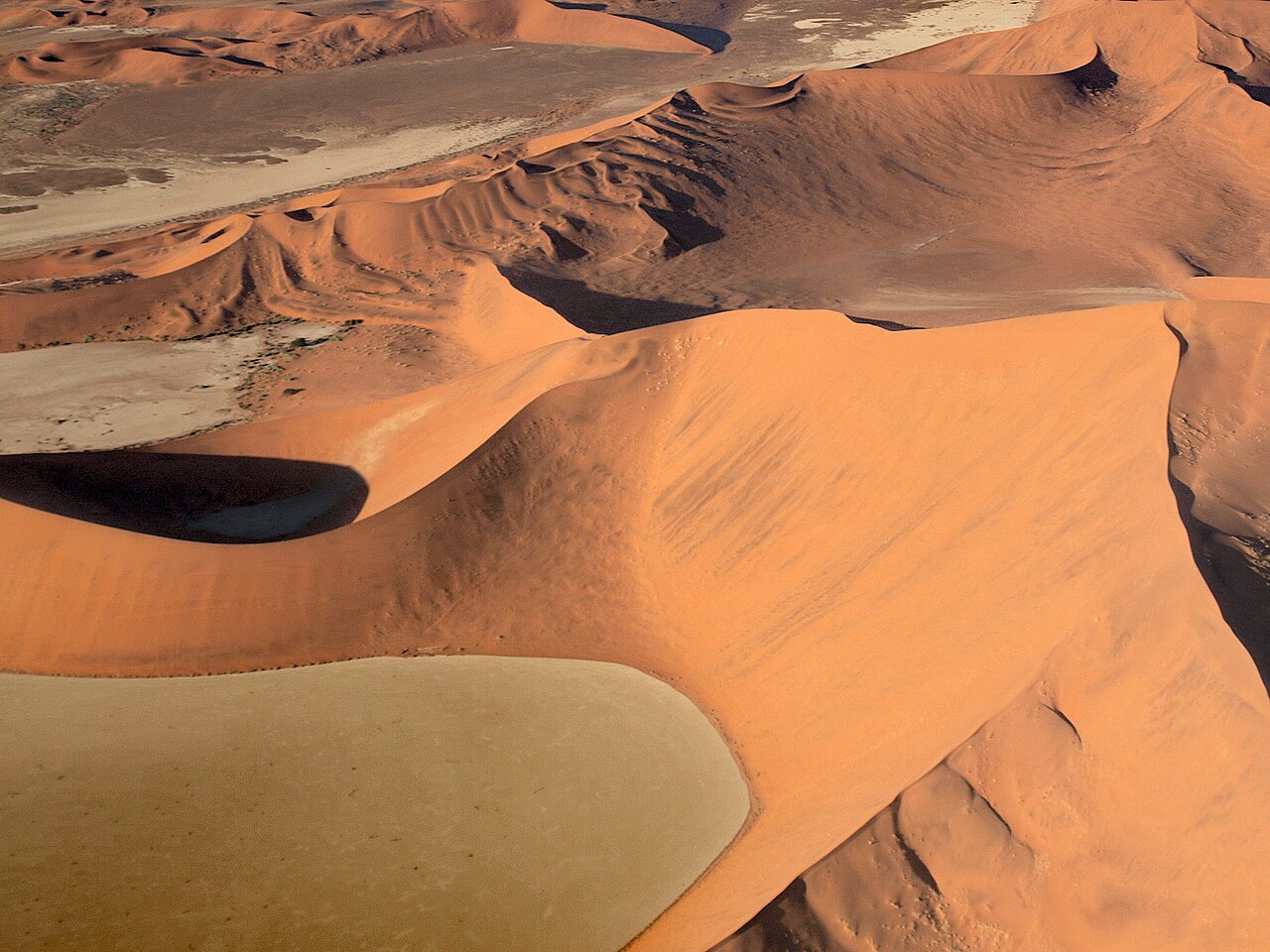
Sossusvlei lies within Namib-Naukluft National Park in the immense Namib Desert. The wider Namib Sand Sea was inscribed by UNESCO in 2013 for its exceptional dune landscapes and unusual fog-influenced ecology. That designation is for a vast desert system, not a single ticketed dune called Sossusvlei. The Sossusvlei excursion begins near Sesriem, proceeds toward dunes such as Dune 45 and continues toward the pans at Sossusvlei and Deadvlei. Visitors commonly enter the area early to avoid severe midday heat and to see the shadows across the dunes.
Countrywide, Namibia has several climatic and ecological zones. The Atlantic coast around Swakopmund and Walvis Bay is cool and fog-influenced; the interior desert becomes much hotter during the day, and Etosha in the north has its own dry-season wildlife pattern. An itinerary built only around a monthly national temperature would conceal these important contrasts. May–September allows more comfortable time on exposed sand while the northern dry season concentrates animals around waterholes.
Namibian environment authorities issue national-park entry permits through designated offices and park gates; Sesriem has an authorized permit point. Some activities and routes require separate authorization. For the final sandy section toward the pans, travelers need to establish whether their vehicle is suitable or use an approved shuttle or guide, rather than assuming an ordinary road car can proceed over deep sand.
Picture the place
Before midday, the dunes throw long angular shadows toward pale clay pans; the dark dead camel-thorn trees of Deadvlei contrast with the orange-red sand.
The easily missed detail
UNESCO’s Namib Sand Sea property covers more than three million hectares, and its wildlife ecology involves ocean-driven fog penetrating an exceptionally dry environment. Sossusvlei is a dramatic visitor gateway to that wider system, not its entirety.
A practical rhythm
- Before sunrise — Reach the Sesriem access point according to its current permitted entry time.
- Morning — Use the early cool hours for Dune 45 and the Sossusvlei/Deadvlei area.
- Later day — Return toward Sesriem before peak afternoon heat and save energy for a less exposed activity.
What could complicate the plan
Heat, dehydration, restricted vehicle access and remote roads are substantial risks. A park-entry permit is required, and off-road driving outside authorized areas is prohibited. The U.S. State Department currently describes tourist visas for U.S. citizens as required, with visa-on-arrival or advance online options and specific passport-document conditions.
What to do next
identifies complementary regions beyond the dunes; combines them into a realistic route.
Sources
- UNESCO World Heritage Centre — Namib Sand Sea, fog desert and inscription
- Namibian Ministry of Environment, Forestry and Tourism — park permits and prohibited activities
- UN Tourism, Namibian gastronomy — kapana, omatangana, millet and local dishes
- Namibian Environment Ministry, Etosha — Etosha size, wildlife and foundation
- U.S. State Department — visa and road-travel requirements