Paris / France When to visit
When should I visit Paris, France, for the best experience?
The short answer
The first three weeks of September — Paris-Montsouris records a 1991–2020 September precipitation normal of just 1.76 inches (44.7 mm) across 7.5 wet days with 174.7 hours of sunshine, the best combination of dry weather and usable daylight in the year.
The answer, with local context
Paris is drier than its reputation. Météo-France's Paris-Montsouris station, in the 14th arrondissement at 75 meters, gives an annual precipitation normal of 24.97 inches (634.3 mm) spread over 108.9 days with a millimeter or more, and 1,717.0 hours of sunshine a year. The rain here is frequent and light rather than heavy — about one day in three carries some, and very few carry much.
September's advantage is that it is dry without being dark. Its 44.7 mm is the second-lowest monthly precipitation normal of the year, behind February's 41.8 mm, and its 174.7 sunshine hours still allow long evenings, with daytime highs averaging 70.7°F (21.5°C) and nights at 55.4°F (13.0°C). July has more sun — 222.4 hours, the annual peak — and averages 78.3°F (25.7°C) by day, but carries 59.4 mm of rain and the heaviest visitor volumes of the year.
The months to think hard about are at the other end. December offers only 56.9 hours of sunshine across the whole month, with 62.0 mm of rain over 11.4 wet days and a mean daily high of 46.4°F (8.0°C) — about two hours of sun a day on average. January is barely better at 59.0 hours. May, often recommended on temperature grounds, is in fact the wettest month on the Montsouris record at 69.0 mm, with highs of 68.4°F (20.2°C).
Picture the place
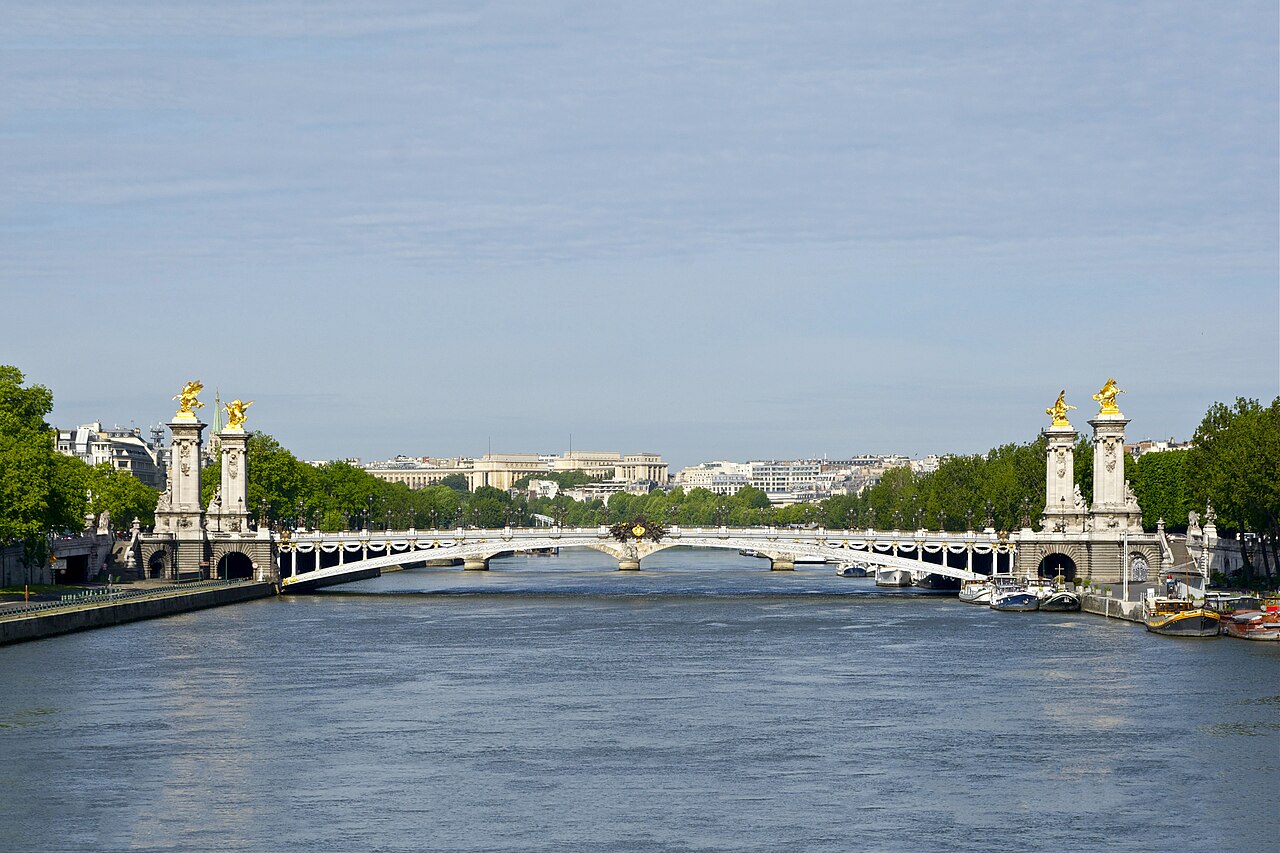
Early autumn is when the river itself becomes the best thing in the city. The Seine runs through the center on a slight curve, and with the sun lower the stone quays on the inner bank hold light into the evening while the opposite bank is already in shadow — which is why the bridges fill up around six.
The easily missed detail
What UNESCO inscribed in Paris in 1991 is "Paris, Banks of the Seine," under criteria (i), (ii) and (iv). The listed property is the river corridor through the city rather than a single building, which has a practical consequence: the most heritage-dense walk in Paris is free, has no opening hours, and is at its best precisely when the light is low — the long early-autumn evenings and the short, bright winter afternoons. A visit timed for that rather than for museum queues gets more out of the designation.
A practical rhythm
- September — The driest month of the warm half of the year and the shoulder of the season. Book accommodation early; the city is busy without being August-busy.
- June and July — 203.5 and 222.4 sunshine hours respectively, the two brightest months, at the cost of crowds and higher rates.
- December and January — Under 60 sunshine hours a month. Good for interiors and markets, poor for walking the river.
What could complicate the plan
The State Department places France at Level 2, Exercise increased caution, which affects nothing about when to go but is worth reading before booking. Paris's rain pattern means a waterproof layer matters more than an umbrella — on 108.9 days a year you will meet some rain, and almost none of it is heavy enough to stop a day. August brings a real practical wrinkle: it is when many independent restaurants and small businesses close for the month, so a food-led trip in late summer finds a thinner city than the visitor numbers suggest. And the May figures catch people out — it is the wettest month on the record, not a safe spring bet.
What to do next
Read the Paris things-to-do answer in this group for the Louvre's opening pattern and the city museums' schedule, and the Paris small-budget answer for what the free side of the city actually offers.
Sources
- Météo-France — Paris-Montsouris 1991–2020 monthly and annual precipitation, wet-day, sunshine and temperature normals, station altitude
- UNESCO World Heritage Centre — property name "Paris, Banks of the Seine", criteria (i)(ii)(iv), inscription year 1991
- U.S. Department of State — France travel advisory, Level 2, Exercise increased caution