Phuket / Thailand When to visit
When should I visit Phuket, Thailand, for the best experience?
The short answer
Mid-November to March — the Andaman dry season, once the southwest monsoon has pulled back off the west coast and the beach red flags come down.
The answer, with local context
Phuket's year is cut cleanly in two by the monsoon. The Thai Meteorological Department's pattern for the Andaman coast puts the southwest monsoon over the island from roughly May to October, with September the wettest month of the year, and a dry northeast regime from November to April, with January and February the driest. Temperatures barely move: daily highs sit in the high 80s to low 90s Fahrenheit, around 32 to 34°C, in every month, so the choice between seasons is about rain, sea state and visibility rather than heat.
Sea state is the part people underestimate. Phuket's main beaches — Patong, Karon, Kata, Surin, Kamala — face west into the Andaman Sea, which is the exposed side during the monsoon. Red flags go up on those beaches when rip currents are strongest, and they are not advisory decoration. In the dry months the same water is flat enough for the day-boat trade to run reliably, which is what makes the islands offshore accessible at all.
The monsoon also closes things. Thailand's Department of National Parks shuts the Similan Islands National Park, the best-known dive and snorkel destination reached from the Phuket side, from mid-May to mid-October each year, and applies a seasonal closure to Maya Bay in the Phi Phi group as well. A June trip to Phuket is a perfectly good beach holiday; it is not a boat holiday.
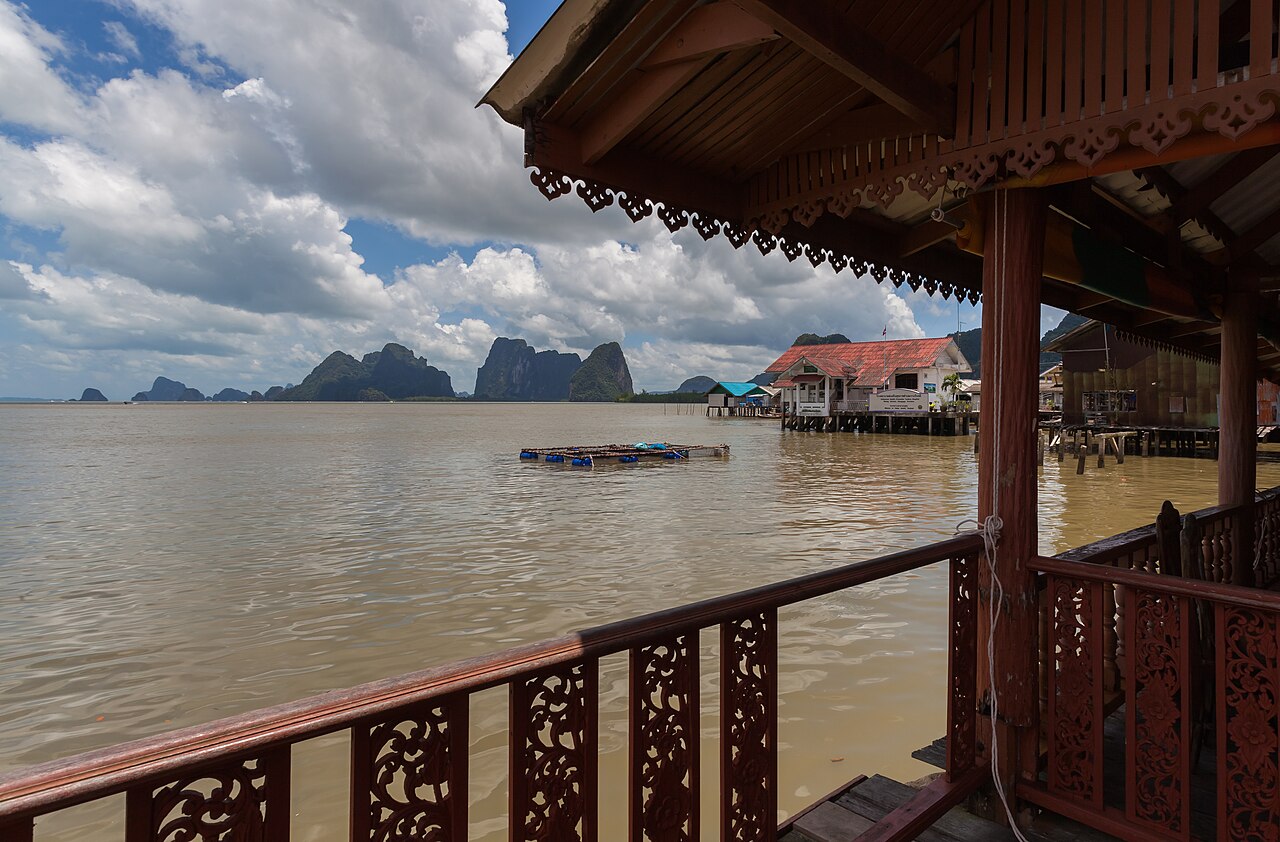
Picture the place
The island is connected to the mainland by the Sarasin Bridge at its northern tip, and in the dry months the inland road spine runs between rubber plantation and hill forest while the coast on either side stays within a few miles.
The easily missed detail
Phuket's biggest cultural event sits right at the edge of the monsoon. The Vegetarian Festival, held during the ninth lunar month of the Chinese calendar — which falls in late September or October — fills Phuket Town with street processions for roughly nine days. It is the one time of year when the island's Hokkien Chinese heritage, not its beaches, is the reason to be there, and it lands in the final weeks of the wet season when room rates are still low.
A practical rhythm
- Mid-November to February — Driest and calmest; west-coast swimming, day boats and the Similan season all running at once.
- March to April — Still dry, increasingly humid, and the last reliable weeks before the monsoon returns.
- May to October — Wet, with September the peak; park closures offshore, red flags inshore, and the lowest prices of the year.
What could complicate the plan
The US Department of State places Thailand at Level 1, Exercise Normal Precautions, in an advisory issued July 7, 2026, with Level 2 applied to the Thai-Cambodian border region and to Yala, Pattani and Narathiwat provinces — all far from Phuket, on the other side of the peninsula or the eastern frontier. Length of stay is governed by the visa exemption scheme covering ordinary passport holders of 93 countries and territories, effective from 15 July 2024, which permits up to 60 days with an extension of up to 30 more granted by the Thai Immigration Bureau. Monsoon swell can cancel a boat day with no notice, and the national park closures are fixed by date rather than by conditions.
What to do next
The Phuket things-to-do question in this group covers what is still worth doing when the boats are not running.
Sources
- Thai Meteorological Department — Andaman coast monsoon timing, wettest and driest months, temperature range
- Department of National Parks, Wildlife and Plant Conservation, Thailand — Similan Islands National Park seasonal closure and Maya Bay closed period
- US Department of State, Thailand travel advisory — advisory level, issue date and higher-level areas
- Royal Thai Embassy — visa exemption scheme, 60-day stay, 30-day extension, effective date
- UNESCO Intangible Cultural Heritage, Nora, dance drama in southern Thailand — southern Thai performance tradition inscribed in 2021