Roatán / Honduras Things to do
What are the most worthwhile things to do in Roatán on a first visit?
The short answer
Dive or snorkel the barrier reef, then spend real time in the island's Garifuna communities — whose language, dance and music UNESCO inscribed on the Representative List of the Intangible Cultural Heritage of Humanity in 2008, at the Committee's third session, as nomination file No. 00001.
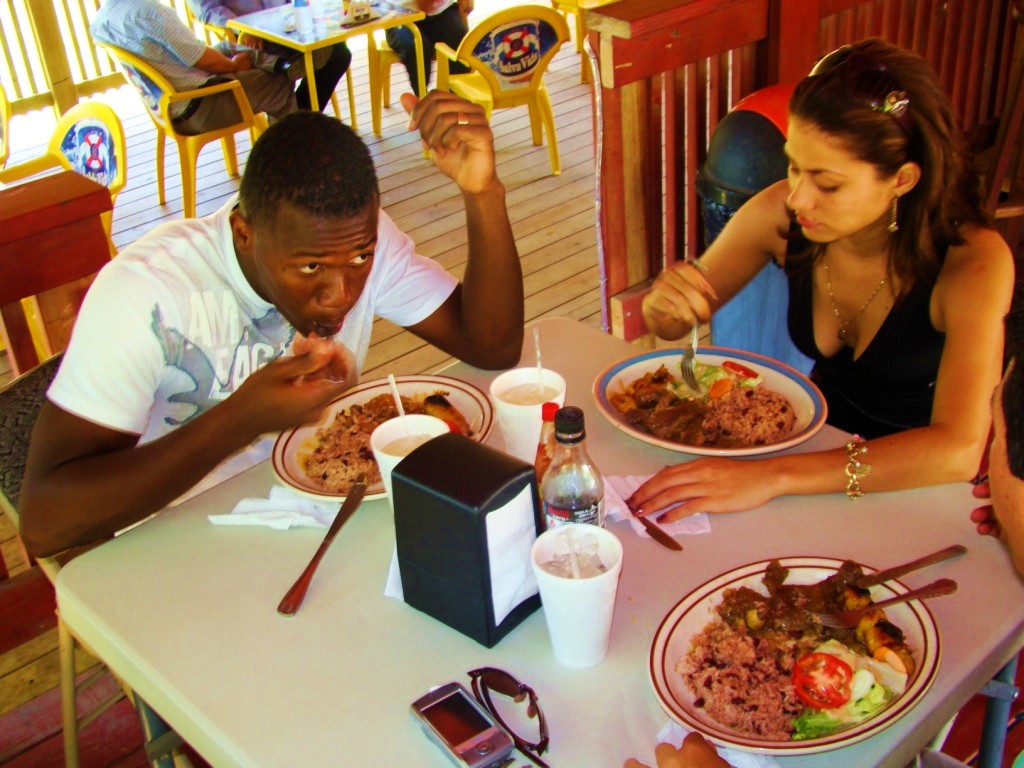
The answer, with local context
Two things make Roatán distinct rather than generically Caribbean, and only one of them is underwater.
The reef is the obvious draw: the island lies along the Mesoamerican reef system, close enough to shore that wall diving and shore snorkeling are both practical from the same base. That proximity is why Roatán supports the density of dive operations it does — the drop-off is a short boat ride, not an expedition.
The reef also has a published price and published plumbing. Roatán Marine Park asks a US$10 voluntary user fee, issued as a bracelet or token through dive shops and its own store at West End, and it maintains more than 329 dive and snorkel moorings so boats tie on instead of dropping anchor; anchoring inside the Bay Islands National Marine Park is prohibited outright. The park has also marked 39 boat channels with 186 channel markers and 20 demarcation markers, at least one marker per channel carrying a solar beacon, and it replaced or installed 139 dive mooring lines in 2024 alone. If you arrive by yacht rather than on a dive package, the 25 West End yacht moorings are rented at US$10 a day, US$50 a week or US$150 a month.
The cultural half is less marketed. The Garifuna are a people of mixed Indigenous Caribbean and African descent who, as UNESCO's inscription records, were forced in the eighteenth century to flee the Caribbean island of Saint Vincent and settled along the Atlantic coast of Central America. Their communities today are spread across Honduras, Guatemala, Nicaragua and Belize, and the 2008 inscription is a joint one covering all four states. The language belongs to the Arawakan group — not to Spanish or English — and UNESCO's file records that it is taught in only one village, and is under pressure from economic migration, discrimination and its absence from school systems. On Roatán that heritage is concentrated in specific settlements rather than distributed across the island, so visiting it is a deliberate choice of where to go, not something that happens in passing.
The practical frame around both is the US Department of State's advisory, which singles out resort areas in the Bay Islands as having a concentration of resources and being better policed than the Honduran mainland. It also notes that credit cards are accepted on Roatán as well as in large towns and cities — relevant on an island where dive packages and park fees are the main spend.
Picture the place
The reef edge runs close in along much of the coast, which is why the water changes color so abruptly offshore — pale over the sand and seagrass shelf, then deep blue where the wall begins. From the ridge road that runs the length of the island, both bands are visible at once on a clear day.
The easily missed detail
Garifuna drumming on Roatán is not folkloric decoration. UNESCO's inscription describes songs accompanied by drums and dances that carry practical knowledge — cassava growing, fishing, canoe building and the construction of baked mud houses. The repertoire is a transmission system, which is why performances in community settings differ substantially from hotel floor shows, and why the difference is worth seeking out. The language's precarious position — taught in a single village — is the reason the inscription exists at all.
A practical rhythm
- Early — Dive boats leave first; morning has the flattest water and the best light on the wall.
- Afternoon — Shore snorkeling over the inner shelf, where the reef comes close enough to swim to.
- Evening — Garifuna community events run late, and the music is the point rather than the backdrop.
What could complicate the plan
Honduras carries a national Level 3 advisory from the US Department of State, and the Bay Islands exception the advisory describes applies to resort areas rather than to the whole island or to mainland transit. Dive operations are weather-dependent and stop entirely in heavy swell. The Garifuna settlements are small living communities, not attractions with opening hours, and arriving without a local arrangement is both unproductive and intrusive.
What to do next
The Roatán when-to-visit question in this group sets out the hurricane season dates that determine dive reliability, and the food question covers Garifuna cooking and the seasonal fishing closures behind it.
Sources
- UNESCO Intangible Cultural Heritage, Language, dance and music of the Garifuna — 2008 inscription at 3.COM, file No. 00001, four states, Arawakan language group, single teaching village, knowledge carried in song
- US Department of State, Honduras Travel Advisory — Bay Islands policing note, card acceptance on Roatán, Level 3 rating
- NOAA National Hurricane Center, Tropical Cyclone Climatology — the cyclone season that governs dive-boat reliability
- Roatán Marine Park, Marine Infrastructure — mooring and channel-marker counts, 2024 mooring-line work, yacht mooring rates, anchoring prohibition
- Roatán Marine Park, User Fee Bracelets and Tokens — the US$10 voluntary user fee and where bracelets and tokens are sold