Rome / Italy Food and drink
Where should I eat in Rome, and which local food or drink is worth trying?
The short answer
Eat in Trastevere or Testaccio and order one of the four Roman pasta dishes — carbonara, cacio e pepe, gricia and amatriciana are variations on the same small set of ingredients, and knowing which is which tells you more about Roman cooking than any menu will.
The answer, with local context
The four share a logic. Gricia is guanciale, cured pork jowl, with pecorino and black pepper. Add egg and it becomes carbonara. Drop the pork and you have cacio e pepe, cheese and pepper alone. Add tomato to gricia and it is amatriciana. None of them contains cream, and the thickening comes from cheese emulsified with pasta water. The rest of the Roman repertoire runs on the same thrift: coda alla vaccinara, oxtail stewed slowly; carciofi alla giudia, whole artichokes flattened and twice-fried, from the Jewish quarter; supplì, fried rice balls with a filling of mozzarella; and the maritozzo, a sweet bun split and filled with whipped cream.
Where to sit matters as much as what to order. Trastevere, formally Rione XIII, occupies the right bank below the Janiculum hill, and its northern part climbs from Via Garibaldi below the monastery of San Pietro in Montorio — a dense grid of small streets where kitchens outnumber monuments. Testaccio, downriver, grew up around the old slaughterhouse, which is why the offal dishes are at their most serious there.
Timing a meal around sightseeing takes some care in Rome, because the big sites run long days. The Pantheon opens 9:00 to 19:00 with last entry at 18:30 and its ticket offices closing at 18:00; it is closed on 25 December and 1 January unless the Ministry schedules an extraordinary opening. The Vatican Museums run 8:00am to 8:00pm Monday to Saturday with last entry at 6:00pm, which means a late lunch near the Vatican and an evening visit are compatible in a way they are not at most European museums.
Picture the place
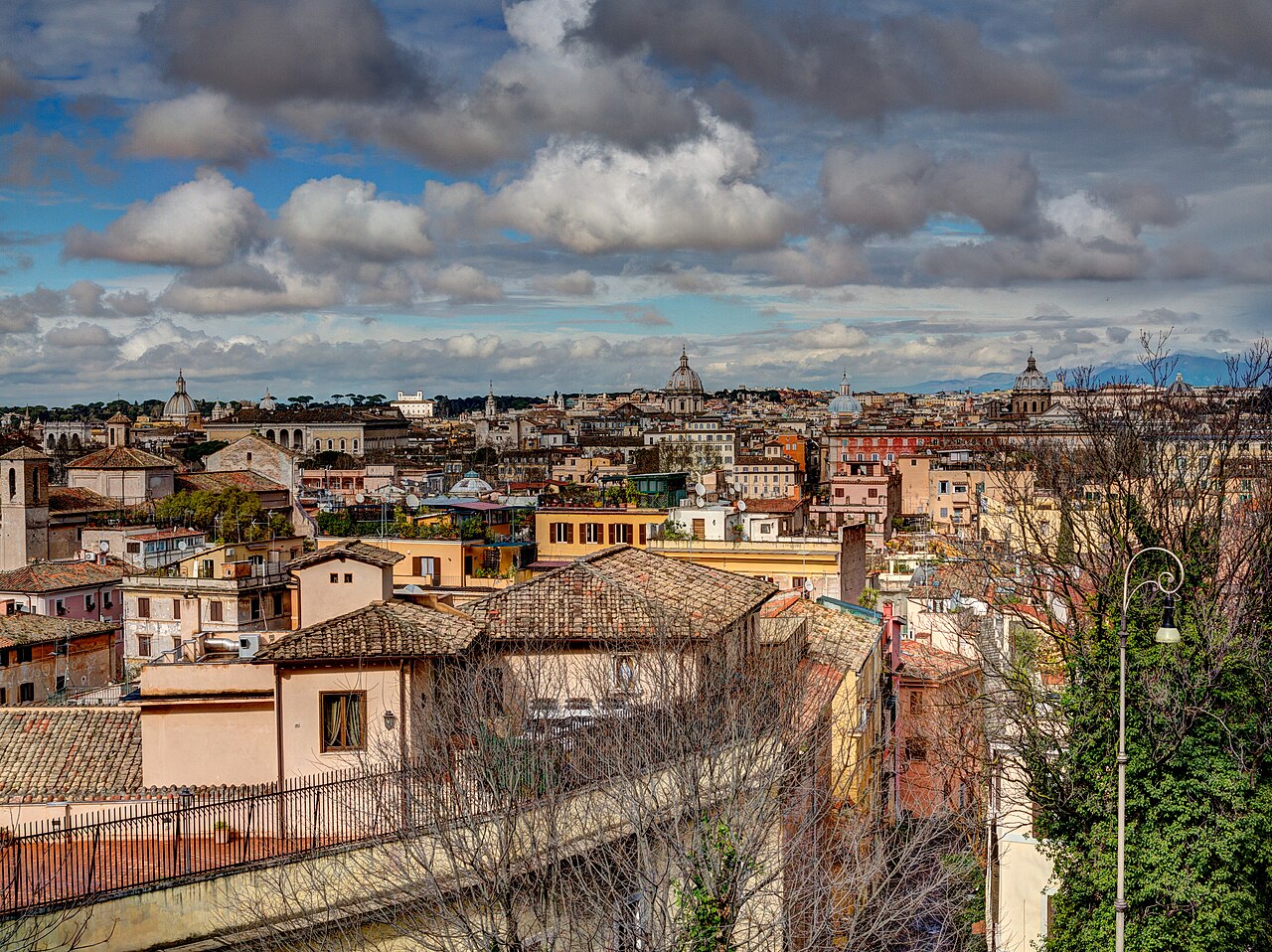
The streets of northern Trastevere rise steeply from Via Garibaldi, so the restaurant terraces there sit on stepped ground with the rest of the rione below them rather than on a flat piazza.
The easily missed detail
Ticket offices at the Pantheon shut a full hour before the building does — 18:00 against a 19:00 close, with last entry at 18:30. Anyone planning to combine an aperitivo with a late Pantheon visit needs to buy before six, and worshippers attending religious services enter without a ticket, since sales pause for liturgical celebrations. It is a church with an admission charge, not a museum with a chapel.
A practical rhythm
- Lunch — The pasta four are lunch dishes in Rome as much as dinner ones, and the kitchens that do them well do them at midday.
- Late afternoon — Supplì and a maritozzo are the snack bracket between meals; both are sold by the piece from bars and fry shops.
- Evening — Testaccio's offal cooking, coda alla vaccinara included, is slow food and belongs to a long dinner rather than a quick one.
What could complicate the plan
The US Department of State currently places Italy at Level 2, Exercise Increased Caution, so standard urban precautions apply in crowded dining districts and on transport. Practically, the two headline sites set hard edges around mealtimes: the Pantheon's ticket desks close at 18:00 and the Vatican Museums' last entry is at 18:00, so a leisurely Roman lunch can quietly cost you an afternoon's sightseeing. Trastevere's gradient is also real — the northern part of the rione climbs, and the prettiest tables are often up the hill.
What to do next
The Rome when-to-visit question in this group sets out the seasonal opening calendar that decides how long your sightseeing day actually runs.
Sources
- Ministero della Cultura (Italy) — Pantheon opening hours, last entry, ticket-office closing time, annual closures and worshipper access
- Vatican Museums (Holy See) — Monday-to-Saturday hours and last entry
- US Department of State — travel advisory level