Sicily / Italy Things to do
What are the most worthwhile things to do in Sicily on a first visit?
The short answer
Build the trip around three World Heritage properties in three different corners of the island — the Archaeological Area of Agrigento in the south, the Late Baroque Towns of the Val di Noto in the south-east, and Mount Etna on the east coast.
The answer, with local context
Agrigento is the oldest layer. UNESCO inscribed the Archaeological Area under criteria (i), (ii), (iii) and (iv), for a row of Doric temples it calls among the most outstanding monuments of Greek art and culture and among the most remarkable examples of Doric architecture in the world. The Greek colony was founded in the 6th century BCE. What the citation adds, and what most visitors miss, is that much of the ancient city still lies intact beneath fields and orchards — the temples are the visible fraction of a far larger site.
The Val di Noto is a different kind of property: eight towns rather than one monument. Caltagirone, Militello Val di Catania, Catania, Modica, Noto, Palazzolo Acreide, Ragusa and Scicli were all rebuilt after an earthquake in 1693, and UNESCO's citation describes them as the culmination and final flowering of Baroque art in Europe. They are inscribed under criteria (i), (ii), (iv) and (v).
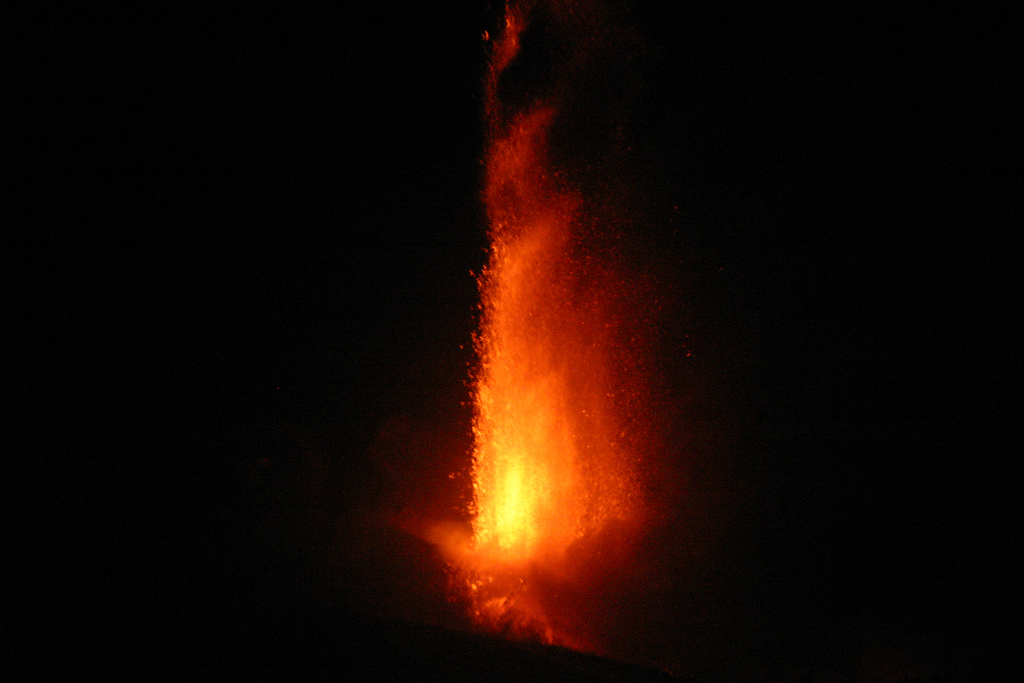
Mount Etna was inscribed in 2013, at the World Heritage Committee's thirty-seventh session, under criterion (viii) alone — the geological criterion, for ongoing processes and landforms rather than for scenery or ecology. That single-criterion listing is the clearest statement anywhere of what Etna is for: a mountain inscribed for what it is still doing, not for a view or a habitat.
Then there is the island's living heritage. Opera dei Pupi, the Sicilian puppet theater, was proclaimed in 2001 and inscribed on UNESCO's Representative List in 2008. Two main schools are recognized, in Palermo and in Catania, and they differ in puppet size and shape, in operating technique and in the range of painted backdrops. The repertoire draws on medieval chivalric literature, Renaissance Italian poems, the lives of saints and tales of notorious bandits, and the dialogue is largely improvised.
Picture the place
At Agrigento the temples stand in a line along a ridge with cultivated ground running out below and around them — the fields and orchards UNESCO notes are not a buffer added later but the cover over the rest of the ancient city.
The easily missed detail
Etna's park plan explains why the mountain feels differently managed at different heights. Zona A, the integral reserve, is to be kept with minimal human intervention. But inside Zona B the plan recognizes "Zone C Altomontane" — areas that already carried tourist facilities and ski lifts when the park was drawn, and which operate under the looser Zone C rules by derogation. The infrastructure you find high on the mountain exists because of a carve-out, not because the summit zone is open ground.
A practical rhythm
- South coast — Agrigento for the Doric temples and the 6th-century BCE colony beneath the orchards.
- South-east — The eight Val di Noto towns. Noto, Modica and Ragusa sit close enough together to read as one architectural project, which is what criterion (iv) describes.
- East — Etna, inscribed for geology alone, with Catania doubling as a Baroque town and a puppet-theater school.
What could complicate the plan
Etna was inscribed for ongoing geological processes, which is a formal way of saying the mountain is still building and still erupting — and access arrangements on the upper slopes change accordingly. Inside Zona A the park's own plan commits to keeping human intervention to a minimum, so there is no infrastructure solution to that. The Zone C Altomontane derogation also means the facilities higher up are legacy installations inside a protected area, not a built-out resort system. On arrival, note that the Entry/Exit System has been fully operational across all Schengen countries, Italy included, since 10 April 2026.
What to do next
The Sicily when-to-visit answer in this group covers the seasonal ferry tiers for the Aeolian islands; the trip-length answer sets out how far apart these three properties actually sit.
Sources
- UNESCO World Heritage Centre, Archaeological Area of Agrigento — criteria, 6th-century BCE founding, Doric temples, the city beneath fields and orchards
- UNESCO World Heritage Centre, Late Baroque Towns of the Val di Noto — the eight towns, the 1693 earthquake, criteria (i), (ii), (iv), (v)
- UNESCO World Heritage Centre, Decision 37 COM (Mount Etna) — 2013 inscription under criterion (viii)
- UNESCO Intangible Cultural Heritage, Opera dei Pupi — 2001 proclamation, 2008 inscription, the Palermo and Catania schools, repertoire and improvised dialogue
- Ente Parco dell'Etna, Piano delle attività — Zona A minimal-intervention rule and the Zone C Altomontane derogation
- European Commission, Migration and Home Affairs — EES fully operational across all Schengen countries since 10 April 2026