Sweden country guide When to visit
When is the best time to visit Sweden for Stockholm?
The short answer
June through August for the long days, late May or September for the balance — and Stockholm is an unusually well-documented place to make that judgement, because the Stockholm Observatory has meteorological measurements reaching back to 1756.
The answer, with local context
Sweden is long enough that "when to visit" has different answers at each end of it. For the 1991–2020 normal period, SMHI puts the annual mean temperature at about 45°F to 48°F (7°C to 9°C) in the south, and at roughly 32°F down to 28°F (0°C to −2°C) in the north, with the warmest conditions along the west coast and the Skåne and Blekinge coasts and the coldest in the northern part of the mountain range. Between the mildest south and the coldest north that is a gap of well over ten Fahrenheit degrees in annual mean, which is why a Swedish trip is really a choice of latitude as much as a choice of month.
Stockholm's own record is the longest thing about it. SMHI records that the observatory's measurements date back to 1756 and have always been taken at the site on Sveavägen, although the exact spot has shifted within the grounds. Stockholm is one of only three Swedish stations recognized by the World Meteorological Organization as Centennial Stations — alongside Hoburg and Bjuröklubb — a designation requiring at least a hundred years of measurements plus further criteria. Of the 234 WMO Centennial Stations, about ten began in the 1700s.
That matters to a traveler for a specific reason: when you read that a Stockholm summer is unusually warm or a winter unusually mild, the comparison is being drawn against a continuous local series stretching back more than 260 years, not against a few recent decades. Few capitals can say the same.
Picture the place
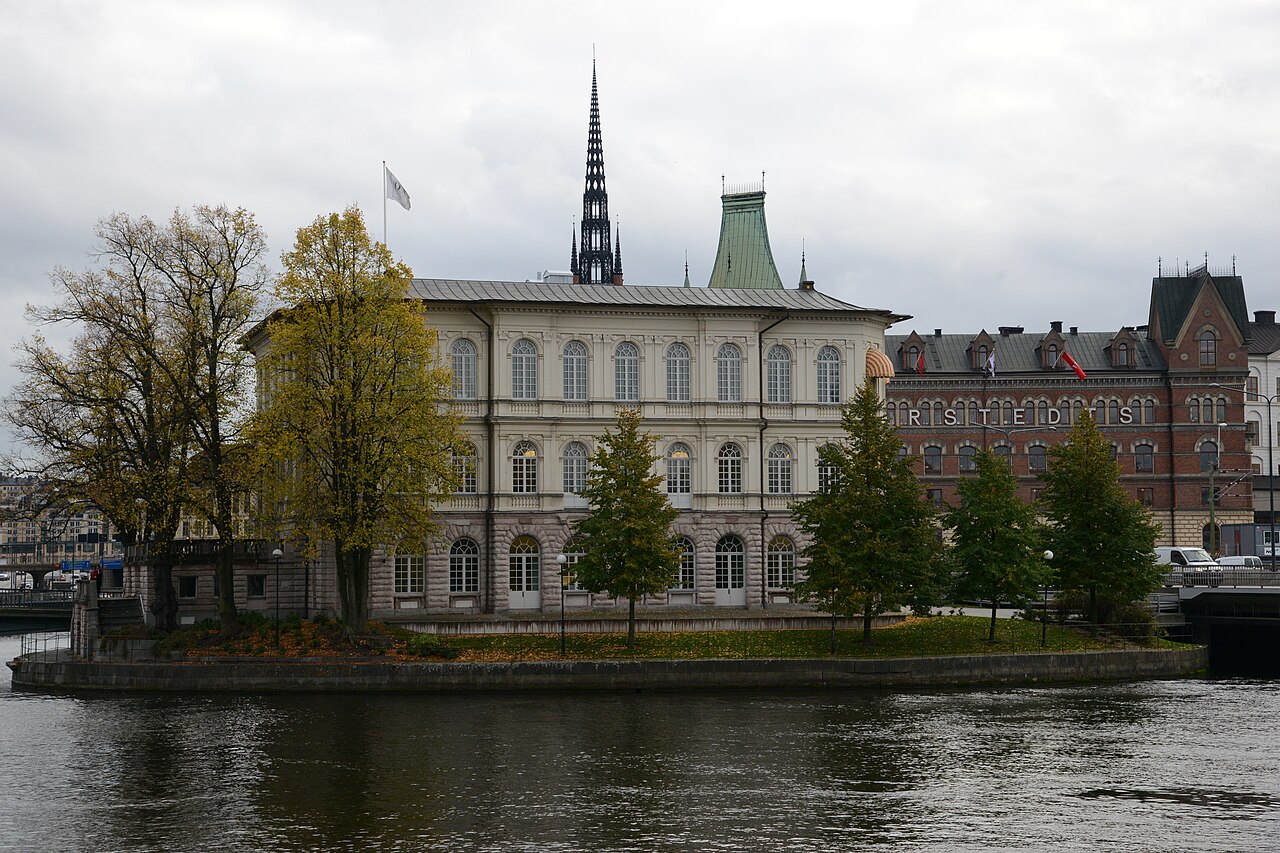
The reason the record sits where it does is the city's geography: an observatory on raised ground at Sveavägen, kept in use through two and a half centuries of the city growing around it. The surroundings changed; the instruments stayed.
The easily missed detail
Sweden's climate map is organized north-to-south, but its warm edge is on the west and south coasts rather than in the interior. SMHI's normals put the warmest annual means along the west coast and the Skåne and Blekinge coasts — so a traveler optimizing for mild weather should be looking at the southern seaboard, not simply at the lower half of the map.
A practical rhythm
- High summer — June to August, when the long northern days are the whole point of the trip.
- Shoulder — Late May and September, when the southern annual mean of 45°F to 48°F (7°C to 9°C) is a more useful guide than the national average.
- Winter — Worth it for the far north, where the annual mean runs from 32°F down to 28°F (0°C to −2°C) and the season is the attraction rather than the obstacle.
What could complicate the plan
If you are traveling with a dog, the Swedish Environmental Protection Agency's rules are fixed by date rather than by discretion: dogs must be on a leash from 1 March to 20 August, and a leash is strongly recommended for the rest of the year. That covers the entire spring and summer season. On entry, Sweden is a Schengen country, and the Entry/Exit System has been fully operational across all Schengen countries since 10 April 2026, which changes border processing rather than eligibility.
What to do next
The Sweden places-and-experiences answer in this group covers the right of public access and the country's World Heritage properties; the food answer explains the protected roe from the far north.
Sources
- SMHI, Normalperioden 1991–2020 — national annual mean temperature ranges north and south, and the warmest and coldest regions
- SMHI, Världens längsta observationsserier — Stockholm Observatory measurements since 1756, the Sveavägen site, Sweden's three WMO Centennial Stations, and the 234 Centennial Stations of which about ten began in the 1700s
- Swedish Environmental Protection Agency (Naturvårdsverket), The Right of Public Access handbook — the 1 March to 20 August leash requirement
- European Commission, Migration and Home Affairs — EES fully operational across all Schengen countries since 10 April 2026