Swiss Alps / Switzerland When to visit
When should I visit Swiss Alps, Switzerland, for the best experience?
The short answer
Pick your altitude before your month — the Swiss Alps Jungfrau-Aletsch World Heritage property alone spans from 809 meters to 4,274 meters, about 2,654 to 14,022 feet, and no single season serves that whole range.
The answer, with local context
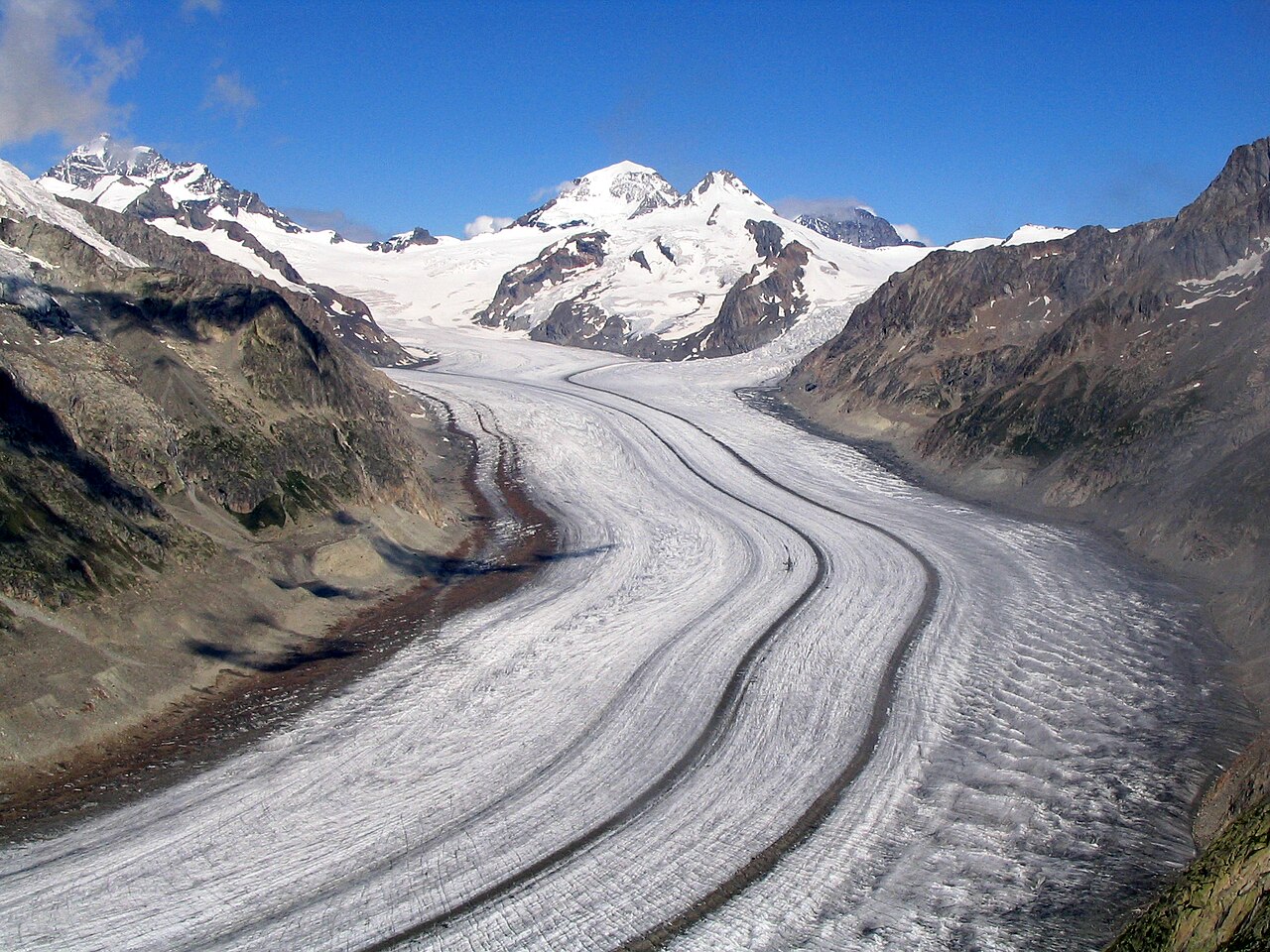
The vertical interval is the thing to plan around. A property whose lowest point sits at 2,654 feet and whose highest reaches 14,022 feet contains, in one protected area, valley floors that behave like temperate Europe and summits that are permanently glaciated. UNESCO describes this as the most glaciated part of the European Alps. Choosing when to visit is therefore the same decision as choosing how high to go: the question is not whether July or February is better, but which band of that 11,000-foot interval you intend to spend your days in.
The property's own ecology shows where the transitions sit. UNESCO's citation highlights the colonization of land exposed by retreating glaciers, including the upper and lower tree lines of the Aletsch forest, as a notable example of plant succession. The tree lines are the visible marker of where the usable walking country gives way to rock and ice, and they are the practical boundary for anyone planning a trip around hiking rather than mountaineering.
This has been a World Heritage property since 2001, and that long-standing designation is partly why the area is so well mapped and so clearly zoned at different heights. The management of the Jungfrau-Aletsch region is the model for how the Swiss Alps are presented to visitors.
Picture the place
The Aletsch forest's upper and lower tree lines are not a gradual thinning but a legible edge — above it, ground recently uncovered by a retreating glacier and being colonized by plants; below it, mature forest. Walking up through that boundary is walking out of one climate zone into another within a single morning.
The easily missed detail
Switzerland's protected food designations are seasonal markers in their own right, and they tell you something about the agricultural year in these valleys. The Swiss federal authorities record that the Botzi pear has held AOP status since 2007, and that the AOP label as a whole marked its twenty-fifth anniversary in 2022. The designations attach to harvests and to production seasons, so a visit timed to an AOP product's season is a visit timed to when a valley is working rather than when it is simply open.
A practical rhythm
- Low band — The valley floors near the property's 809-meter (2,654-foot) low point are usable across the longest season.
- Mid band — Around and below the Aletsch forest's tree lines is where hiking country ends; this is the band that defines a summer trip.
- High band — Above the tree lines, in the most glaciated part of the European Alps, the season is short and the terrain is glaciated rather than walked.
What could complicate the plan
Switzerland is in the Schengen Area, so the European Commission's border systems apply: the Entry/Exit System has been fully operational across all Schengen countries since 10 April 2026, which changes how arrivals are processed. Within the property itself, the constraint is physical rather than administrative — 11,000 feet of vertical range in one protected area means that conditions at your accommodation tell you very little about conditions where you intend to walk.
What to do next
The Swiss Alps things-to-do answer in this group covers the Aletsch glacier and the named peaks in detail; the food answer sets out the AOP and IGP products that define alpine eating.
Sources
- UNESCO World Heritage Centre, Swiss Alps Jungfrau-Aletsch — the 809 m to 4,274 m altitude range, the most glaciated part of the European Alps, the Aletsch forest tree lines and plant succession, first inscription in 2001
- Swiss Federal Department of Foreign Affairs, About Switzerland — Botzi pear AOP since 2007 and the AOP label's twenty-fifth anniversary in 2022
- European Commission, Migration and Home Affairs — EES fully operational across all Schengen countries since 10 April 2026