Switzerland country guide Food and drink
What local dishes should I try in Switzerland, and where should I look for them?
The short answer
Order from the register — Switzerland protects 41 named specialities, 25 of them as AOP and 16 as IGP, and that list maps the country's food more honestly than any menu does.
The answer, with local context
Twelve of the AOP entries are cheeses, and they are not interchangeable. Gruyère, Emmentaler, Sbrinz and Tête de Moine are the names that travel; L'Etivaz, Glarner Alpkäse, Formaggio d'alpe ticinese, Walliser Raclette, Berner Alpkäse with its hard-shaved Hobelkäse form, and the Werdenberger, Liechtensteiner and Bloder sour cheeses mostly do not. Two separate Vacherins are registered — Vacherin fribourgeois and Vacherin Mont-d'Or — which matters at the counter, because they are not the same cheese.
The cured meats are even more regional. Bündnerfleisch comes from Graubünden, Walliser Trockenfleisch and Walliser Rohschinken from the Valais, Saucisson vaudois and Saucisse aux choux vaudoise from the canton of Vaud, Longeole from Geneva, St. Galler Bratwurst from St Gallen, and the Mostbröckli, Pantli and Siedwurst trio from Appenzell. Two are AOP rather than IGP: Boutefas and Jambon de la Borne.
For wine, the designation to follow is a landscape rather than a bottle. UNESCO inscribed Lavaux, Vineyard Terraces in 2007 — the terraced slopes above Lake Geneva — and the wines of those terraces are drunk locally far more than they are exported.
Reaching all of this is the practical half of the question. A Swiss Travel Pass covers unlimited train, bus and boat travel plus local public transport in more than 90 towns and cities, which is what makes it realistic to taste Ticino and the Valais on the same trip.
Picture the place
Lavaux is a working agricultural slope, not a viewpoint: the terraces step down toward Lake Geneva in narrow stone-walled strips, and the vineyards are close enough to the water that the lake sits in the frame from almost every row.
The easily missed detail
Raclette is protected only in a specific form — Walliser Raclette — so the word on a menu elsewhere in the country tells you about a method, not an origin. The same logic runs through the whole register: 41 entries, each tied to a defined area, which is why the cheese board in Lugano should not look like the one in Appenzell. If you want a single organizing principle for eating across Switzerland, let the canton pick the dish.
A practical rhythm
- In the Valais — Walliser Raclette, Walliser Trockenfleisch and Walliser Rohschinken are all registered to the same canton, so one stop covers the cheese and both cured meats.
- In Graubünden — Bündnerfleisch is the IGP to ask for by name; it is the one eastern Switzerland is known for.
- Around Lake Geneva — Combine the Lavaux terraces with Vaud's own protected sausages, Saucisson vaudois and Saucisse aux choux vaudoise.
What could complicate the plan
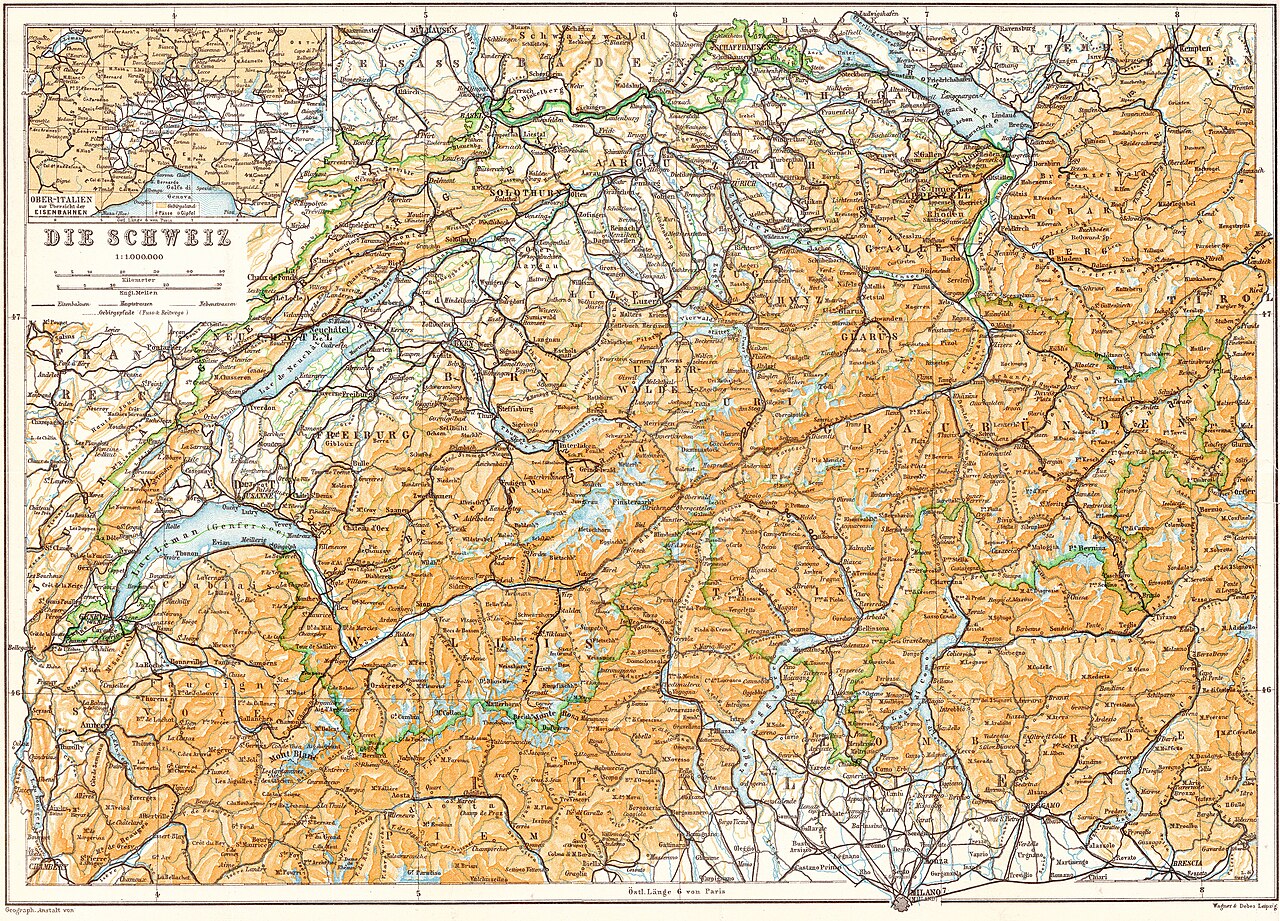
No vaccinations are legally required for entry to Switzerland, so the obstacles here are logistical. The register's geography is the main one: Formaggio d'alpe ticinese is made south of the Alps and Walliser Trockenfleisch in the Rhône valley, so eating both means crossing the mountains, not switching restaurants. Twelve of the twenty-five AOP entries are cheeses tied to separate cantons, which is more regional spread than a single week of travel can cover.
What to do next
The Switzerland question on what to see beyond the highlights covers the Jura and Ticino routes that put you near these producers; the trip-planning answer handles the pass arithmetic.
Sources
- Swiss AOP-IGP register, Register of specialities with guarantee of origin and a protected geographical indication — total registered products, AOP and IGP split, cheese and meat entries
- UNESCO World Heritage Centre — Lavaux, Vineyard Terraces inscription year
- Switzerland Tourism / Swiss Travel System — network coverage and local transport in over 90 towns and cities
- US Department of State — vaccination requirements for entry