Sydney / Australia When to visit
When should I visit Sydney, Australia, for the best experience?
The short answer
March and April — Sydney's autumn, when the sea is still at its warmest, the humidity of February has broken, and the city runs its festival season at school-term prices rather than holiday ones.
The answer, with local context
Sydney's climate is a long warmth with a mild interruption, and the Bureau of Meteorology's Observatory Hill normals draw it precisely. January averages highs of 81°F (27.0°C), March 78°F (25.7°C) and April 75°F (23.6°C), while July — the coolest month — still manages 64°F (17.9°C). Rain is the city's constant rather than its season: about 45 inches (1,150 mm) a year across some 95 rain days, with the wettest stretch running from February into June — June is, on the 1991–2020 normals, the single wettest month at 5.6 inches (142 mm) — and the driest weeks arriving in September. The extreme is real but rare: the harbor station's record is 114.4°F (45.8°C), set on January 18, 2013.
The sea keeps summer's secret longest. Sydney's ocean temperature runs from about 66°F (19°C) in July to 75°F (24°C) in January, and it lags the air by a month or more — the water in March and April is warmer than the water in December, even as the beaches empty. That lag is the whole argument for autumn: swimming season outlasts the crowds, the evenings cool enough for a jacket by April, and the calendar fills in. The Sydney Gay and Lesbian Mardi Gras — a parade held since 1978 — anchors late February and early March, and autumn brings the Royal Easter Show and the Biennale in its even years.
The two great exceptions argue for other months entirely. New Year's Eve is Sydney's global signature — the City of Sydney counts more than a million spectators around the foreshore for the midnight fireworks — and it is booked and priced like it. And winter has one festival that justifies the season: Vivid Sydney, running 23 nights from late May into June since 2009, when Destination NSW turns the harbor into the Southern Hemisphere's largest festival of light, with the Opera House sails as its canvas. December and January are the honest peak: hottest, busiest, dearest, and wet in the afternoons.
Picture the place
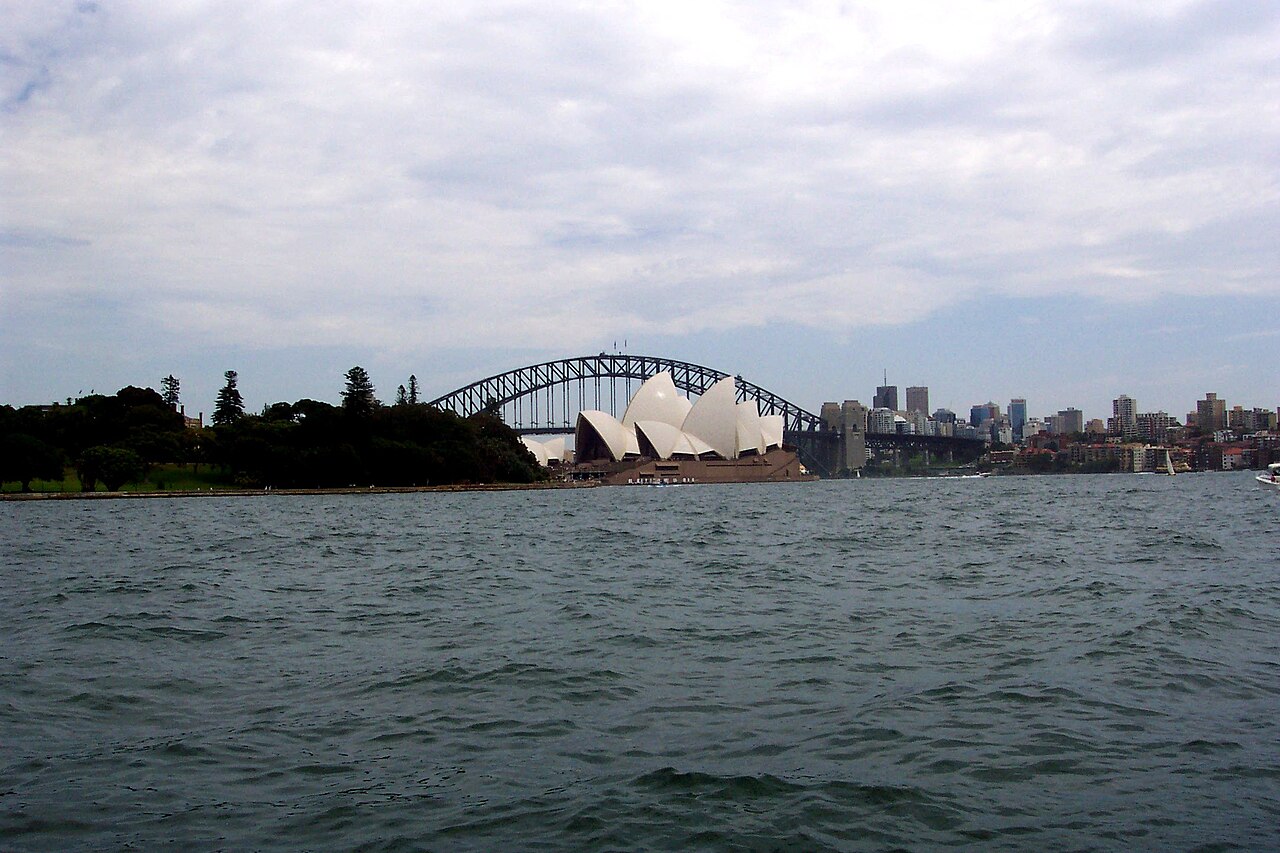
On a March morning the harbor is doing its quiet impression of summer — ferries crossing a flat, bright sheet of water under a sky rinsed clean by last night's change, the Opera House tiles lit cream against the blue, and the Bondi-bound buses already carrying towels.
The easily missed detail
Sydney's sunniest month is in midwinter. The Bureau of Meteorology's clear-day averages for Observatory Hill give August 13.4 clear days and July 12.0 — against 6.8 for January. The harbor city's postcard light belongs to its winter: low, golden, and reliably blue-skied, which is why Vivid's June nights so rarely get rained on.
A practical rhythm
- Morning — Autumn mornings are the harbor's best hours: a ferry to Manly or the harbor pool swims before nine, while the light is low and the water is glass.
- Midday — When a wet-season-style downpour arrives, it arrives in the afternoon build-up; galleries, the Queenstown Building's arcades and yum cha in Haymarket are the city's standing midday shelters.
- Evening — March evenings hold the warmth past sunset: dinner in Balmain or Surry Hills, and the harbor ferries lit up on the last runs across the water.
What could complicate the plan
The Easter long weekend and the April school holidays briefly restore peak pricing inside the recommended window, and the autumn rain pattern is real — the March–June wetness means any given week can lose two days to weather, so beach plans need a gallery in reserve. At the other extreme, winter visitors unprepared for Vivid's popularity find the Circular Quay precinct at crowd levels that rival New Year's Eve, while the festival's best light installations queue like it too.
What to do next
Default to March or April, book New Year's Eve a year out if that is the trip, and let Vivid pull you into June only deliberately. The things-to-do list in this group assumes the autumn light.
Sources
- Bureau of Meteorology — Observatory Hill climate normals, 1991–2020: monthly temperatures, annual rainfall of about 1,150 mm, June as the wettest month, clear-day averages, and the 45.8°C record of January 18, 2013
- Destination NSW — Vivid Sydney, running since 2009 over 23 nights in late May and June as the Southern Hemisphere's largest light festival
- City of Sydney — the New Year's Eve foreshore audience of more than a million, and Mardi Gras's place in the February–March calendar