Evago

Togo country guide Food and drink

What local dishes should I try in Togo, and where should I look for them?

The short answer

Follow the grain line and the water — maize dishes through the south and center, millet and sorghum in the north, and fish almost anywhere, because Togo's coastal wetland alone supplies over 85% of the country's annual fish production.
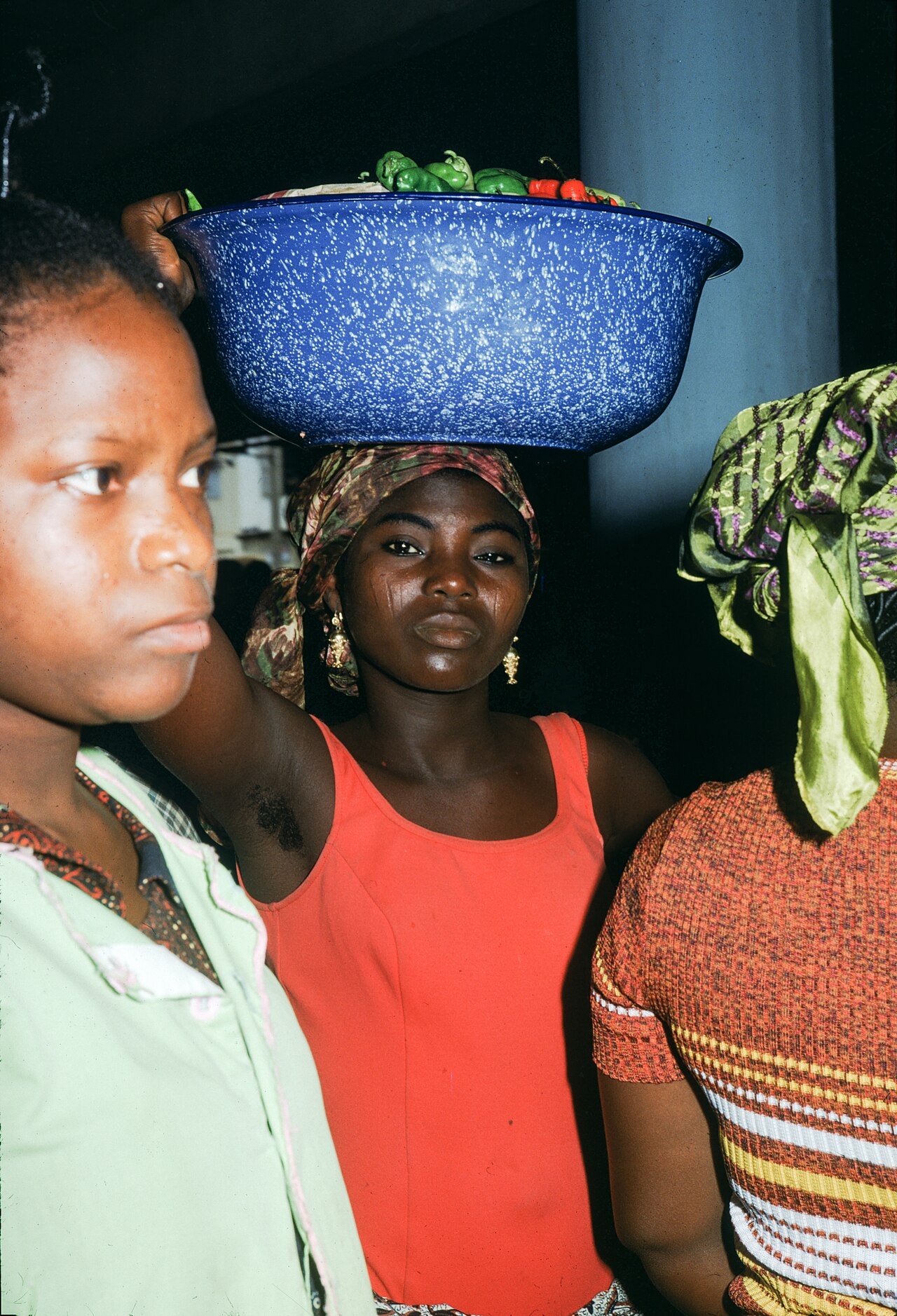
Colloque sur la promotion de la femme face aux responsabilités communales, organisé par la Fédération mondiale des Villes jumelées à Lomé au Togo du 26 au 31 juillet 1975.
This file is licensed under the Creative Commons Attribution-Share Alike 4.0 International license. You are free: to share – to copy, distribute and transmit the work to remix – to adapt the work Under the following conditions: attribution – You must give appropriate credit, provide a link to the license, and indicate if changes were made. You may do so in any reasonable manner, but not in any way that suggests the licensor endorses you or your use. share alike – If you remix, transform, or build upon the material, you must distribute your contributions under the same or compatible license as the original.https://creativecommons.org/licenses/by-sa/4.0CC BY-SA 4.0 Creative Commons Attribution-Share Alike 4.0 truetrue Author .mw-parser-output .commons-creator-table{background-color:#f0f0ff;box-sizing:border-box;font-size:95%;text-align:start;color:inherit}.mw-parser-output .commons-creator-table>tbody>tr{vertical-align:top}.mw-parser-output .commons-creator-table>tbody>tr>th{background-color:var(--background-color-neutral,#e0e0ee);font-weight:bold;text-align:start;color:inherit}.mw-parser-output .mw-collapsible-toggle-expanded.mw-collapsible-arrowtoggle,.mw-parser-output .mw-collapsible-toggle-expanded .mw-collapsible-arrowtoggle{padding-left:20px!important;background-image:url("https://upload.wikimedia.org/wikipedia/commons/1/10/MediaWiki_Vector_skin_action_arrow.png");background-repeat:no-repeat;background-position:left center}.mw-parser-output .mw-collapsible-toggle-collapsed.mw-collapsible-arrowtoggle,.mw-parser-output .mw-collapsible-toggle-collapsed .mw-collapsible-arrowtoggle{padding-left:20px!important;background-repeat:no-repeat}.mw-parser-output .commons-creator-table[dir="ltr"] .mw-collapsible-toggle-collapsed.mw-collapsible-arrowtoggle,.mw-parser-output .commons-creator-table[dir="ltr"] .mw-collapsible-toggle-collapsed .mw-collapsible-arrowtoggle{background-image:url("https://upload.wikimedia.org/wikipedia/commons/4/41/MediaWiki_Vector_skin_right_arrow.png");background-position:left center}.mw-parser-output .commons-creator-table[dir="rtl"] .mw-collapsible-toggle-collapsed.mw-collapsible-arrowtoggle,.mw-parser-output .commons-creator-table[dir="rtl"] .mw-collapsible-toggle-collapsed .mw-collapsible-arrowtoggle{background-image:url("https://upload.wikimedia.org/wikipedia/commons/1/1e/MediaWiki_Vector_skin_left_arrow.png");background-position:right center}@media(max-width:719px){.mw-parser-output .commons-creator-table,.mw-parser-output .commons-creator-table>tbody{box-sizing:border-box;display:block;width:100%}.mw-parser-output .commons-creator-table>tbody{border-right:1px solid var(--border-color-base,#aaa);border-bottom:1px solid var(--border-color-base,#aaa)}.mw-parser-output .commons-creator-table>tbody>tr{border-top:1px solid var(--border-color-base,#aaa);display:flex;flex-wrap:wrap}.mw-parser-output .commons-creator-table>tbody>tr>th{border-left:1px solid var(--border-color-base,#aaa);padding:2px;flex:1 1 100%}.mw-parser-output .commons-creator-table>tbody>tr>td{border-left:1px solid var(--border-color-base,#aaa);padding:2px;flex:1 1}}@media(min-width:720px){.mw-parser-output .commons-creator-table{border:1px solid var(--border-color-base,#aaa);border-collapse:collapse;border-spacing:0;padding:5px}.mw-parser-output .commons-creator-table>tbody>tr>th,.mw-parser-output .commons-creator-table>tbody>tr>td{border:1px solid var(--border-color-base,#aaa);padding:2px}.mw-parser-output .commons-creator-table>tbody>tr>.halfwidth{max-width:10em}.mw-parser-output .commons-creator-table>tbody>tr>.fullwidth{max-width:20em}}@media screen{html.skin-theme-clientpref-night .mw-parser-output .commons-creator-table{background-color:#0c0b19}}@media screen and (prefers-color-scheme:dark){html.skin-theme-clientpref-os .mw-parser-output .commons-creator-table{background-color:#0c0b19}} Françoise Foliot (1924–2019) Description French illustrator photographer Date of birth/death 14 May 1924 30 August 2019 Location of birth/death 5th arrondissement of Paris Narbonne Authority file : Q60558828 VIAF: 264145541847596600744 SUDOC: 19058050X creator QS:P170,Q60558828 · CC BY-SA 4.0 File source

The answer, with local context

Togo's plate is organized by latitude, and the official crop record makes the division explicit. FAO's country brief names maize as the main-season crop of the southern and central areas, with millet, sorghum, rice and other coarse grains grown in the north. Aggregate 2025 cereal production came in at nearly 1.7 million tonnes, about 15% above the previous 5-year average. So the starch that arrives alongside a stew in Lomé is not the starch that arrives in the Atacora, and asking for the same dish 250 miles apart gets you a different grain.

Price movement tells you where the pressure was. By June 2026 maize was trading 25% to 40% below its level a year earlier, and rice was flat to 15% lower, with maize falling by up to 15% and rice by up to 10% between March and June 2026 alone. That is the backdrop to a cheap, grain-heavy everyday diet.

The protein side runs through the lagoons. The Ramsar citation for Togo's coastal wetlands records that the zone yields more than 85% of the country's annual fish production and that local communities also harvest shellfish, bushmeat and medicinal plants from it. Freshwater, brackish and marine catch all land within a short radius of the capital.

For the cash crops, Togo's leading agricultural commodities are cocoa, coffee and cotton, with cashew and soybean production expanding, in a sector making up roughly 40% of national GDP.

Picture the place

The wetland that feeds much of this is a 591,000-hectare belt of mangrove, lagoon, marsh and river mouth running the full length of the coast, dominated by Rhizophora racemosa and Avicennia germinans. Fish, shellfish and crustaceans come out of a system where the sea, the lagoons and the Mono river country all meet within a few miles.

The easily missed detail

Togo's coastal fishery operates without a management plan — the Ramsar listing records that none existed at designation, with the environment ministry working against unsustainable fishing and illegal hunting while a mangrove-centered national wetland strategy was still in draft. Nothing about that changes what is for sale, but it does mean the catch at a lagoon-side grill is governed by custom and local enforcement rather than a published quota, and the species on offer shifts with what the boats found.

A practical rhythm

  • Lomé and the south — Maize as the default grain, with lagoon and sea fish from the wetland belt that supplies most of the national catch.
  • The central corridor — Still maize country, and the cocoa, coffee and cashew growing zone.
  • The far north — Millet, sorghum and rice, in the region where Koutammakou's granaries sit on the roofs of the houses.

What could complicate the plan

Food availability is seasonal in a way that affects visitors indirectly. FAO identified a lean season from June to August 2026 in which about 332,000 people, 5% of the population analyzed, were expected to face severe acute food insecurity — an improvement on roughly 625,000, or 10%, in the same window of 2025. Eating well is easy in Togo, but market variety narrows in those months. Health formalities bind too: proof of yellow fever vaccination is required of all travelers over 1 year of age, presented as a WHO yellow card, and travelers without it can be refused entry.

What to do next

The Togo places-and-experiences answer covers the coastal wetland and the central park as destinations in their own right, and the trip-planning answer handles visas and vaccination paperwork in full.

Sources

  1. FAO GIEWS, Togo country brief — cereal output, regional crop geography, maize and rice price movement, lean-season food-insecurity figures
  2. Ramsar Sites Information Service, Zones Humides du Littoral du Togo — share of national fish production, mangrove species, local harvesting, management status
  3. US International Trade Administration, Togo agricultural sector — leading commodities and agriculture's GDP share
  4. US Department of State, Togo country information — yellow fever certificate requirement

All questions about Togo country guide