Vietnam country guide Places and experiences
What should a first-time traveler see in Vietnam beyond the obvious highlights?
The short answer
Spread the trip across the nine properties Vietnam holds on the World Heritage List, two of which now cross provincial and national borders — Ha Long Bay – Cat Ba Archipelago, and Phong Nha-Ke Bang National Park paired with Hin Nam No National Park in Laos.
The answer, with local context
UNESCO records nine inscribed properties for Viet Nam, and the named list spans almost the entire length of the country: the Central Sector of the Imperial Citadel of Thang Long in Hanoi, Ha Long Bay – Cat Ba Archipelago on the northeast coast, the Trang An Landscape Complex inland in the north, the Complex of Hué Monuments and My Son Sanctuary on the central coast, and the transboundary Phong Nha-Ke Bang and Hin Nam No parks straddling the Vietnamese–Lao frontier. Three further properties complete the nine.
Two of those names changed recently, and the change is worth understanding because it affects itineraries. Ha Long Bay's listing now explicitly includes the Cat Ba Archipelago, which means the karst landscape people associate with one bay is formally recognized across a far wider area, including islands reached from Hai Phong rather than Ha Long city. Phong Nha-Ke Bang is now inscribed together with Hin Nam No in Laos as a single transboundary property — the cave systems do not stop at the border, and neither does the designation.
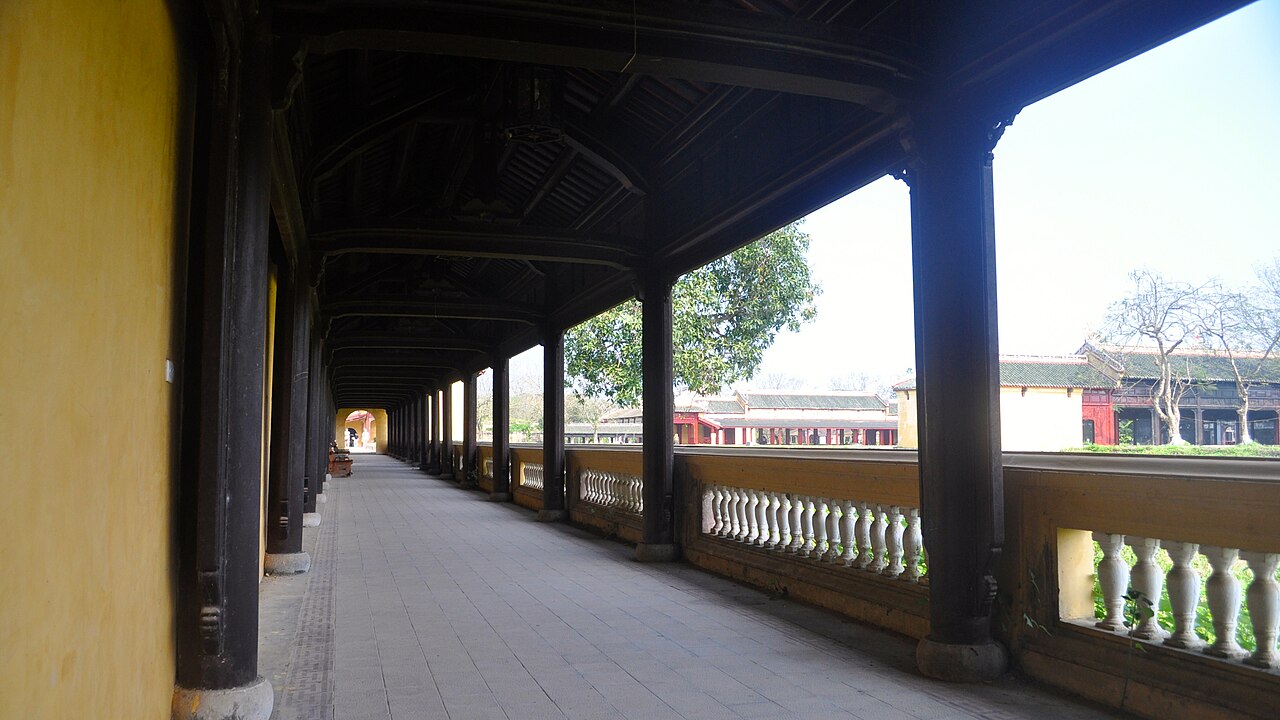
Hué repays more time than most itineraries give it. The Complex of Hué Monuments covers the walled citadel and palace of Vietnam's former imperial capital, whose fortifications are ringed by a moat fed from the Perfume River. It is a city built around a single architectural idea rather than a city with a monument in it, and a full day inside the walls is not excessive.
Then there is the island that sits outside the mainland rhythm entirely. Phu Quoc, off the southwest coast in the Gulf of Thailand, is the one part of Vietnam US citizens can visit without arranging a visa in advance — the US State Department records an exception for stays of 30 days or less on the island. For a traveler combining Vietnam with neighboring countries, that exception is a real planning lever.
Picture the place
The karst towers of the Cat Ba and Ha Long waters rise straight out of the sea with undercut bases where the tide has worn them, so the islands look narrower at the waterline than above it. Inland at Trang An the same limestone stands in flooded paddy and river channels instead of seawater, and the rock is reflected rather than surrounded.
The easily missed detail
A transboundary inscription has a practical consequence travelers rarely anticipate: the most impressive parts of a listed landscape may require a different country's entry stamp. With Phong Nha-Ke Bang and Hin Nam No listed jointly, seeing the whole property means crossing into Laos, and that is a separate visa question rather than a day trip from Dong Hoi.
A practical rhythm
- North — Hanoi's citadel, then the Trang An karst, then the Cat Ba side of the Ha Long listing rather than only the Ha Long city departure points.
- Center — Hué for the imperial complex and My Son for the Cham temple sanctuary, which sit close enough to combine over several days.
- South and offshore — Finish on Phu Quoc, where the visa exception makes a tail-end extension unusually easy to arrange.
What could complicate the plan
Distance is the real enemy of this itinerary. Vietnam's north–south railway runs roughly 1,070 miles (1,726 km), which is a useful gauge of how much ground nine scattered properties cover — attempting more than three regions in two weeks means most of the trip is transit. The CDC's Global Measles notice, dated 28 May 2025, names Vietnam among affected destinations. And the two revised listings mean older guidance, maps and signage may still use the previous property names.
What to do next
The Vietnam food question covers the regional cooking of Hué, the central coast and the Phu Quoc fishery, and the trip-planning question explains the visa process for the mainland.
Sources
- UNESCO World Heritage Centre, Viet Nam State Party page — number of inscribed properties and current official property names including the transboundary listings
- US Department of State, Vietnam travel advisory and country information — the Phu Quoc exception for stays of 30 days or less
- US Centers for Disease Control and Prevention, travel health notices — Global Measles notice naming Vietnam