Amalfi Coast / Italy Food and drink
Where should I eat in Amalfi Coast, and which local food or drink is worth trying?
The short answer
Cetara, for colatura di alici — the anchovy extract the European Union registered as a Protected Designation of Origin by Commission Implementing Regulation (EU) 2020/1529 of 14 October 2020, in Class 1.7, fresh fish, molluscs and crustaceans and products derived therefrom.
The answer, with local context
The coast has two protected products that tell you where to eat and what to order, and both are tied to specific villages rather than to the coast in general.
Colatura di alici di Cetara is the older and stranger of the two: an amber liquid pressed from salted anchovies, used as a seasoning rather than drunk or eaten on its own. Italy applied for the registration and the Commission granted it on 14 October 2020, with publication in the Official Journal on 21 October 2020 and entry into force on the twentieth day following. Cetara is the fishing village at the eastern end of the coast, between Maiori and Vietri sul Mare, and it is the place where the product has a legal basis for its name.
The lemons are the other. The registered specification for Liquore di Limone della Costa d'Amalfi — a geographical indication under point 32 of Annex II to Regulation (EEC) No 110/2008 — is unusually prescriptive, and reading it tells you what a real bottle is. The name is reserved for liqueur made by cold maceration of the peel in ethyl alcohol for at least 36 hours. The fruit must qualify under the Limone Costa d'Amalfi protected geographical indication, specifically the Sfusato Amalfitano ecotype of Femminello Sfusato. There must be at least 250 grams of whole fruit per liter of finished liqueur, and the label must state it. Alcohol is a minimum of 25 percent by volume and sugar runs between 200 and 350 grams per liter, expressed as invert sugar. Colorings, emulsifiers, stabilizers and flavorings are prohibited outright. The liquid runs yellow to bright green with a pH of 7.9, plus or minus 0.2. Every production stage must happen within the thirteen named coastal municipalities, with bottling and packaging the only permitted exceptions, and it must be sold in glass containers of up to two liters.
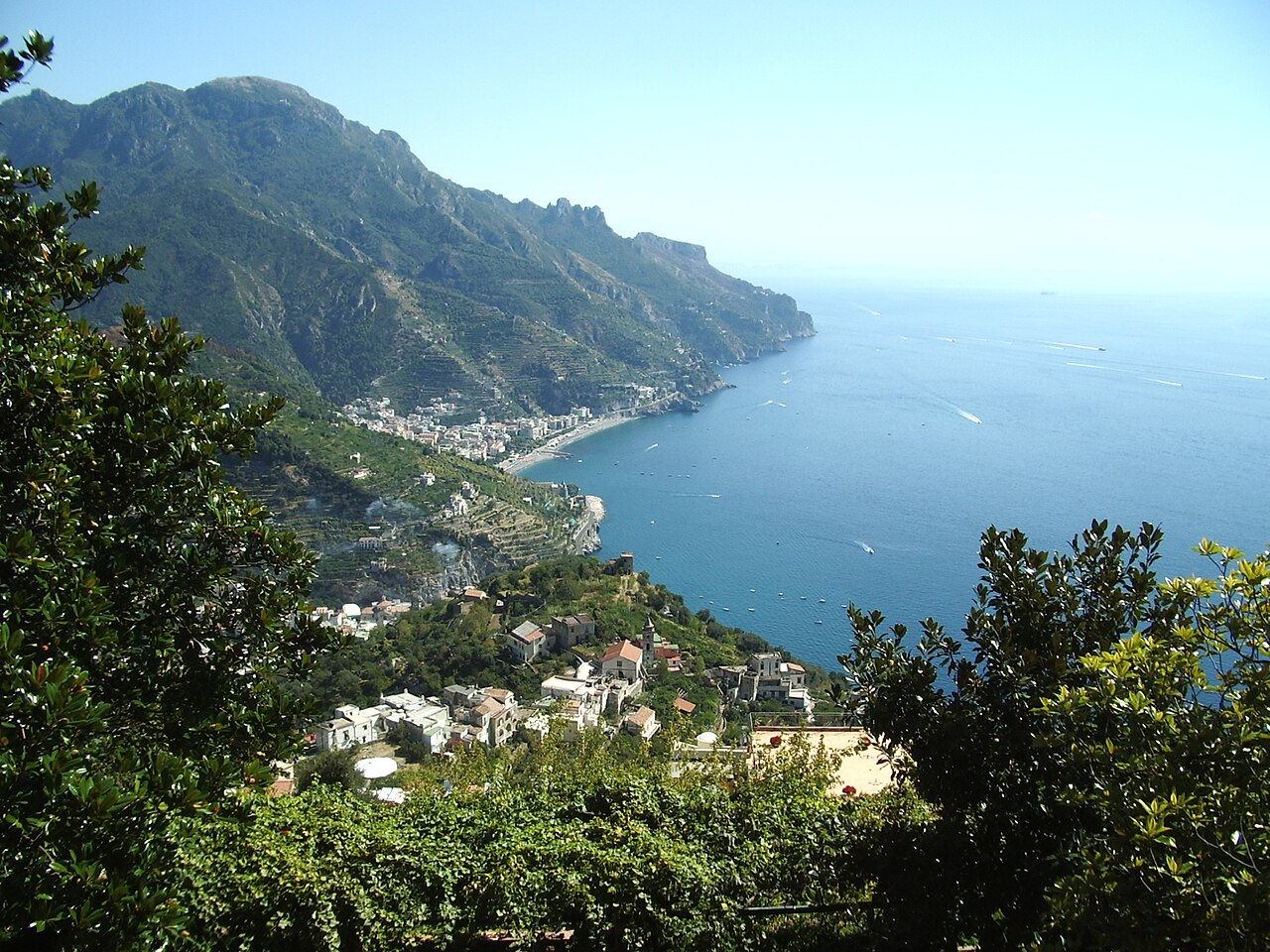
Those lemons are not incidental to the landscape. UNESCO's citation for the coast identifies citrus groves on the lower terraced slopes as part of what makes the property outstanding, alongside the vineyards — the agriculture and the designation describe the same hillsides.
Picture the place
Cetara is a working harbor rather than a resort — the beach is small, the boats are fishing boats, and the village sits in a cleft where the mountain comes down to the water, which is why it has stayed a fishing place while towns a few miles west became something else.
The easily missed detail
Most limoncello sold along this coast is not the protected product. The registered specification bars added colorings and flavorings and sets a minimum fruit load of 250 grams per liter, which must be declared on the label — so the label is where you check. A bright, uniform green with no stated fruit quantity is a different drink from the one the European Commission registered. The same logic applies at the table in Cetara: colatura carries a Protected Designation of Origin, the strictest of the EU tiers, and anchovy sauce without it is simply anchovy sauce.
A practical rhythm
- Cetara — The colatura village, at the coast's eastern end; order it dressed over spaghetti rather than tasted alone.
- The terraces above Amalfi and Minori — Where the Sfusato Amalfitano grows, on the lower slopes UNESCO cites.
- Anywhere with a label — Check the stated fruit quantity per liter before buying the liqueur.
What could complicate the plan
Cetara sits at the opposite end of the coast from Positano, and with one cliff road linking them, crossing between the two is a committed half-day in season rather than a drive. The protected designations govern production, not restaurant practice, so the names appear loosely on menus and the specification is the only reliable check. Anchovy fishing and the small-boat season shape supply in a village this size, and the lemon terraces are private agricultural land inside a World Heritage property, not a visitable attraction.
What to do next
The Amalfi Coast when-to-visit question in this group sets out the months when the terraces are in growth and harvest, and the things-to-do question covers the cathedral complex in Amalfi town.
Sources
- Commission Implementing Regulation (EU) 2020/1529 of 14 October 2020, as published by legislation.gov.uk — Colatura di alici di Cetara PDO registration, Class 1.7, dates
- European Commission, eAmbrosia product specification for Liquore di Limone della Costa d'Amalfi — maceration rule, Sfusato Amalfitano requirement, fruit load, ABV, sugar range, additive ban, pH, area and packaging rules
- UNESCO World Heritage Centre, Costiera Amalfitana — citrus groves and vineyards on the lower terraced slopes as part of the inscribed landscape