Belgium country guide Places and experiences
What should a first-time traveler see in Belgium beyond the obvious highlights?
The short answer
Spread out — Belgium holds 16 World Heritage properties in a country you can cross in a morning, and the ones that get missed are a Gothic cathedral in Tournai, a set of boat lifts on a canal, and the belfry towers that gave Flemish towns their skylines.
The answer, with local context
Sixteen inscribed properties is a remarkable density. UNESCO's file on Belgium names Notre-Dame Cathedral in Tournai, the Historic Centre of Brugge and the transnational Belfries of Belgium and France among those it tracks for state of conservation, and the country also has 16 sites waiting on its tentative list. Tournai sits in the Walloon southwest, far from the Flemish circuit most first visits follow, and its cathedral is a Romanesque-to-Gothic transition building rather than another late-Gothic hall.
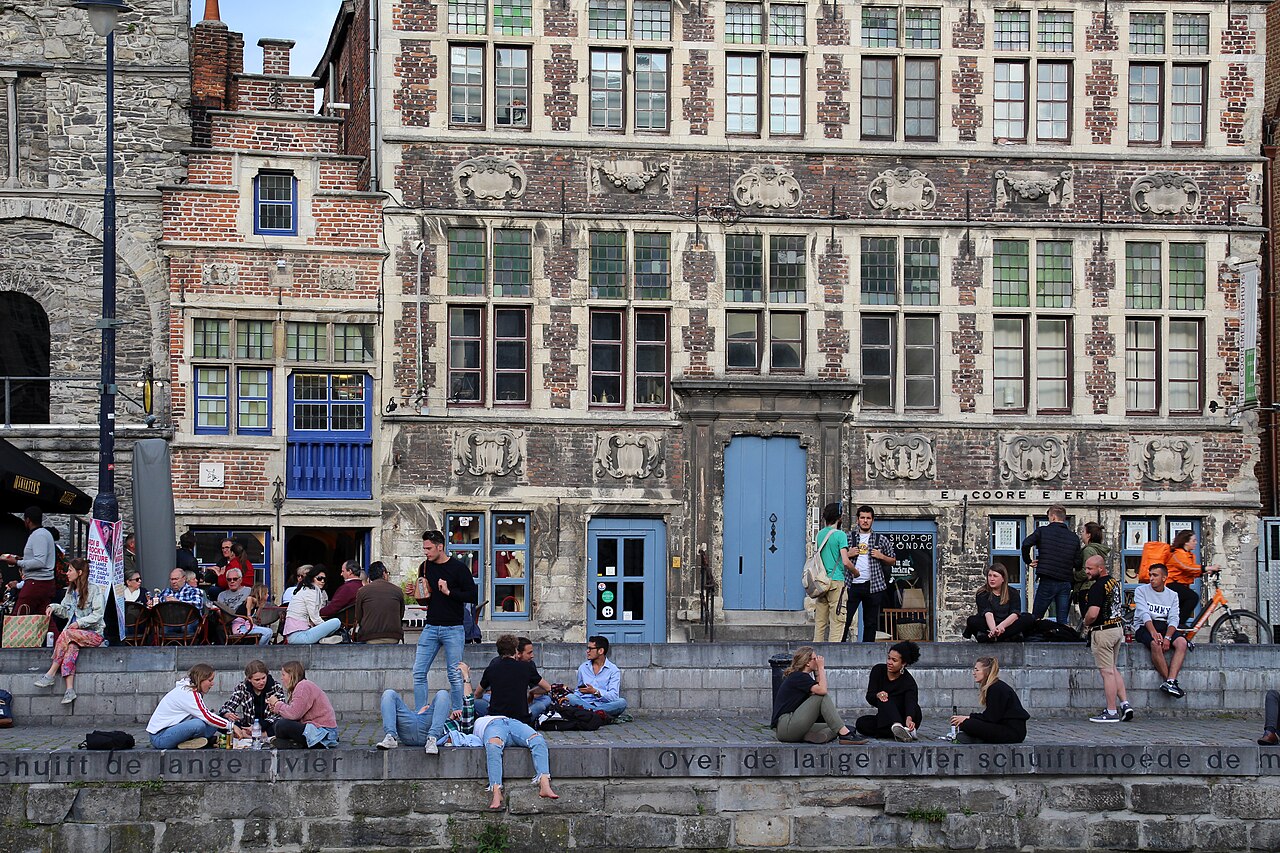
Ghent is the obvious correction to a Bruges-only trip, and the Graslei is the reason. The quay runs along the Leie close to where it meets the Scheldt, and the medieval guild houses facing the water were the working front of the city when Flanders traded in grain. It is the same urban logic as Bruges — water, warehouses, civic pride built in brick and stone — at a city scale rather than a town one, and with a university population that keeps it from feeling preserved.
The belfries are the property most likely to be walked past. They are town towers rather than church towers, built to hold charters and bells on behalf of the citizenry, and because they are transnational and spread across many towns there is no single site to visit. Noticing them is the whole experience, and once you do, the Flemish skyline stops reading as a series of churches.
One of them can be climbed, and the city publishes the terms. Musea Brugge gives the Bruges belfry a height of 83 meters, a stair of 366 steps and a carillon of 47 bells. Standard admission is €16 from 1 April to 2 November and €15 from 3 November to 31 March, with €14 and €13 for under-18s and free entry below seven. Last entry is an hour before closing, groups are not admitted at all, and the tower shuts on 25 December and 1 January.
Picture the place
On the Graslei the facades sit directly on the quay with no setback, so the water takes the whole elevation as reflection, and the gables appear twice over whenever the Leie is still.
The easily missed detail
Bruges's belfry is part of two separate World Heritage properties at once — the Historic Centre of Brugge and the Belfries of Belgium and France. That overlap is unusual, and it is a good reminder that in Belgium the designation often attaches to a building type spread across many towns rather than to one monument in one place. A traveler who understands that will plan a route through small cities rather than a list of single sights.
A practical rhythm
- Flanders — Ghent for a river-front city at full working scale, with Bruges as the town-scale counterpart rather than the substitute.
- Wallonia — Tournai for the cathedral, and the canal engineering nearby, in the part of Belgium most itineraries skip entirely.
- Everywhere — The belfries, which are not a destination but a pattern you start seeing once you know they are inscribed.
What could complicate the plan
Belgium's two main language communities run separate signage, separate opening conventions and separate holiday patterns, and a Walloon day trip from a Flemish base crosses that line. Visa-exempt travelers are held to 90 days in any 180-day period across the Schengen Area, and days in other Schengen countries count. The Entry/Exit System is fully operational across all Schengen countries as of 10 April 2026, so the first border crossing takes longer than it used to. Belgium requires visitors to carry a passport at all times, which applies on an intercity train as much as at the airport.
What to do next
The when-to-visit question in this chapter gives the Belgian climate record these trips have to work around; the trip-planning question handles the entry arithmetic in detail.
Sources
- UNESCO World Heritage Centre, States Parties: Belgium — number of inscribed properties, tentative list, named properties
- UNESCO World Heritage Centre, Historic Centre of Brugge — description of the medieval settlement and its Gothic fabric
- UK Foreign, Commonwealth and Development Office, Belgium entry requirements — Schengen stay limit, carrying ID
- European Commission, Migration and Home Affairs — EES operational date
- Musea Brugge, Belfort (Belfry) — tower height, step count, carillon bells, seasonal admission prices, last entry, group and annual closure rules