Bogotá / Colombia When to visit
When should I visit Bogotá, Colombia, for the best experience?
The short answer
January, February, July or August — Bogotá's city government, citing IDEAM, puts the dry season at about 4 months and names exactly those.
The answer, with local context
Bogotá does not have seasons in the temperate sense; it has a wet year interrupted twice. The city government describes Bogotá as sitting in the Andean zone of Colombia's Cordillera Oriental with a cold, very dry climate, and gives an average temperature of about 55.6°F (13.1°C) on IDEAM figures. Daytime highs average 64°F to 68°F (18°C to 20°C) and dawn lows average 46°F to 50°F (8°C to 10°C). In the dry stretch at the start of the year, dawn temperatures can fall below 41°F (5°C).
That is a narrower annual range than most visitors expect and a wider daily one. The practical consequence is that the choice of month barely changes what you wear — a jacket is a year-round item here — while it changes a great deal about whether you are walking in rain. The city also notes that El Niño and La Niña events can swing conditions either way, bringing torrential rain with hail and lightning, or very sunny, hot days.
The cultural calendar matters more than the thermometer. UNESCO designated Bogotá a Creative City of Music in March 2012, and the city's tourism institute lists the festival series that designation rests on: Rock al Parque, which it describes as one of the largest free rock festivals in Latin America, alongside Salsa, Jazz, Hip Hop, Joropo, Colombia and Vallenato al Parque. The Bogotá International Book Fair, the BOG25 international art and city biennial and the International Festival of Living Arts fill out the year.
Picture the place
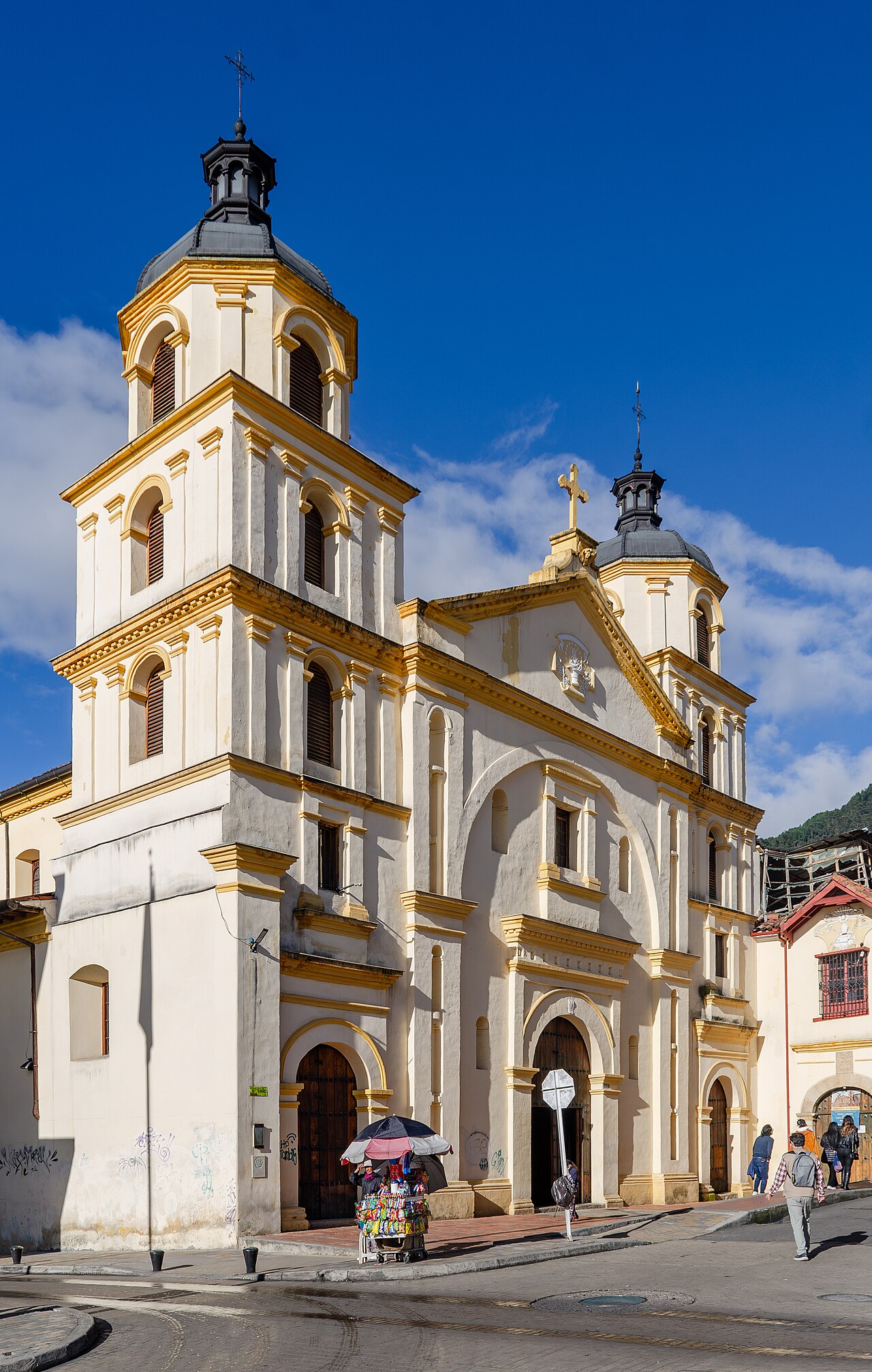
The city runs cool and bright by day and genuinely cold before sunrise: average dawn lows of 46°F to 50°F (8°C to 10°C) against average afternoon highs of 64°F to 68°F (18°C to 20°C), and dawn readings under 41°F (5°C) in the early-year dry spell. It feels nothing like the latitude suggests.
The easily missed detail
The free-festival programme is the strongest argument for timing a visit, because the Parque series is municipal and admission-free rather than commercial. A city designated for music by UNESCO in March 2012 has built that status on open-air events in public parks, which means the calendar, not the ticket price, is the constraint.
A practical rhythm
- Dry-season mornings — Clear and cold. The average dawn low of 46°F to 50°F (8°C to 10°C) understates what the January dry spell can deliver.
- Afternoons — Highs of 64°F to 68°F (18°C to 20°C) year-round, which is why the city reads as permanently spring-like regardless of month.
- Festival weekends — The al Parque series is free and outdoors, so it is the one part of the calendar worth planning dates around.
What could complicate the plan
Entry is straightforward but has limits worth knowing. The FCDO's Colombia guidance, updated 30 October 2026, states that visitors may stay up to 90 days for business or tourism without a visa at the immigration officer's discretion, that an onward or return ticket valid within that period must be shown, that a stay can be extended by up to 120 days through Migración Colombia, and that a visitor may not remain more than 180 days in any 12-month period. A passport must be valid on entry, and Colombian immigration recommends an expiry date at least 6 months after planned departure. Proof of yellow fever vaccination is required on arrival from certain countries with transmission risk, and may be requested for travel to areas within Colombia considered high risk — relevant if Bogotá is the gateway to a lowland leg rather than the whole trip. The optional Check-Mig form can be submitted between 72 hours and 1 hour before travel to speed entry.
What to do next
The things-to-do question in this chapter has the Gold Museum's hours, prices and free day, and the food question covers the district market halls.
Sources
- Alcaldía Mayor de Bogotá, city climate page citing IDEAM — average temperature, daily highs and lows, the 4 dry months, Cordillera Oriental setting, El Niño and La Niña effects
- Bogotá Secretaría de Cultura, Recreación y Deporte, and Instituto Distrital de Turismo — UNESCO Creative City of Music designation in March 2012, the al Parque festival series, FilBo, BOG25, FIAV
- UK Foreign, Commonwealth and Development Office, Colombia entry requirements — 90-day visitor stay, onward ticket, 120-day extension, 180-day annual limit, yellow fever rule, Check-Mig window