Bolivia country guide Food and drink
What local dishes should I try in Bolivia, and where should I look for them?
The short answer
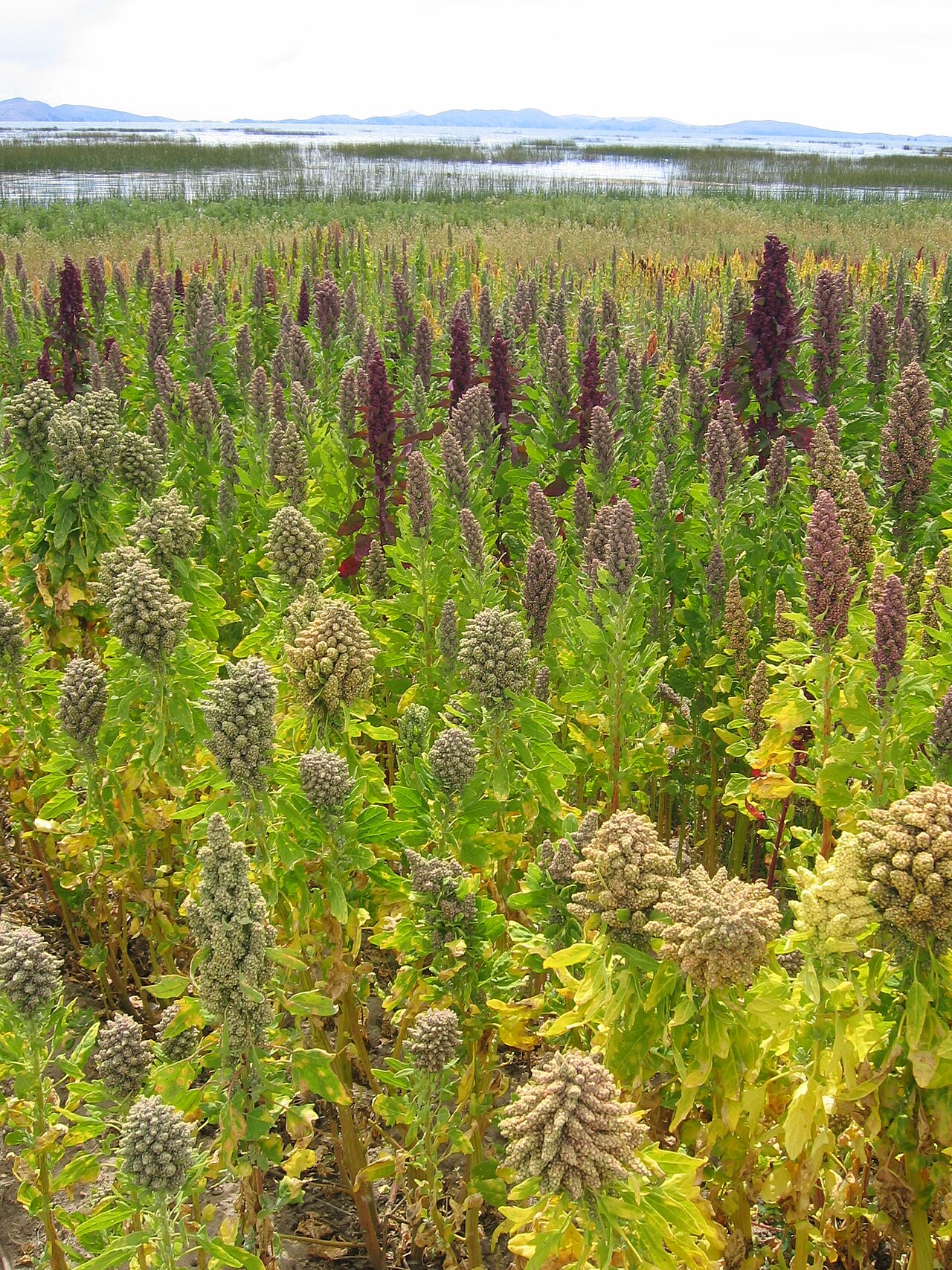
Follow quinoa to Oruro and Potosí — Bolivia's own agriculture ministry recorded Oruro producing 51 percent of the national quinoa crop and Potosí about 38 percent, with quinua real a variety grown nowhere else.
The answer, with local context
Bolivia's food map tracks altitude almost exactly. The agriculture bulletin published by the Ministry of Productive Development, covering the 2013 season, gives the quinoa shares as Oruro 51 percent, Potosí about 38 percent and La Paz 10 percent, with Cochabamba, Chuquisaca and Tarija together accounting for roughly 0.4 percent — in other words, the crop is an Altiplano crop and barely exists in the valleys. The bulletin also describes quinua real as a variety cultivated only in Bolivia. Export destinations in that year ran to the United States at about 60 percent, with France and the Netherlands at roughly 7 percent each.
Lower down, the staples change entirely. FAO's country brief for Bolivia, with a reference date of 9 September 2026, records that the main wheat harvest begins in July, that the 2026 rice harvest was finalized in April, and that minor-season maize — about 15 percent of annual maize output — was planted in May 2026. Sorghum is grown mostly in the eastern Santa Cruz department. Those are the crops behind lowland cooking, and they are on a different calendar from the high-plateau harvest.
The practical version for a traveler: eat quinoa, potatoes and llama on the Altiplano, where they grow; eat rice, maize, yuca and river fish in the east, where those grow. The country's imports tell you where the gaps are — FAO put cereal imports in 2025/26 at about 441,000 tonnes, roughly 65 percent above the five-year average.
Picture the place
Quinoa country around the southern salt flats is open, stony and treeless, farmed in low open fields rather than terraces — the same ground that makes the Altiplano look empty is what the crop is adapted to.
The easily missed detail
Bolivia's own bulletin is internally inconsistent about the size of the quinoa sector, giving cultivated area as both about 200,708 hectares and about 170,000 hectares in the same document, and production as both about 95,000 tonnes and just over 58,000 tonnes. The regional shares and the export destinations are consistent and usable; the totals are not. It is worth knowing that even the national figures for Bolivia's best-known crop are contested.
A practical rhythm
- On the Altiplano — Quinoa, in soups and as a grain, in the Oruro and Potosí departments that report 51 percent and about 38 percent of the crop.
- In the eastern lowlands — Rice, finalized as a harvest in April 2026, and maize planted in May.
- Anywhere — Markets rather than restaurants are where the regional difference is visible.
What could complicate the plan
The State Department's Quick Facts for Bolivia list yellow fever among its vaccination entries, which matters for anyone adding a lowland leg to an Altiplano trip. The CDC's food and water guidance puts fruit you peel yourself and vegetables rinsed in safe water before cooking in its lower-risk group, and is explicit that cloudy or discolored water is not made safe by boiling or disinfection, so bottled water should be used instead. FAO's brief also records diesel shortages and roadblocks limiting producers' access to markets, alongside a state of exception declared in June 2026 — conditions that affect what is actually on a market stall as much as what is grown.
What to do next
The places question in this chapter covers the eastern lowland World Heritage properties where the rice and maize cooking lives, and the trip-planning question handles entry rules.
Sources
- Bolivia, Ministerio de Desarrollo Productivo y Economía Plural, quinoa bulletin — departmental production shares, quinua real, export destination shares, and the document's own conflicting area and production totals
- FAO GIEWS, Bolivia country brief — reference date, wheat, rice and maize timing, Santa Cruz sorghum, 2025/26 cereal imports, diesel and roadblock conditions
- CDC Yellow Book 2026, Food and Water Precautions for Travelers — lower-risk food handling, cloudy water warning
- US Department of State, Bolivia country information — yellow fever vaccination entry