Bologna / Italy Food and drink
Where should I eat in Bologna, and which local food or drink is worth trying?
The short answer
Eat tortellini in brodo and tagliatelle al ragù in the Quadrilatero's orbit, buy mortadella where it was born, and learn the sentence that protects you everywhere else in Italy: in Bologna, it is never "spaghetti bolognese."
The answer, with local context
Bologna's kitchen is the most codified in Italy — literally. The city's classic recipes have been formally registered: the official ragù alla bolognese recipe was deposited by the Accademia Italiana della Cucina with the Bologna Chamber of Commerce in October 1982 (beef, pancetta, soffritto, tomato, white wine, milk — and it belongs on tagliatelle, the egg ribbon whose width legend ties to Lucrezia Borgia's hair), and the Confraternita del Tortellino registered tortellini's filling in 1974 — pork loin, mortadella, prosciutto, Parmigiano Reggiano, egg and nutmeg, folded to the size of a navel and served in capon broth. Lasagne verdi alla bolognese, its pasta green with spinach, carries its own registered recipe (1982). These are not pedantries; they are the standards the city's kitchens are judged by, and the reason Bologna is La Grassa — the Fat.
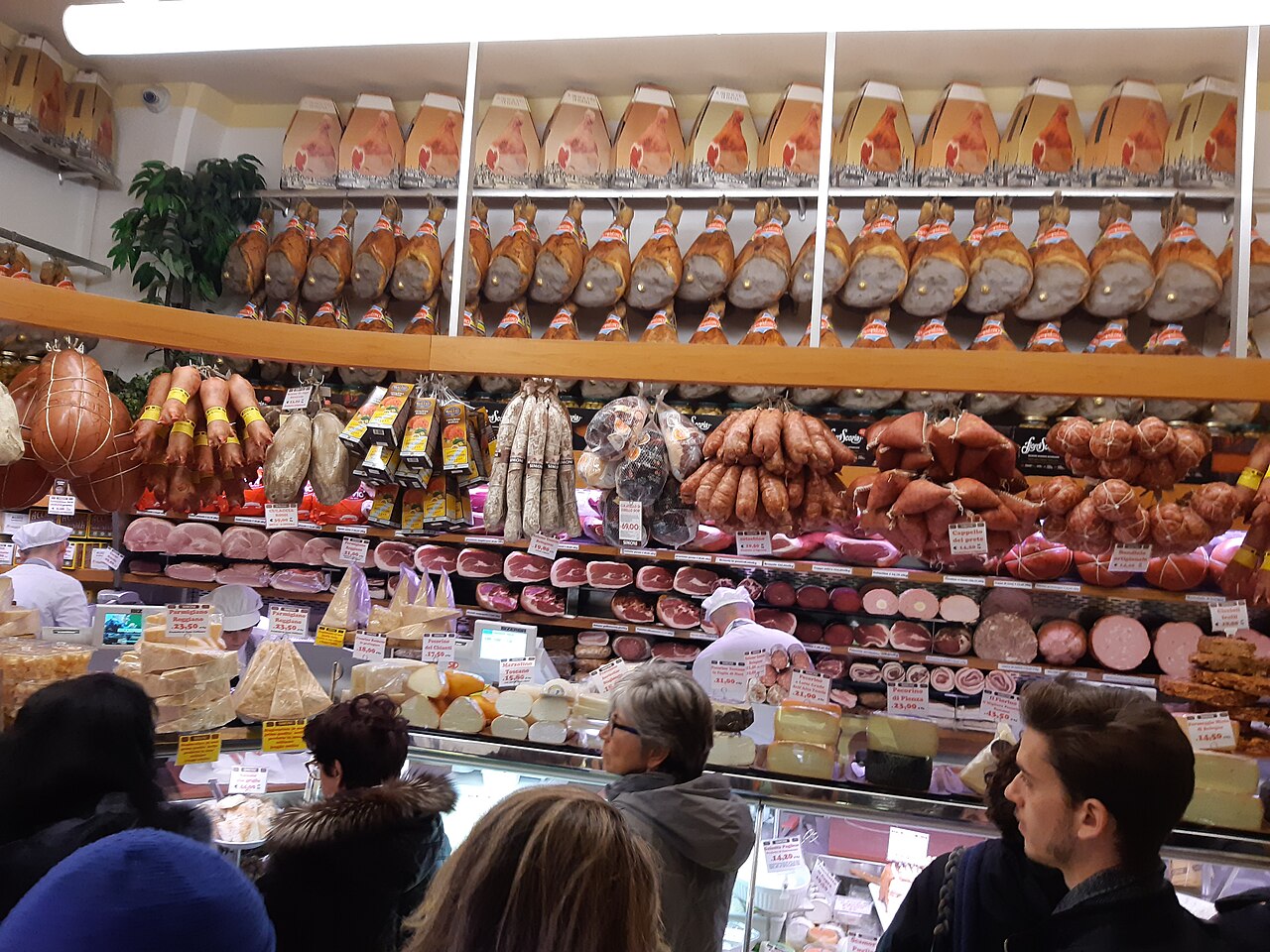
Eat first in the Quadrilatero, the medieval market grid off Piazza Maggiore: Via Pescherie Vecchie and Via Clavature run the great salumerie with their mortadella ropes and tortellini windows — Tamburini (since 1932) and Paolo Atti & Figli (since 1880) are the names — plus the Mercato di Mezzo food hall. For the trattoria canon, Osteria dell'Orsa feeds students and professors at communal tables for famously little; Diana, under the porticoes of Via dell'Indipendenza, is the white-tablecloth classic for tortellini in brodo; Trattoria da Vito, out in San Donato, is the beloved rough-edged local legend. A sfoglina — the pasta-making nonna of legend, now a profession again — is visible at work in shops like Le Sfogline, where the day's tortellini are rolled on wooden boards in the window.
Round out the city's own plates: gramigna alla salsiccia (curly pasta with sausage ragù), cotoletta alla bolognese (veal under prosciutto and Parmigiano), and the bread course of Emilia — crescentine and tigelle, griddled breads served hot with squacquerone cheese, pesto modenese and salumi, the definitive aperitivo dinner. Drink the hills: Pignoletto, the frothy white of the Colli Bolognesi (DOCG), is the local pour, with Lambrusco arriving from Modena next door. The souvenir that survives the flight is a vacuum-packed mortadella — IGP-protected since 1998, studded with lardons and sometimes pistachio, and the ancestor, via its name, of American "baloney."
Picture the place
Morning in the Quadrilatero: shopkeepers hosing the stone lanes, windows stacked with golden tortellini rings and mortadella the size of artillery shells, and the whole grid smelling of broth, Parmigiano and new bread before the first coffee has landed.
The easily missed detail
Bologna's most divisive dish is a plate of rules: genuine tortellini in brodo must swim in capon broth, the tortellini must be small enough to fit several on a spoon, and serving them in cream sauce is the local definition of a tourist trap. The brotherhood that registered the recipe in 1974 still polices it — ask a Bolognese waiter about cream and watch a face fall. What the locals actually argue about is subtler: whether ragù wants white or red wine (the registered recipe says white).
A practical rhythm
- Quadrilatero before noon — Graze the salumerie and market halls at aperitivo hour, then sit down to lunch rather than the reverse
- One classic, one student table — Pair a Diana-style white-tablecloth lunch with an Osteria dell'Orsa evening for the city's two registers
- Brodo is a lunch dish — Order tortellini in brodo at midday, when the broths are freshest and the trattorias are full of locals
What could complicate the plan
August closes much of the canon — the great shops and trattorias take their holidays when the city empties, and what remains open aims at tourists. Sundays shrink the Quadrilatero to a skeleton crew. The famous names book out on fair and graduation weekends (the university's laurea celebrations fill the centro in blocks through the year), and the dell'Orsa-style no-reservations queues at 8 p.m. are a standing feature, not a failure.
What to do next
Lunch in the Quadrilatero, tortellini in brodo at a classic trattoria, an aperitivo of crescentine and Pignoletto — and a mortadella in the suitcase, vacuum-sealed.
Sources
- Accademia Italiana della Cucina / Camera di Commercio di Bologna — the official ragù alla bolognese recipe, deposited October 1982
- Confraternita del Tortellino — the registered tortellini filling, deposited 1974; lasagne verdi recipe registered 1982
- Consorzio Mortadella Bologna — mortadella's IGP protection (1998) and production rules
- Bologna Welcome — the Quadrilatero market lanes and historic shops, including Tamburini (1932) and Paolo Atti & Figli (1880)