Bruges / Belgium When to visit
When should I visit Bruges, Belgium, for the best experience?
The short answer
May, timed to Ascension Day — the Holy Blood Procession carries the city's relic through streets first used for it in 1304, spring fills the Beguinage garden, and the day-tripper peak of summer has not yet arrived.
The answer, with local context
Bruges has a shape problem that decides everything about timing: it is a small medieval city — a UNESCO-listed historic center since 2000, barely a 45-minute walk across — that receives large-city visitor numbers, most of them arriving between 10 a.m. and 4 p.m. from Brussels, Ghent and the cruise buses. Every season strategy is really a crowd strategy. May attacks it best: highs around 64°F (18°C), days lengthening toward a 9:45 p.m. sunset by month's end, the canals' horse chestnuts in leaf, and the city's single greatest event on the calendar.
That event is the Procession of the Holy Blood, held every year on Ascension Day (in most years mid-May). The relic of the Holy Blood, kept in the basilica on the Burg, has been carried through Bruges in procession since 1304 — more than 1,700 participants in biblical and historical costume, with the whole city turned out; UNESCO inscribed the procession on its Intangible Cultural Heritage list in 2009. May is also prime season in the Ten Wijngaerde Beguinage (founded 1245, itself World Heritage since 1998), where the courtyard garden passes from daffodils to early roses, and the canal boats — which run roughly March to mid-November — operate in their pleasantest weather window.
The rivals each take something away. December's Christmas markets are atmospheric but the light is gone by 5 p.m. and the canals lose their reflections to drizzle. Summer brings the longest days but the full day-tripper swell and the longest queues up the Belfry. September is May's closest competitor — harvest menus, softer crowds — but has no procession. Time the year to Ascension, and let the rest of May arrange itself around it.
Picture the place
Procession afternoon on the Steenstraat: banners of the guilds, drums and a hush for the reliquary, gold embroidery moving slowly through streets that have watched the same circuit for more than 700 years.
The easily missed detail
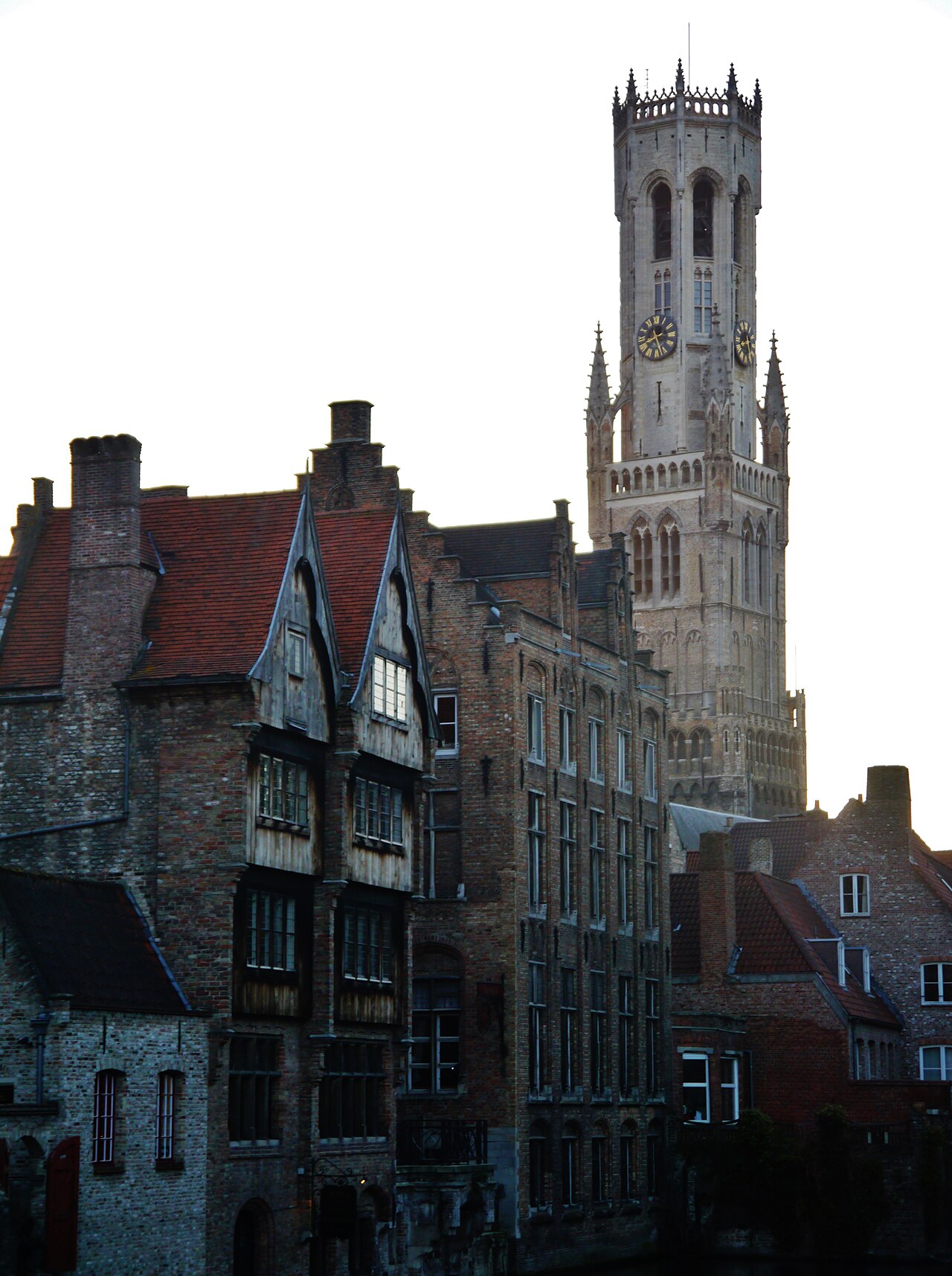
Visit Bruges overnight, not by day: the city's second act begins when the buses leave. After about 6 p.m. the Markt empties to locals, the Rozenhoedkaai turns gold and then blue, and the Belfry's floodlit reflection does the thing the postcards promise. May makes this strategy doubly good — evenings are long and warm enough to eat outside, and the carillon (47 bells) plays its evening concerts into the quiet. Bruges is a city best rented by the night.
A practical rhythm
- Anchor to Ascension Day — Find the year's Ascension date (the procession follows it, in mid-May in most years) and build the trip around it
- Sleep inside the ring — Stay within the old center so dawn and dusk — the empty, golden hours — are yours on foot
- Museums on procession morning — The Groeninge and Memling collections are quiet while the crowds stake out the procession route
What could complicate the plan
Ascension weekend is a Belgian public-holiday weekend: trains fill, hotels price accordingly, and the procession route closes the center's streets for hours. May weather in Flanders is reliably unreliable — 64°F and blue, or 54°F and Atlantic rain, sometimes in the same day. And the canal boats and Belfry still queue at midday even in May; both reward the first hour of opening.
What to do next
Book a center hotel for the Ascension weekend early, put the procession day itself aside for the procession, and schedule the Belfry climb and boat tour for a weekday morning.
Sources
- UNESCO World Heritage Centre — the Historic Centre of Bruges, inscribed 2000; the Flemish Béguinages (1998) and the Belfries of Belgium and France (1999)
- UNESCO Intangible Cultural Heritage — the Procession of the Holy Blood, inscribed 2009; held on Ascension Day since 1304 with more than 1,700 participants
- Visit Bruges — the Belfry: 272 feet (83 m), 366 steps, a carillon of 47 bells; canal boat season running roughly March to mid-November
- Royal Meteorological Institute of Belgium (KMI/IRM) — May in Flanders: highs near 18°C and long evening daylight