Bukhara / Uzbekistan Things to do
What are the most worthwhile things to do in Bukhara on a first visit?
The short answer
Explore the Poi-Kalyan architectural complex, the Ark fortress, Lyab-i Hauz and the Samanid Mausoleum, then discover Bukhara's historic trading domes and traditional craft workshops.
The answer, with local context
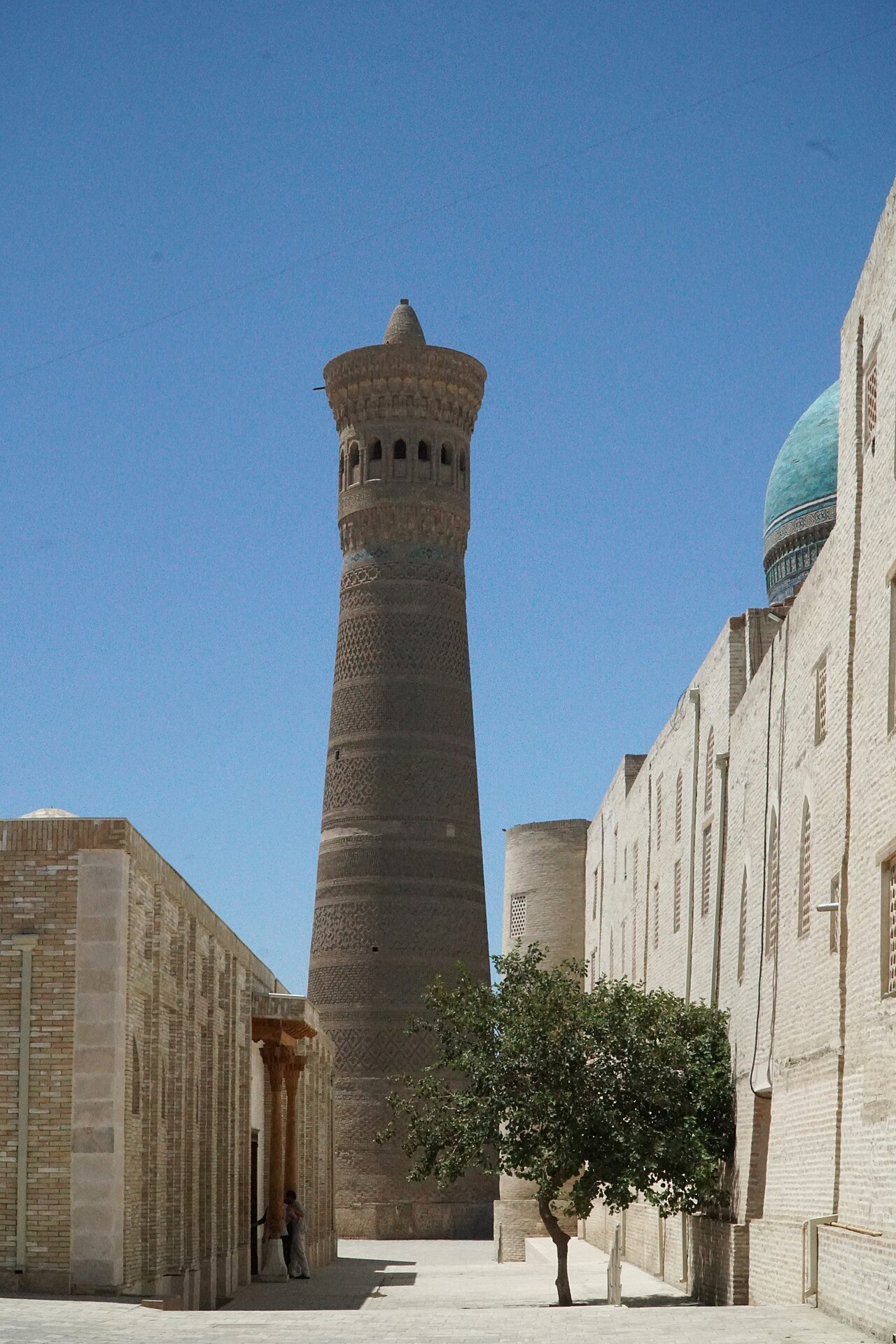
The Poi-Kalyan complex is among Bukhara's most recognizable architectural ensembles. Its principal monuments include the Kalyan Minaret, Kalyan Mosque and Mir-i-Arab Madrasa. The minaret dates from the twelfth century, and its decorative brickwork is a defining feature of the historic skyline. Uzbekistan's national tourism portal dates the ensemble as a whole to the 12th to 16th centuries and records that a congregational mosque and minaret already stood on the site after the Arab conquest in the 8th century; the present mosque and the Mir-i-Arab madrasa belong to the 16th-century rebuilding that followed the collapse of the earlier minaret.
The Ark of Bukhara occupies a fortified site associated with the city's rulers. UNESCO identifies the citadel as an important historical center that was rebuilt during the sixteenth century.
The Samanid Mausoleum represents an earlier architectural tradition. UNESCO describes it as one of the most important surviving examples of tenth-century Islamic architecture, distinguished by its sophisticated patterned brickwork. The national tourism portal puts its construction between 892 and 907, straddling the turn of that century, gives its walls as up to 1.8 meters thick, and counts 40 windows in the gallery running beneath the dome. Bukhara's historic center itself entered the UNESCO World Heritage List in 1993.
Lyab-i Hauz provides a contrasting urban setting. Its historic pool is surrounded by religious buildings and traditional commercial areas, making it a useful place to understand how public spaces functioned within the city.
Continue through the old trading domes, including Toqi Zargaron and Toqi Telpakfurushon. Uzbekistan's national tourism portal also identifies Chor Minor, Magoki-Attori Mosque and the Bolo Hauz Mosque as important attractions.
For a longer stay, the Sitorai Mohi Hosa summer palace outside the historical core introduces a different period of Bukharan court life.
Picture the place
The Kalyan Minaret rises above brick courtyards and blue-tiled architectural portals. Elsewhere, vaulted trading passages connect narrower streets, while Lyab-i Hauz opens onto a pool surrounded by older buildings.
The easily missed detail
Not every monument is a museum. Some madrasas and religious complexes retain educational or devotional functions, and access to their interiors can be restricted even when their exteriors remain visible.
A practical rhythm
Morning: Visit Poi-Kalyan and the Ark.
Midday: Explore the Samanid Mausoleum and Bolo Hauz area.
Afternoon: Walk the trading domes toward Lyab-i Hauz.
What could complicate the plan
Restoration work may limit access to some structures, and the old streets contain uneven surfaces. Religious buildings may restrict entry during prayers or special observances.
What to do next
introduces Bukhara's regional pilaf, baked breads and teahouse traditions.
Sources
- UNESCO — architectural history and major monuments.
- Uzbekistan national tourism portal — city attractions.
- Uzbekistan national tourism portal — monument groupings and visitor routes.
- Uzbekistan national tourism portal, Poi-Kalon — construction periods of the ensemble and its component buildings.
- Uzbekistan national tourism portal, Samanid Mausoleum — construction dates, wall thickness, window count and the 1993 World Heritage inscription.