Bukhara / Uzbekistan When to visit
When should I visit Bukhara, Uzbekistan, for the best experience?
The short answer
April through May and September through October are the most comfortable seasons for exploring Bukhara's historic center, offering more manageable walking conditions than the intensely hot summer months.
The answer, with local context
Bukhara lies in western Uzbekistan, in a region influenced by the dry continental climate of Central Asia. Summer days can become extremely hot, while winter brings colder temperatures and occasional snow.
Spring and autumn offer better conditions for exploring the city's open squares, markets and historic monuments. April and May provide opportunities to walk between the Poi-Kalyan complex, the Ark and Lyab-i Hauz without the strongest summer heat.
September and October are similarly useful for sightseeing. The shorter autumn days still permit substantial exploration, while evenings are generally more comfortable than midsummer afternoons.
UNESCO inscribed the Historic Centre of Bukhara in 1993 under cultural criteria (ii), (iv) and (vi). The World Heritage property covers 216 hectares, following a minor boundary modification inscribed in 2016. Its designated buffer zone covers 339 hectares.
The historic center is notable for preserving an urban layout associated with the Silk Roads and the development of medieval Central Asian Islamic architecture.
Picture the place
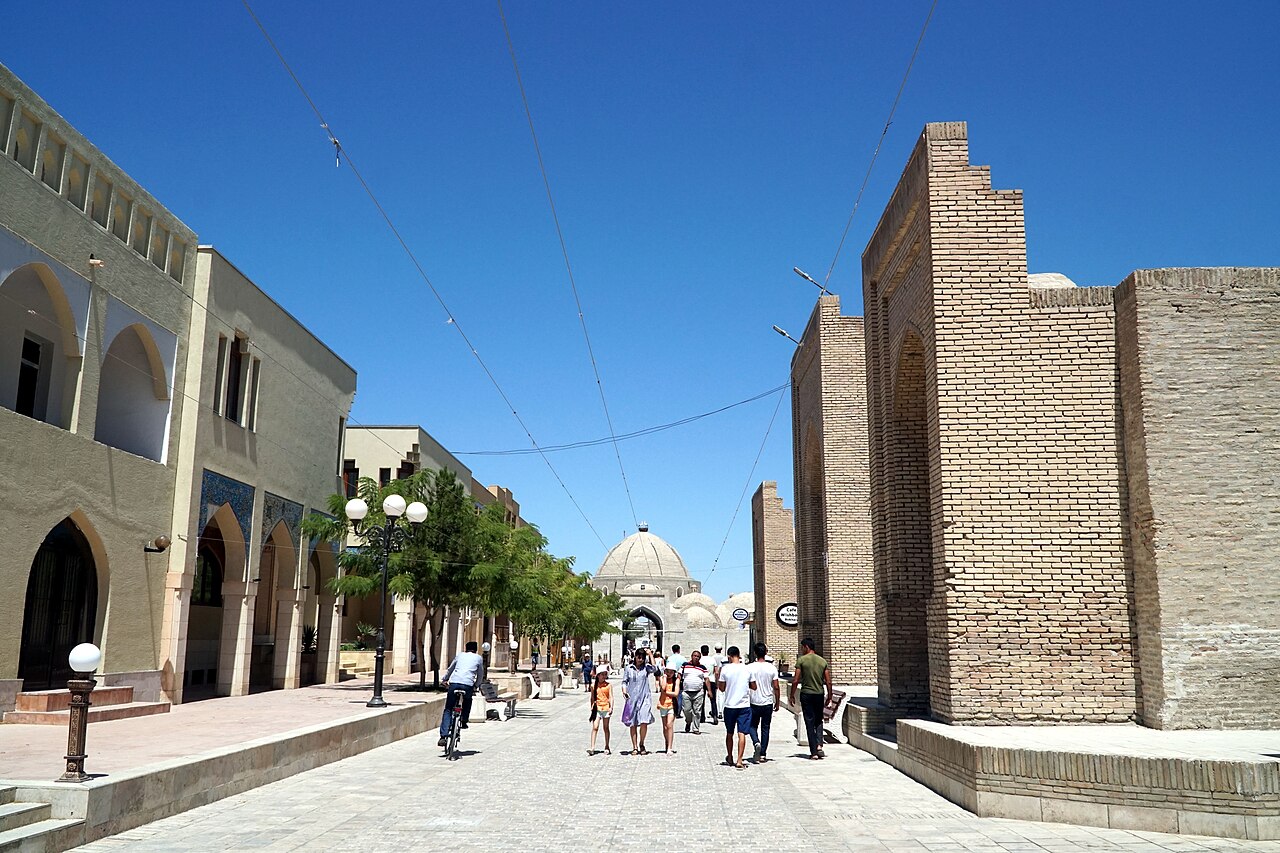
Bukhara's warm-colored brick buildings, tiled portals, narrow streets and shaded courtyards form a compact historical landscape. The architectural details are especially distinctive where geometric brickwork contrasts with turquoise ceramic decoration.
The easily missed detail
Bukhara is more than a collection of individual monuments. UNESCO recognizes the surviving urban fabric as a whole, meaning the streets and relationships between historic buildings contribute to the site's significance.
A practical rhythm
Morning: Explore the Poi-Kalyan area and nearby monuments.
Midday: Pause around Lyab-i Hauz or another shaded courtyard.
Late afternoon: Walk through the trading-domes district.
What could complicate the plan
Summer heat can make exposed squares uncomfortable, while winter may bring cold conditions and shorter daylight hours. Some mosques and shrines remain active religious places with access restrictions during worship.
What to do next
identifies the monuments and historic neighborhoods that best explain Bukhara's importance along the Silk Roads.
Sources
- UNESCO — World Heritage designation, criteria and protected area.
- Uzbekistan national tourism portal — principal monuments and historic city context.
- Bukhara travel information — seasonal travel guidance.