Cappadocia / Türkiye Things to do
What are the most worthwhile things to do in Cappadocia on a first visit?
The short answer
Fly the dawn balloon slot, walk the Göreme Open Air Museum's painted cave churches, descend into Derinkuyu's underground city, and hike the Rose Valley to a sunset — the four acts of the Göreme-centred core, with Ihlara and Avanos as the second day.
The answer, with local context
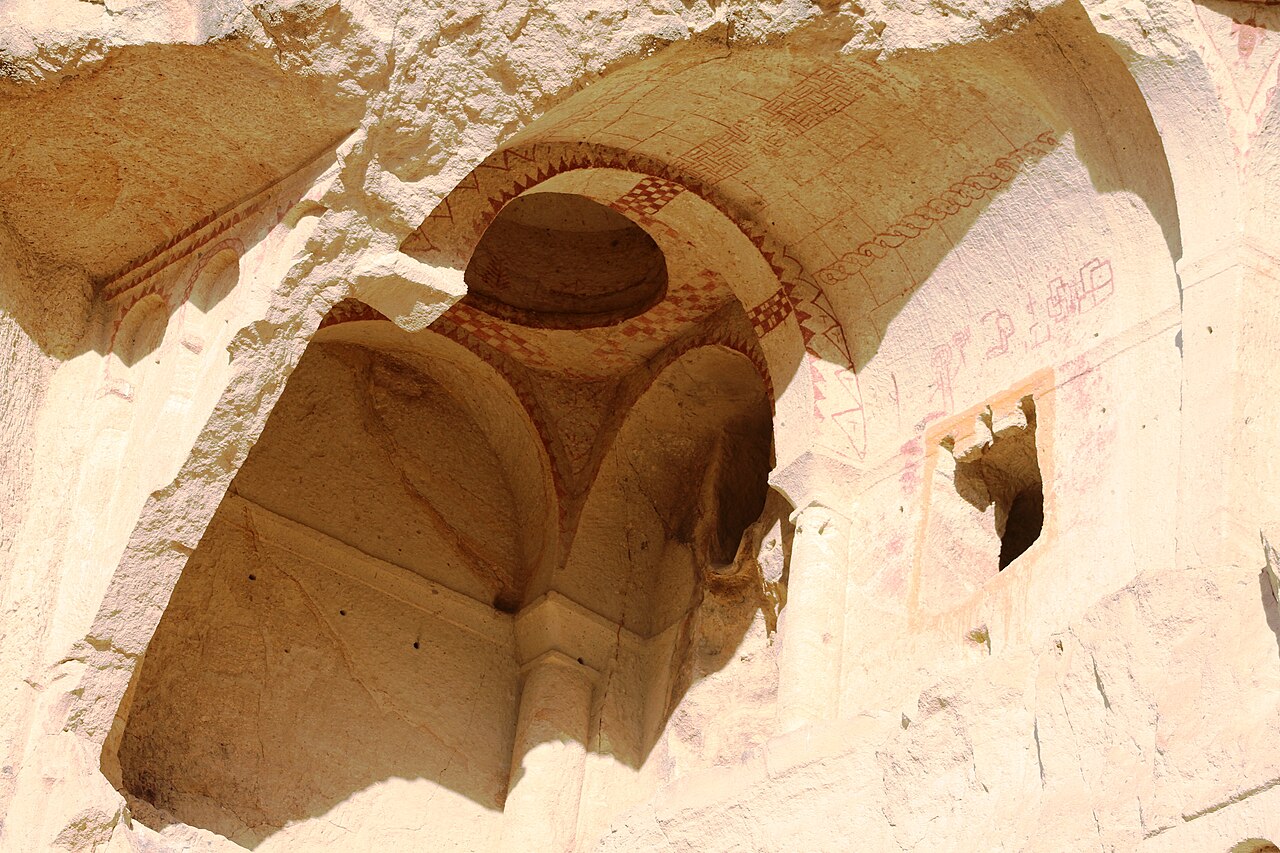
Begin with the geology, because everything here is its consequence: ash from ancient volcanoes (Erciyes and Hasan Dağı) settled into tuff, and water and wind carved the soft rock into cones, chimneys and waves — the fairy chimneys (peribacaları) that empires then hollowed into houses, churches and cities. The first act is the region's sacrament: the sunrise balloon flight over the Göreme valleys (up to an hour aloft, the fleet rising in the regulated dawn slot, landing to the traditional champagne toast), or its free twin — the same dawn watched from a Göreme terrace or the Uçhisar road, balloons pouring over the ridge at eye level. The second act is the Göreme Open Air Museum (UNESCO 1985): a monastic city of rock-cut churches painted between the 10th and 12th centuries — the Apple Church, the Snake Church, and above all the Dark Church (Karanlık Kilise), whose frescoes kept their blues and ochres in a century of darkness and are the finest Byzantine wall painting in Anatolia (it carries its own extra ticket and admits small numbers — go first).
The third act goes down. The underground cities — some 200 known in the region — are the plateau's refuge architecture, and Derinkuyu is their cathedral: descending some 280 feet (85 m) through as many as 18 levels of stables, wineries, chapels, a missionary school and ventilation shafts that double as wells, sealed by rolling-stone doors, built to hold thousands (estimates reach 20,000 people with their animals) through a siege season. Kaymaklı, its broader, shallower twin, is the alternative for the less ladder-happy. Above ground again, the valley circuit completes the grammar: Paşabağ (Monks Valley), where the mushroom chimneys carry hermits' cells (one held St Simeon the Stylite's followers); Zelve, an open-air museum of a cave village lived in until 1952; Devrent's eroded menagerie; Pigeon Valley's dovecote cliffs (the guano fertilised the orchards); and Uçhisar's rock castle, the region's highest viewpoint, for the sunset orientation. Rose and Red Valley (Kızılçukur) are the sunset hike itself — two to three hours of path through apricot orchards and painted churches to the viewpoint where the tuff fires pink.
The second day widens the map. West: the Ihlara Valley, a 9-mile (14 km) canyon cut 330 feet (100 m) into the plateau by the Melendiz river, its Byzantine cave churches (Ağaçaltı's frescoes at the entrance) strung along a willow-shaded river walk to Belisırma's trout restaurants, capped by Selime Monastery — a cathedral-sized rock complex at the canyon's end. North: Avanos, the pottery town on the Kızılırmak (Türkiye's longest river at 1,355 km), where the red river clay has been thrown since Hittite times — take the wheel lesson, watch the masters, and visit Chez Galip's hair museum (some 16,000 locks of visitors' hair, collected since 1979) for the region's strangest half hour. The core first, the wings second: Cappadocia overload is the only real failure mode.
Picture the place
The Dark Church at mid-morning: eight visitors standing in managed silence while Christ's blue mantle glows out of eight centuries of darkness, the guide's whisper bouncing off painted apostles.
The easily missed detail
The Open Air Museum's most important building sits outside its fence: Tokalı Kilise (the Buckle Church), across the road from the museum entrance, is the largest rock church in Cappadocia, its 10th-century fresco cycle (an indigo New Testament in two registers) covered by the same museum ticket — most tour groups never cross the road. The underground twin detail: Derinkuyu's famous "depth" is less astonishing than its plumbing — the ventilation shaft is also a well whose mouth never reaches the surface levels, so a besieged city could draw water the enemy could not poison; read the city as engineering, not hiding, and it doubles in interest.
A practical rhythm
- Museum Pass Türkiye pays here — Open Air Museum, Dark Church, Derinkuyu and Ihlara stack into the pass's value within two days
- Dark Church first, caves cold — The Dark Church caps its entries; the underground cities are the midday refuge at a constant cave temperature
- Sunset by valley, not by clock — Kızılçukur's viewpoint fills an hour before sunset in season; the Uçhisar castle is the emptier alternative
What could complicate the plan
The signature experience is the least reliable one. Balloon flying over the valleys happens in a regulated dawn window with up to about 150 balloons permitted on a morning, and the fleet is grounded when the wind says so, so a flight can be called off at short notice — book it for the first of several possible mornings rather than the last. The underground cities are a physical commitment rather than a sight: the descent at Derinkuyu runs some 85 m through as many as 18 levels of low passages and steep stairs, with no comfortable way out but back up. The painted church with the best frescoes admits small numbers on a separate ticket, so late arrivals are turned away rather than queued. And the second-day wings are distances — the 14 km canyon to the west is a river walk whose entrance and exit are far apart, which makes a driver or a transfer, not a hire car abandoned at one end, the sensible arrangement.
What to do next
Book the balloon for the first dawn, the Open Air Museum for the first morning (Dark Church before ten), Derinkuyu for the first afternoon's heat.
Sources
- UNESCO World Heritage List — Göreme National Park and the Rock Sites of Cappadocia (1985): the tuff landscape and rock-hewn sanctuaries
- Ministry of Culture and Tourism (Türkiye) — the Göreme Open Air Museum and Dark Church, Derinkuyu (some 85 m deep, up to 18 levels) and Kaymaklı underground cities
- Turkish DGCA (SHGM) — the balloon slot system over the Göreme valleys (up to ~150 balloons per permitted morning)
- Avanos Municipality / Kızılırmak basin — the red-clay pottery tradition and Türkiye's longest river (1,355 km)