Chiang Mai / Thailand When to visit
When should I visit Chiang Mai, Thailand, for the best experience?
The short answer
November through January is generally the most appealing period for visiting Chiang Mai, with cooler, drier conditions for exploring its temples, old city and surrounding mountains.
The answer, with local context
Chiang Mai lies in northern Thailand, where the mountainous surroundings create a noticeably different seasonal experience from Bangkok and the southern islands.
The cooler period usually begins in November and continues into January. These months are favorable for walking through the old city, visiting Buddhist temples and exploring the surrounding highlands. The Tourism Authority of Thailand identifies Doi Suthep, Doi Inthanon and the Mae Kampong area among the province's principal destinations.
February through April requires particular attention because of seasonal air pollution. The World Health Organization identifies open agricultural and forest burning as a major contributor to northern Thailand's annual haze. Its 2024 report specifically highlights February through April as the period when burning-related pollution becomes particularly significant.
Rainfall increases during the southwest monsoon, generally from May through October. The wet months bring greener mountain scenery but can also affect hiking trails, rural roads and visibility.
Chiang Mai's mountain destinations are not at the same elevation as the city. Doi Inthanon, Thailand's highest mountain, reaches approximately 2,565 meters above sea level, making conditions at the summit substantially cooler than in the urban center. The city itself already sits well above the delta: NOAA's engineering weather archive places the Chiang Mai station, WMO 483270, at 18.78 degrees north and 98.98 degrees east, 1,030 feet above sea level, with a period of record running from 1973 to 1996.
Health seasonality runs on a different calendar from the weather. The CDC's Yellow Book reports that most Japanese encephalitis outbreaks in Thailand occur in the Chiang Mai valley, with seasonal epidemics across northern provinces from May to October, and recommends the vaccine for stays of at least 1 month.
Picture the place
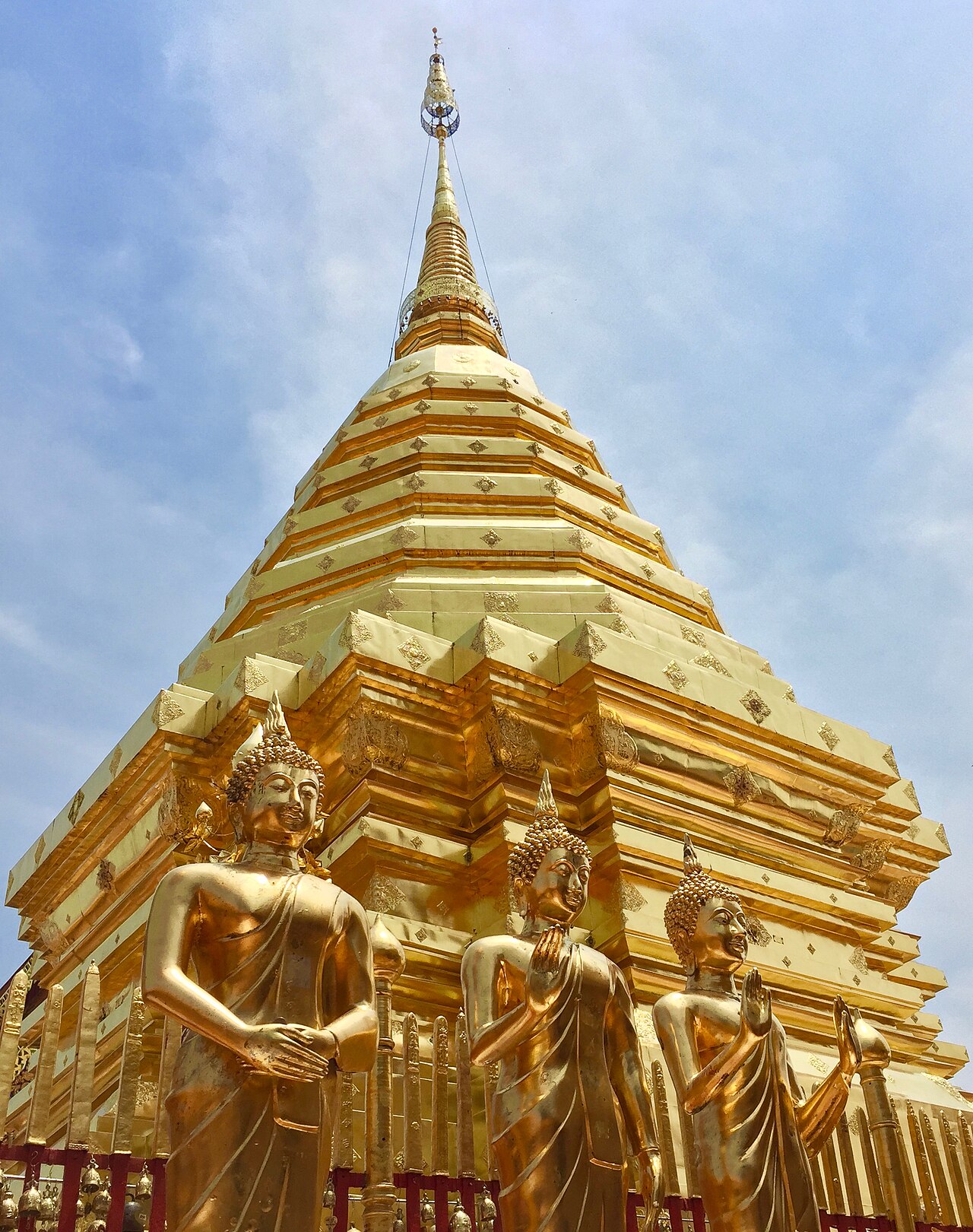
Chiang Mai's old city contains temple courtyards, traditional roofs and streets enclosed by remnants of its historic walls and moat. Beyond the city, forested mountains and agricultural valleys form the province's wider landscape.
The easily missed detail
March can be less suitable for Chiang Mai than the temperature alone suggests. Burning-related particulate pollution may obscure mountain views and create unhealthy outdoor conditions, even on days without rain.
A practical rhythm
Morning — old city: Explore temples before the strongest daytime heat.
Afternoon — Doi Suthep: Visit the mountain temple and its viewpoints.
Another day — highlands: Explore Doi Inthanon or a suitable rural destination.
What could complicate the plan
Seasonal air pollution is the principal concern for late dry-season travel. Mountain roads can also be affected by heavy rainfall and fog during the monsoon, while major festivals bring additional visitors.
What to do next
identifies Chiang Mai's most rewarding temples, historical neighborhoods and mountain attractions.
Sources
- Tourism Authority of Thailand — Chiang Mai destination attractions.
- World Health Organization — seasonal burning and air-pollution risks.
- Tourism Authority of Thailand — mountain, temple and cultural routes.
- NOAA National Centers for Environmental Information, Engineering Weather Data, Chiang Mai — station number, coordinates, elevation and period of record.
- U.S. Centers for Disease Control and Prevention, CDC Yellow Book: Thailand — Japanese encephalitis distribution, season and vaccination advice.