Chiang Mai / Thailand Food and drink
Where should I eat in Chiang Mai, and which local food or drink is worth trying?
The short answer
Try khao soi, sai ua, nam prik noom and northern Thai sticky rice dishes, beginning with traditional eateries around the old city and local markets.
The answer, with local context
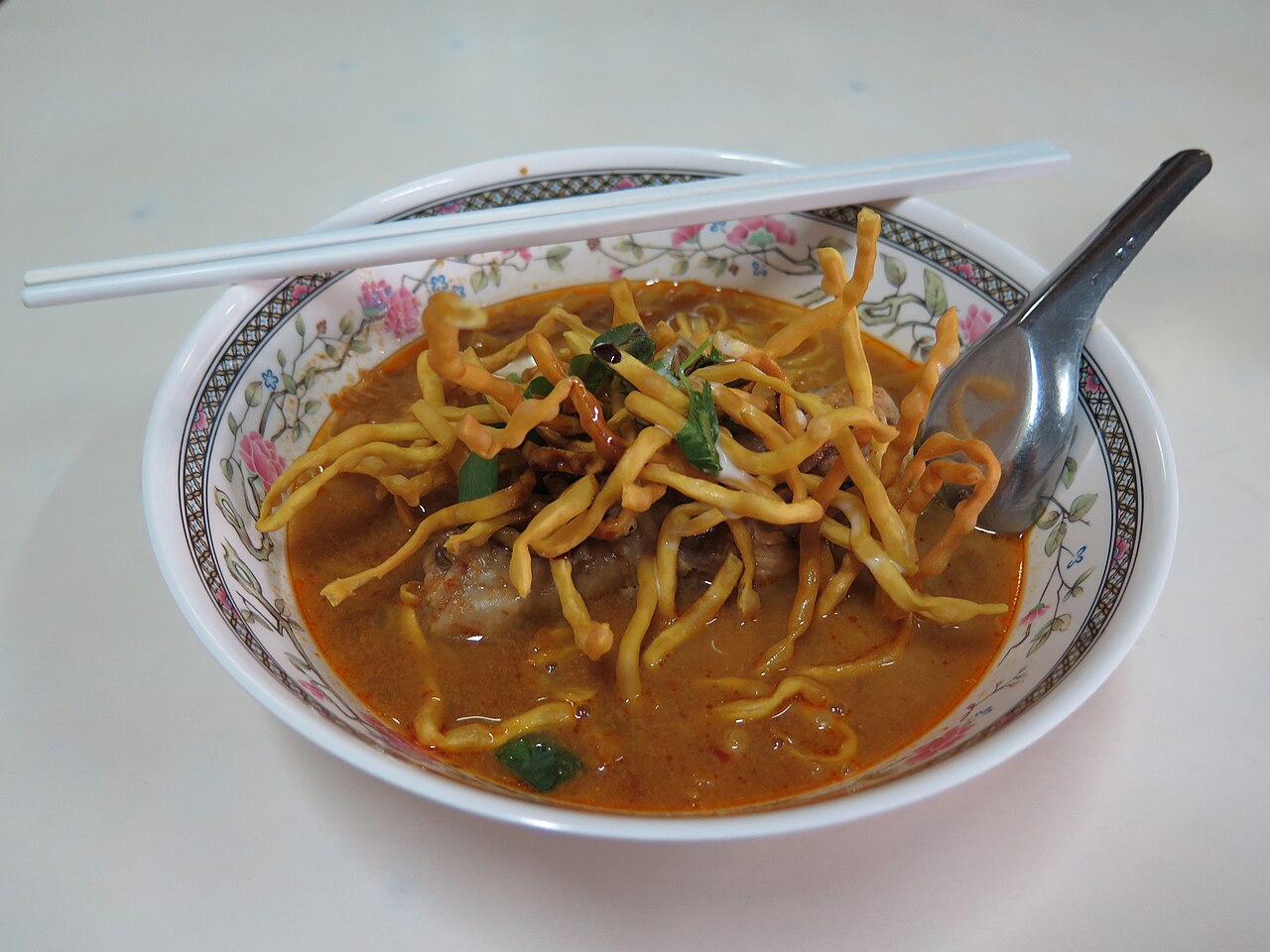
Chiang Mai's food reflects northern Thailand's Lanna heritage and cultural connections with neighboring regions. Its best-known dish is khao soi, a curry-noodle soup typically made with egg noodles, coconut milk, spices and a meat or alternative protein.
Khao soi commonly includes both boiled noodles and crispy fried noodles, creating contrasting textures. Accompaniments may include pickled mustard greens, lime and sliced shallots.
Sai ua is a northern Thai sausage associated with aromatic herbs and spices such as lemongrass, kaffir lime leaves and chili. It is often grilled and served with sticky rice.
Nam prik noom is a green-chili dip, commonly made with roasted chilies, shallots and garlic. It may accompany vegetables, pork cracklings or sticky rice.
Another regional dish is gaeng hung lay, a rich northern-style pork curry influenced by culinary connections with Myanmar. Its flavor profile differs from the coconut-based curries more closely associated with southern Thai cooking.
The Tourism Authority of Thailand's Chiang Mai itinerary specifically identifies Khao Soi Lung Prakit Kad Kom as a place associated with the city's signature noodle dish. Its recommendations also include local markets, Nimmanhaemin and historic neighborhoods.
Traditional khantoke dining involves dishes presented on a low pedestal tray, often in a communal setting.
Thailand's official gastronomy credentials sit elsewhere on the map. The government portal lists Phuket, registered in 2015, and Phetchaburi, registered in 2021, as the country's UNESCO Creative Cities in the cuisine field. Northern cooking is not on that list, which says more about how the designations are awarded than about what reaches the table in Chiang Mai.
Picture the place
Khao soi combines a yellow curry broth with noodles and crisp fried toppings. Sai ua is usually sliced to reveal its herb-filled interior, while chili dips appear alongside sticky rice and vegetables.
The easily missed detail
Northern Thai food is not simply a milder version of Bangkok cuisine. Fermented ingredients, grilled meats, sticky rice and herbal seasonings contribute to a distinct regional cooking tradition.
A practical rhythm
Lunch: Try freshly prepared khao soi at a specialist restaurant.
Afternoon: Sample sai ua and nam prik noom from a local market.
Dinner: Choose a northern Thai meal featuring several shared dishes.
What could complicate the plan
Khao soi may contain coconut, wheat, egg noodles, fish sauce or shrimp paste, depending on the preparation. Northern curries and dips can also contain pork or other animal ingredients. The CDC strongly recommends hepatitis A and typhoid vaccination for Thailand, with typhoid particularly advised for travelers heading into smaller towns and rural areas, and records Thai typhoid incidence at about 1.13 per 100,000 in 2022 — worth settling before a run of village kitchens and roadside stalls outside the city.
What to do next
Return to for the most suitable season to explore Chiang Mai's food markets and mountain landscapes.
Sources
- Tourism Authority of Thailand — named khao soi restaurant and regional itinerary.
- Tourism Authority of Thailand — northern cultural and food destinations.
- Royal Thai Government portal, UNESCO Creative Cities in Thailand — the Thai cities registered in the cuisine field and their years.
- U.S. Centers for Disease Control and Prevention, CDC Yellow Book: Thailand — hepatitis A and typhoid recommendations and typhoid incidence.