Denmark country guide Food and drink
What local dishes should I try in Denmark, and where should I look for them?
The short answer
Preserved and cured food, eaten on rye — Danablu is a registered Protected Geographical Indication in category 1.3, cheeses, and it belongs on a slice of rugbrød rather than a cheeseboard.
The answer, with local context
Danablu was entered in the EU register under Commission Regulation (EC) No 1107/96 and a substantial amendment to its specification was approved on 18 March 2013 by Commission Implementing Regulation (EU) No 269/2013, which confirms its PGI status for Denmark in product category 1.3, cheeses. It is a sharp cow's-milk blue, and the Danish way to eat it is on dense rye with a little sweetness alongside rather than with fruit and biscuits.
The reason Danish cooking leans so hard on curing, salting, pickling and smoking is agronomic. DMI's national normals give July a mean of 60.1°F (15.6°C) and August 60.3°F (15.7°C) — a short, cool growing season on a small, flat country. Fresh produce has a narrow window; everything else had to keep. That is the logic behind pickled herring, salt-cured pork, smoked eel and the whole rugbrød tradition.
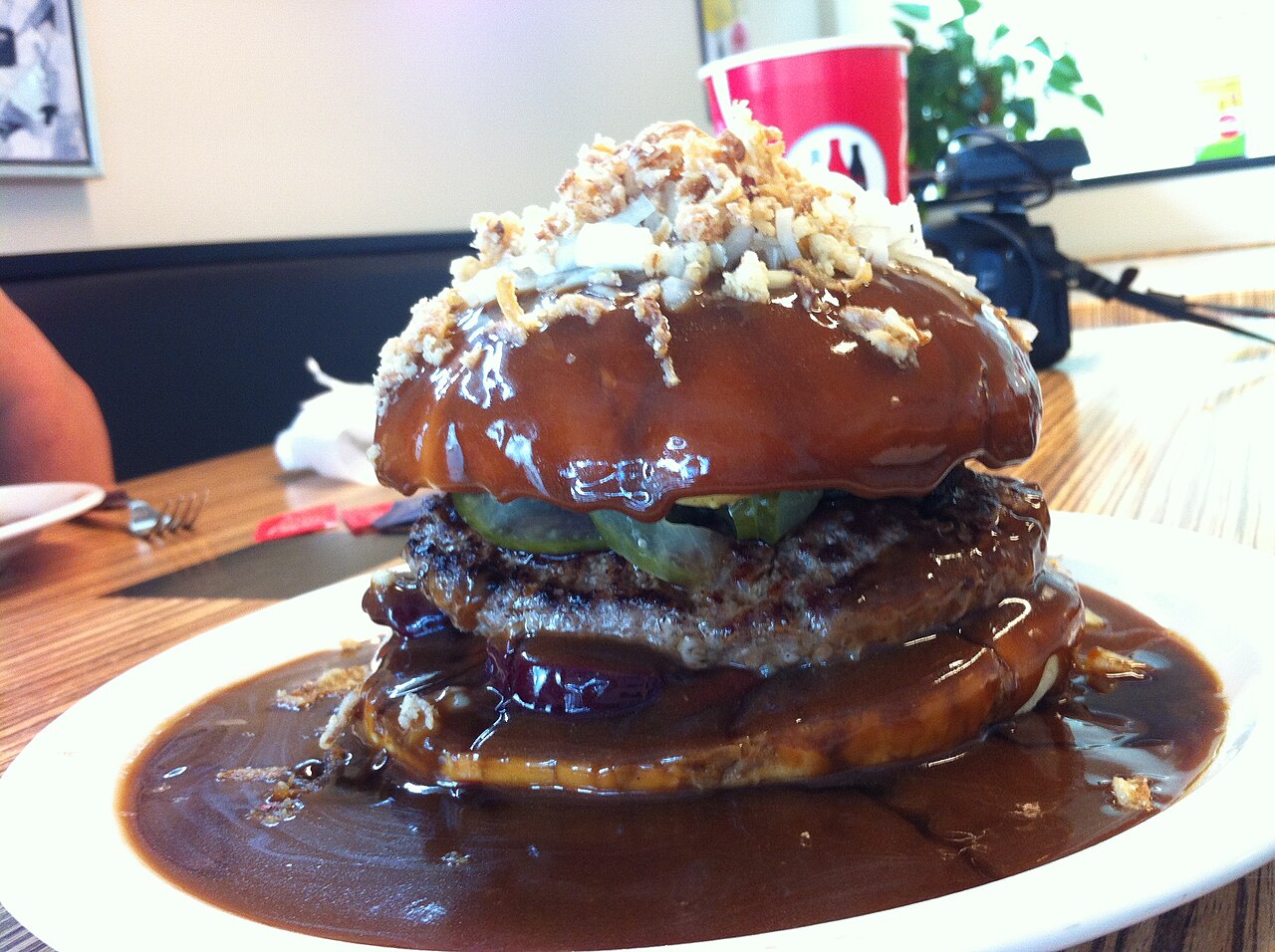
The dishes to look for by name: flæskesteg, pork roast with crackling, which anchors the Christmas table; frikadeller, pan-fried pork meatballs; stegt flæsk med persillesovs, fried pork belly with parsley sauce; and the bøfsandwich, a beef patty in a bun that is Denmark's own answer to the hamburger and a fixture at fairgrounds and roadside stands in Jutland. For dessert, æbleskiver in December and rødgrød med fløde, a red berry pudding with cream, in summer.
Shellfish follow the coast. The Wadden Sea, inscribed by UNESCO in 2014, is a tidal flat system along the southwest, and the Limfjord in northern Jutland is the country's oyster and mussel ground — both are regional rather than national specialties and are best eaten within sight of the water they come from.
Picture the place
A bøfsandwich is assembled and handed over in paper rather than plated, with the sauce going on last, so the first thing you taste is the pickled beetroot and remoulade rather than the beef.
The easily missed detail
A julefrokost is not a lunch. The Danish Christmas lunch is a long sequence — herring first, then warm pork dishes, then cheese — with aquavit and beer between courses, and it runs through November and December as a workplace and family institution rather than a restaurant booking. If you are in Denmark in those weeks, that sequence, not any single dish, is the national cuisine at full stretch.
A practical rhythm
- Everyday — Rugbrød with Danablu, the PGI-registered blue, or pickled herring; this is the base layer of Danish eating.
- Roadside and fairground — The bøfsandwich, especially in Jutland, which is where it is taken most seriously.
- Coastal — Oysters and mussels from the Limfjord in northern Jutland, or shellfish from the 2014-inscribed Wadden Sea flats in the southwest.
What could complicate the plan
Æbleskiver and the julefrokost sequence are December-bound, so an autumn or spring trip misses both entirely. The traditional repertoire is heavily pork-based and the vegetarian options in old-style inns are thin. Shellfish is also season- and water-quality dependent along the Wadden Sea and Limfjord, which means the local harvest can be unavailable on perfectly good weather days.
What to do next
For the regions these dishes belong to, read the Denmark places-and-experiences answer in this group; the Copenhagen food question covers the capital's smørrebrød houses and its newer cooking.
Sources
- Commission Implementing Regulation (EU) No 269/2013 — Danablu's PGI status, product category 1.3, original registration under Regulation (EC) No 1107/96 and the 18 March 2013 amendment
- Danish Meteorological Institute (DMI) — national July and August mean temperature normals
- UNESCO World Heritage Centre — inscription of the Wadden Sea in 2014