Dubrovnik / Croatia When to visit
When should I visit Dubrovnik, Croatia, for the best experience?
The short answer
May, early June, or late September into early October — November is Dubrovnik's wettest month, at 5.62 inches (142.8 mm) on the Croatian Meteorological and Hydrological Service's station record, and high summer brings the heat and the cruise schedule together.
The answer, with local context
DHMZ's figures for the Dubrovnik station, covering 1961 to 2024, make the city's rainfall pattern unusually lopsided for a Mediterranean destination. The wet season is autumn and early winter rather than spring, with November's 142.8 mm the annual peak. That is why late September can still be a dry, swimmable month here while mid-November is reliably not.
The walled city's own calendar matters as much as the weather. The Dubrovnik Summer Festival has run since 1950 and traditionally opens on 10 July and closes on 25 August, staging theater and music in the courtyards, forts and squares of the old town itself rather than in a purpose-built venue. Those seven weeks are the city at its most alive and its most crowded simultaneously.
Dubrovnik also has a genuine winter event. The Festivity of Saint Blaise, the patron of Dubrovnik, was inscribed on UNESCO's Representative List of the Intangible Cultural Heritage of Humanity in 2009 and is marked on 3 February, with banners, processions and the blessing of throats. It is a local occasion rather than a tourist one, which is precisely its appeal.
Picture the place
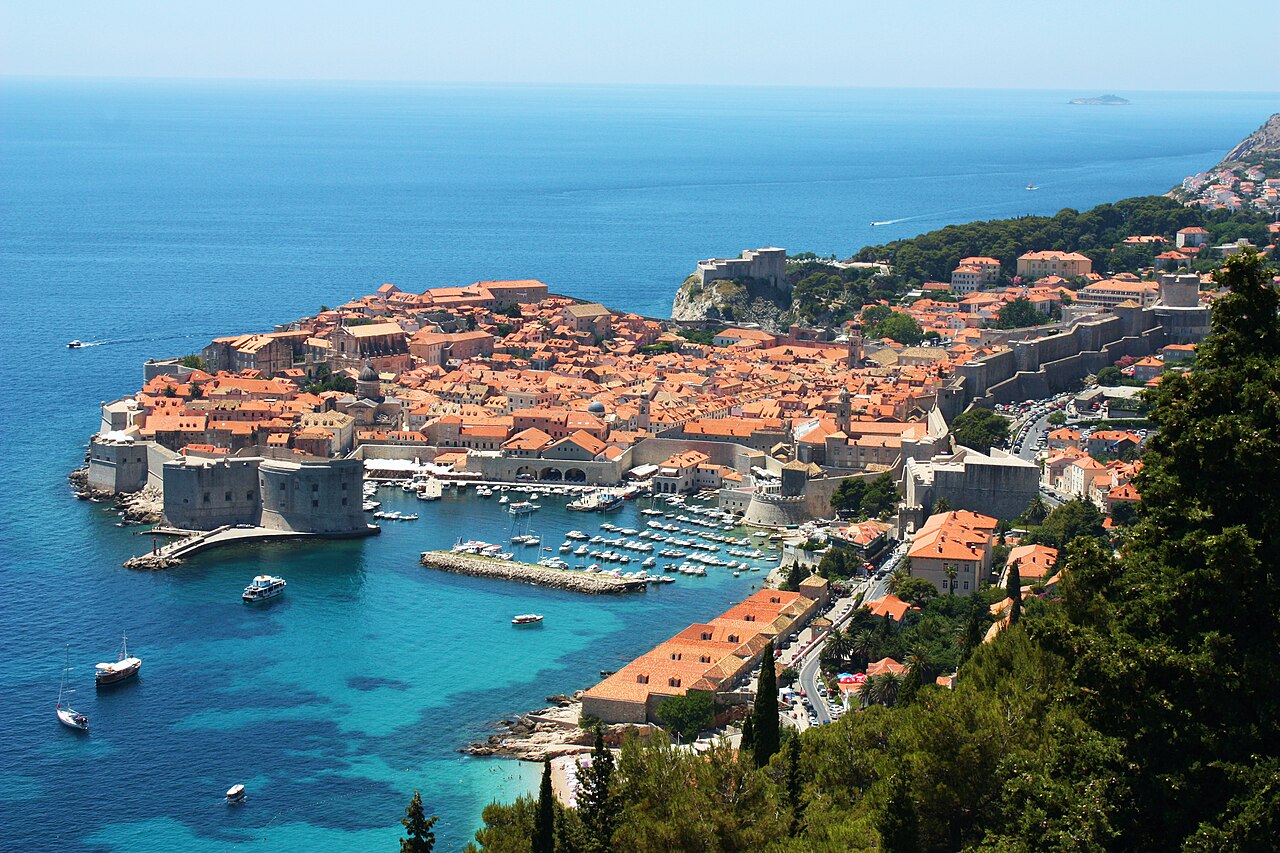
Mount Srđ rises 1,352 feet (412 m) directly behind the old town, so the walled city loses the sun on its landward side while the sea in front of it is still bright — in the shoulder months that shadow line crosses the roofs by mid-afternoon.
The easily missed detail
The city walls are open every single day of the year except Christmas Day, 25 December. That has two consequences. A trip in January or February can be built around the headline experience exactly as a July one can, at a fraction of the crowding; and if your only free day in late December happens to be the 25th, there is no fallback, because the walls are the one thing in Dubrovnik with no substitute.
A practical rhythm
- May to early June — Dry, warm enough to swim, and well before the festival window; the best balance of weather and space on the walls.
- 10 July to 25 August — The Summer Festival, running in the old town's own courtyards and forts since 1950, with peak heat and peak crowds attached.
- Late September to October — Sea still warm and the autumn rains not yet at November's 142.8 mm; the walls at their most comfortable.
What could complicate the plan
Autumn rain here is heavy rather than drizzly, and the old town's polished limestone becomes genuinely slick, which matters on the stepped side streets and the wall circuit's stairs. The wall walk is exposed for most of its length with very little shade, so a midsummer midday attempt is the single most common mistake visitors make. And the Summer Festival's seven-week window pushes accommodation demand to its annual maximum at the same time as the heat.
What to do next
The Dubrovnik things-to-do question in this group covers the walls, the forts and Lokrum in detail; the Croatia country guide places this city in the national seasonal picture.
Sources
- Croatian Meteorological and Hydrological Service (DHMZ) — Dubrovnik's wettest month and its monthly precipitation total, 1961–2024
- Society of Friends of Dubrovnik Antiquities — the city walls open every day of the year except 25 December
- UNESCO Intangible Cultural Heritage — inscription of the Festivity of Saint Blaise, the patron of Dubrovnik, in 2009
- Dubrovnik Summer Festival — the festival's running since 1950 and its traditional 10 July to 25 August dates