Fiji Mamanuca Islands / Fiji When to visit
When should I visit Fiji Mamanuca Islands, Fiji, for the best experience?
The short answer
Late May into June — the dry season newly established, the sea still near its warmest, the big surf swells arriving on the outer reef, and the July–September school-holiday crowds not yet on the catamarans.
The answer, with local context
The Mamanucas cheat Fiji's climate, and the Fiji Meteorological Service's 1991–2020 normals show the trick. The islands sit off the western end of Viti Levu, in the rain shadow of its central mountain range, where the southeast trade winds — the Tokalau — drop their rain on the other side: Nadi Airport, the nearest station, averages about 79 inches (2,000 mm) of rain a year, against 118 inches (2,992 mm) at Suva, on the same island. July, Nadi's driest and coolest month, records just 2 inches (50 mm) of rain, with highs of 84°F (28.5°C) and lows of 66°F (19.2°C); the contrast in a single July week can be 1.7 inches (43 mm) over five days at Nadi against 4.3 inches (108 mm) over fifteen days in Suva. The small, low Mamanuca islets, having no mountains of their own, run drier and more even still.
The dry season runs May to October and does everything at once: rain falls away, humidity drops, visibility on the reefs stretches past 100 feet (30 m), and the southern swells that build Cloudbreak arrive on the same trade-wind schedule, with the surf season running April to October. The sea stays bath-warm throughout — about 80°F (27°C) in August, climbing to 85°F (29.5°C) in February and March on NOAA's recent averages. May and June take the season's front edge: Nadi's rainfall has already collapsed to about 3.6 inches (92 mm) in May, the water is still holding its late-summer warmth, and the resorts have not yet filled for the Australian and New Zealand winter holidays that peak from July to September. October mirrors the bargain at the season's other end, warmer and with a small, real chance of an early cyclone.
The wet season, November to April, is hotter, more humid and officially cyclone season — the Meteorological Service counts roughly two tropical cyclones affecting Fiji in an average season, concentrated from January to March. When Cyclone Winston, a Category 5, crossed Fiji in February 2016 it was the strongest storm ever recorded making landfall in the country. Wet-season prices drop steeply, and on the dry western side a February week can still deliver long sunny spells — but the ferries, the seaplanes and the surf boats all answer to the same sky.
Picture the place
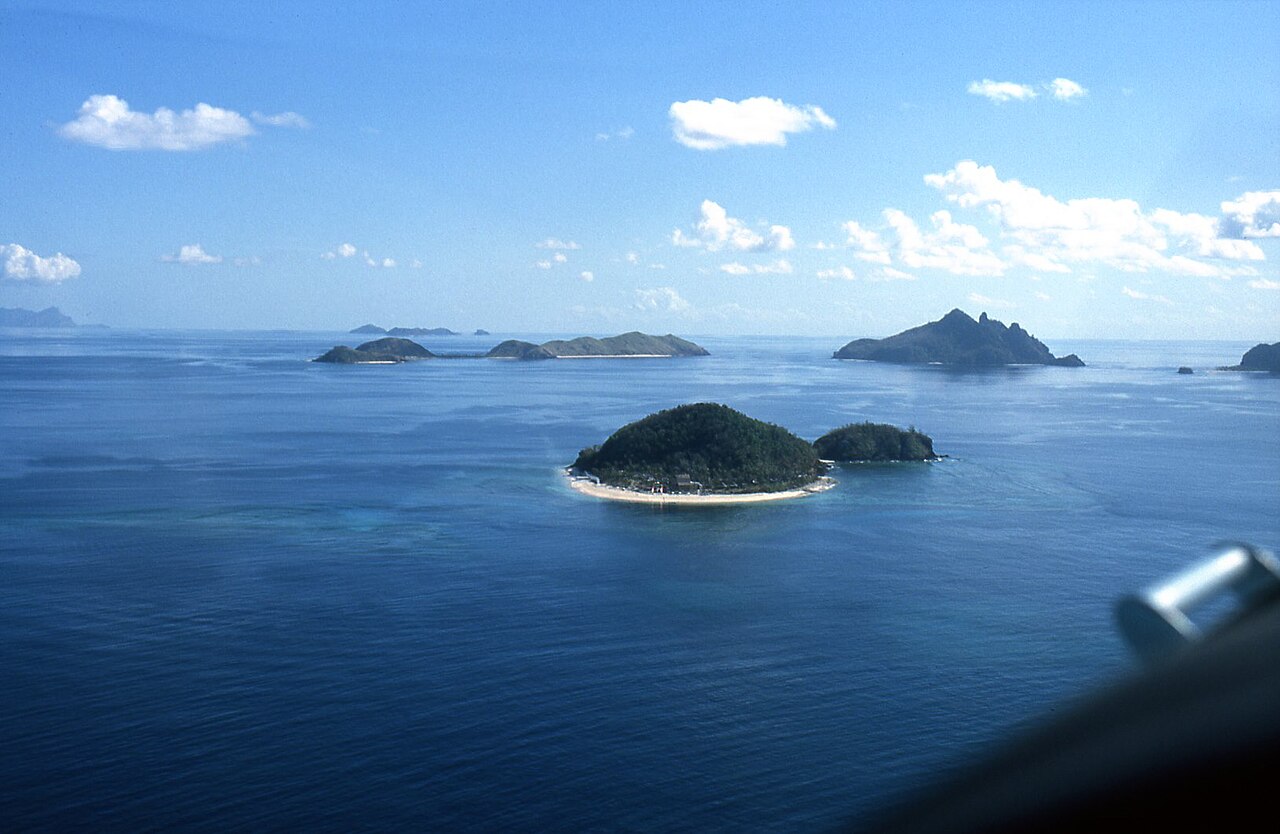
On a June morning the catamaran out of Port Denarau crosses water so flat the islands seem to sit on it rather than in it — Malolo's green shoulder ahead, the reef a paler ring around every island, and the whole of Viti Levu's wet mountain spine behind you, wearing the cloud that will never reach you.
The easily missed detail
In Fiji, the island matters more than the month. A mediocre week in the Mamanucas' rain shadow regularly outperforms a perfect week on Viti Levu's wet southeast coast, where Suva's driest month is wetter than five of Nadi's twelve — which is why nearly every resort island in the country is strung along the dry western chain, and why "when" questions in Fiji should always be answered second, after "where."
A practical rhythm
- Morning — Reef and surf boats go early in the dry season, before the Tokalau freshens: snorkel trips and Cloudbreak boats are dawn businesses.
- Midday — The lagoon at its palest and the beach at its best; the trade wind takes the edge off the noon sun that empties other tropical beaches.
- Evening — Sunset over the Yasawa chain from the western beaches, then the resort's lovo or cultural night — the dry season is when the outdoor evenings never rain out.
What could complicate the plan
Peak season is a crowd fact, not a weather fact: from late June to September the family resorts fill with Australian and New Zealand school holidays, day-trip boats book out, and prices top the year. At the other end, a wet-season cyclone can stop every boat at Port Denarau for days — if you travel between November and April, keep the last night on the mainland side of the crossing, within reach of Nadi Airport, rather than on an outer island.
What to do next
Pick the island before the month — the things-to-do question in this group separates the day-trip cays from the stay-put resorts — and let May–June or October do the rest.
Sources
- Fiji Meteorological Service — 1991–2020 climate normals for Nadi Airport and Suva (Laucala Bay): rainfall, rain days and the July contrast; cyclone season November to April
- Tourism Fiji — the dry season (May–October) and wet season (November–April) structure, and the western islands' rain-shadow position
- NOAA — sea surface temperatures off the Mamanucas, from about 80°F in August to 85°F in February–March