Finland country guide Food and drink
What local dishes should I try in Finland, and where should I look for them?
The short answer
Karelian pasties with egg butter, Kuopio's kalakukko fish loaf, sautéed reindeer and cloudberries in Lapland, Tampere's black sausage, and coffee with a korvapuusti everywhere — Finnish food is a regional map eaten in markets and market halls.
The answer, with local context
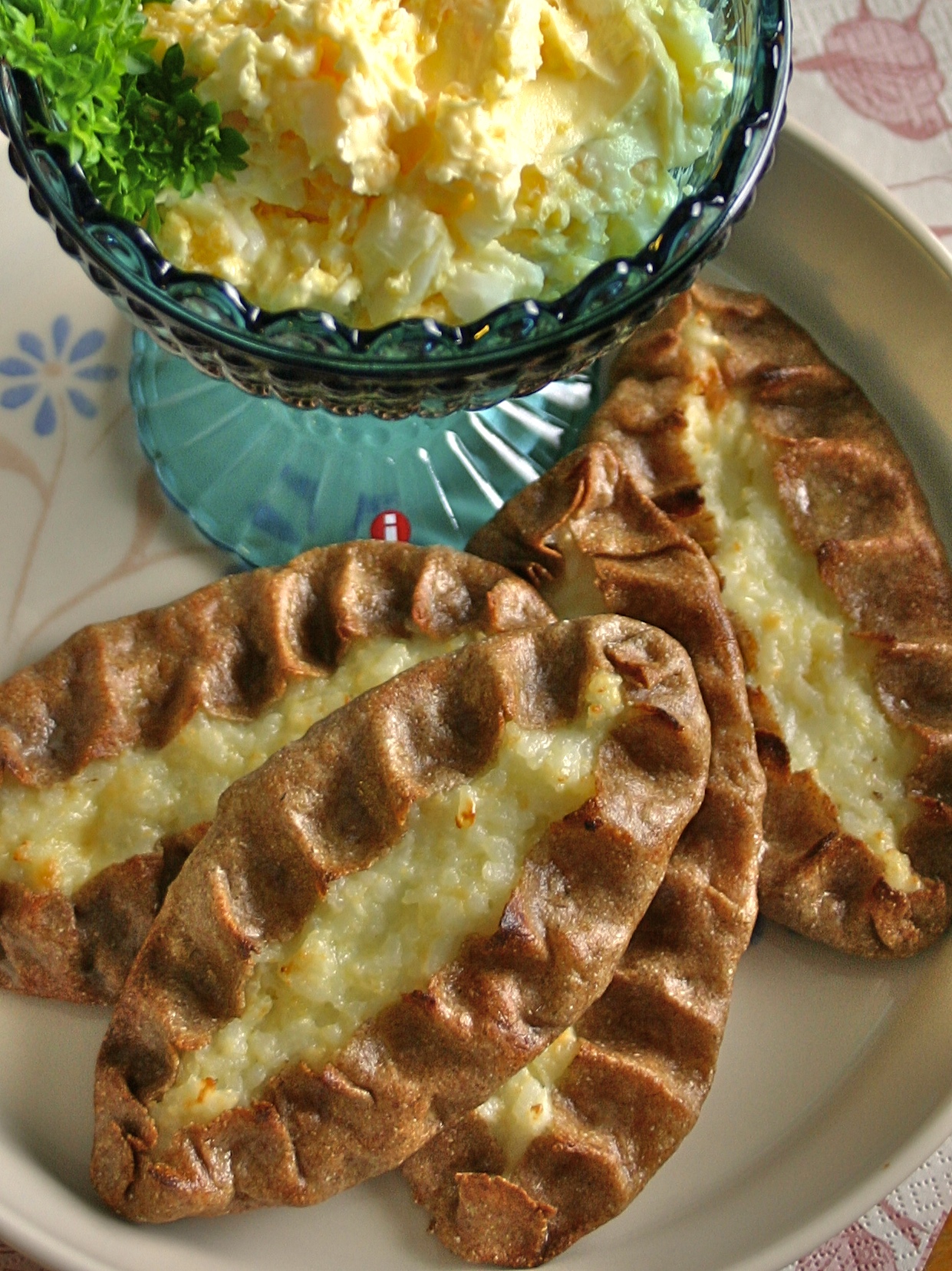
Begin with the pastry that carries protected status: karjalanpiirakka, the Karelian pasty — a thin rye crust crimped around rice porridge (or barley, or potato), baked hard and served spread with munavoi, chopped egg buttered soft. Its name holds EU Traditional Speciality Guaranteed status, and the standard is best tested where it comes from: the North Karelian town of Joensuu and the bakeries of the east. The second protected loaf is stranger: kalakukko, Kuopio's great rye-crusted parcel of vendace or perch baked with pork for hours until the bones soften into the filling — also EU-protected, sold whole and by the slice at Kuopio's market hall at the foot of Puijo hill, and eaten as the Savonian working lunch for centuries. The third is a drink: sahti, the juniper-filtered farmhouse ale of the Häme and Satakunta villages, unfiltered, banana-sweet, strong, and still brewed for weddings — protected as a traditional speciality and poured at country festivals and a few Helsinki craft bars.
The compass of dishes runs by region. Lapland sautés reindeer (poronkäristys) with mashed potato, lingonberry and pickles, and bakes leipäjuusto — squeaky "bread cheese" — to serve warm under cloudberry jam, the north on one plate. Tampere grills mustamakkara, blood sausage, at the Tammelantori market square, eaten with lingonberry and a glass of milk from the Mustalahti harbor stalls. The west coast and archipelago smoke fish — salmon, whitefish and Baltic herring — over alder, and the summer's crayfish parties (from July 21) stack the noble crayfish high with dill and schnapps. Helsinki's market halls (the Old Market Hall of 1889 by the harbor, Hakaniemi inland) compress the country into counters: lohikeitto, the creamy salmon-dill soup that is Finland's default first course, appears everywhere and is best judged there. Sweet Finland runs on pulla — cardamom bun dough in a dozen shapes, the korvapuusti ("slapped ear" cinnamon roll) first among them — and on Runeberg's torte, the almond-rum cylinder topped with raspberry jam sold in Porvoo (the poet's hometown) around his February 5 day.
What to drink is a statistic: Finland drinks more coffee per person than any country in the world — about 26 pounds (12 kg) per head per year, by International Coffee Organization figures — taken light-roasted, often in a sauna's porch or a market café, always with pulla. The fine-dining translation happens in Helsinki, where Restaurant Palace — the 1952 Olympic landmark on the harbor — became the country's first two-Michelin-star dining room, with Olo and its peers cooking the same larder (vendace, reindeer, chanterelles, sea buckthorn) in tasting-menu form. And the larder keeps giving: Finland's forests produce some of Europe's richest bilberry, lingonberry and chanterelle crops, free to pick under everyman's rights — the summer's best dessert may be the one you gather yourself, between the sauna and the lake.
Picture the place
Kuopio market hall at midday: a wedge of kalakukko unwrapped from its paper, steam and rye and fish rising together, eaten with a wooden fork at a counter while Puijo tower watches through the window.
The easily missed detail
The most Finnish food ritual hides in the sauna's afterglow: kiuasmakkara, "stove sausage" — a thick grilling sausage wrapped in foil and cooked on the sauna stones or the cottage grill while the bathers cool off in the lake, eaten with mustard and beer on the jetty. Cottage country runs on it all summer, and any supermarket sells the foil-ready sausages beside the sauna aisle. Order of service is law: sauna, swim, sausage, sunset.
A practical rhythm
- Market halls for range — Kuopio, Tampere's Laukontori and Helsinki's two halls: the country's dishes within one roof each
- Protected names as the checklist — Karelian pasty, kalakukko, sahti: three EU-protected specialities, three regions, three days
- Coffee like a Finn — Light roast, four cups a day, a korvapuusti at least once in a station café
What could complicate the plan
Buying the drink is harder than finding the dish. A Finnish grocery licence covers alcoholic beverages up to 5.5% ABV, extended since 10 June 2024 to fermented drinks of up to 8%, so a full-strength sahti and every spirit come from an Alko store instead; nothing above 2.8% may be sold in any shop outside the hours of 09.00 to 21.00. The market halls keep working hours rather than visitor hours: Kuopio's, where the kalakukko is cut, opens 08.00–17.00 Monday to Thursday, until 18.00 on Friday and 16.00 on Saturday, and closes on Sundays and public holidays — a weekend fly-in can miss the single counter the trip was built around. Two national dates shut the country's kitchens almost entirely: Midsummer Day, which falls on the Saturday between 20 and 26 June, and Independence Day on 6 December.
What to do next
Eat the compass: pasties in the east, kalakukko in Kuopio, black sausage in Tampere, reindeer and bread cheese in Lapland — and judge every salmon soup against the Old Market Hall's.
Sources
- European Commission (eAmbrosia register) — Traditional Speciality Guaranteed status for karjalanpiirakka, kalakukko and sahti
- Michelin Guide Finland — Restaurant Palace (two stars, Helsinki) and the capital's starred dining rooms
- International Coffee Organization / Statistics Finland — Finland's world-leading per-capita coffee consumption, about 12 kg per person per year
- Visit Finland — the crayfish season from July 21; the regional dishes of Lapland, Savo and Tampere
- Valvira (National Supervisory Authority for Welfare and Health) — retail sale above 2.8% permitted only between 09.00 and 21.00
- Kuopio Market Hall — opening hours, with Sundays and public holidays closed
- Ministry of the Interior, Finland — Midsummer Day as the Saturday between 20 and 26 June, and Independence Day on 6 December