Florence / Italy Food and drink
Where should I eat in Florence, and which local food or drink is worth trying?
The short answer
Eat in the historic center but buy your cured pork by its registered name — Lardo di Colonnata was entered on the EU register of protected designations by Commission Regulation (EC) No 1856/2004 of 26 October 2004, and that registration is what separates the real thing from imitations.
The answer, with local context
Colonnata is a village in the marble hills above Carrara, north-west of Florence, and its lardo is cured in marble basins. The European Commission's registration of the name on 26 October 2004 — published the following day and in force from 16 November 2004 — means the words on a deli label are a legal claim about origin and method, not a marketing adjective. Tuscany's wider larder works the same way: the European Commission's register of protected designations of origin and protected geographical indications carries the region's cured hams, sheep's cheeses, olive oils and the Chianti wine denominations, each tied to a defined area and a filed specification.
That is the useful lens for eating in Florence. Rather than hunting for a single celebrated address, read menus for registered names and ask which designation a dish is working from. A steak described by breed and a pecorino described by its designation tell you more about a kitchen than any ranking does.
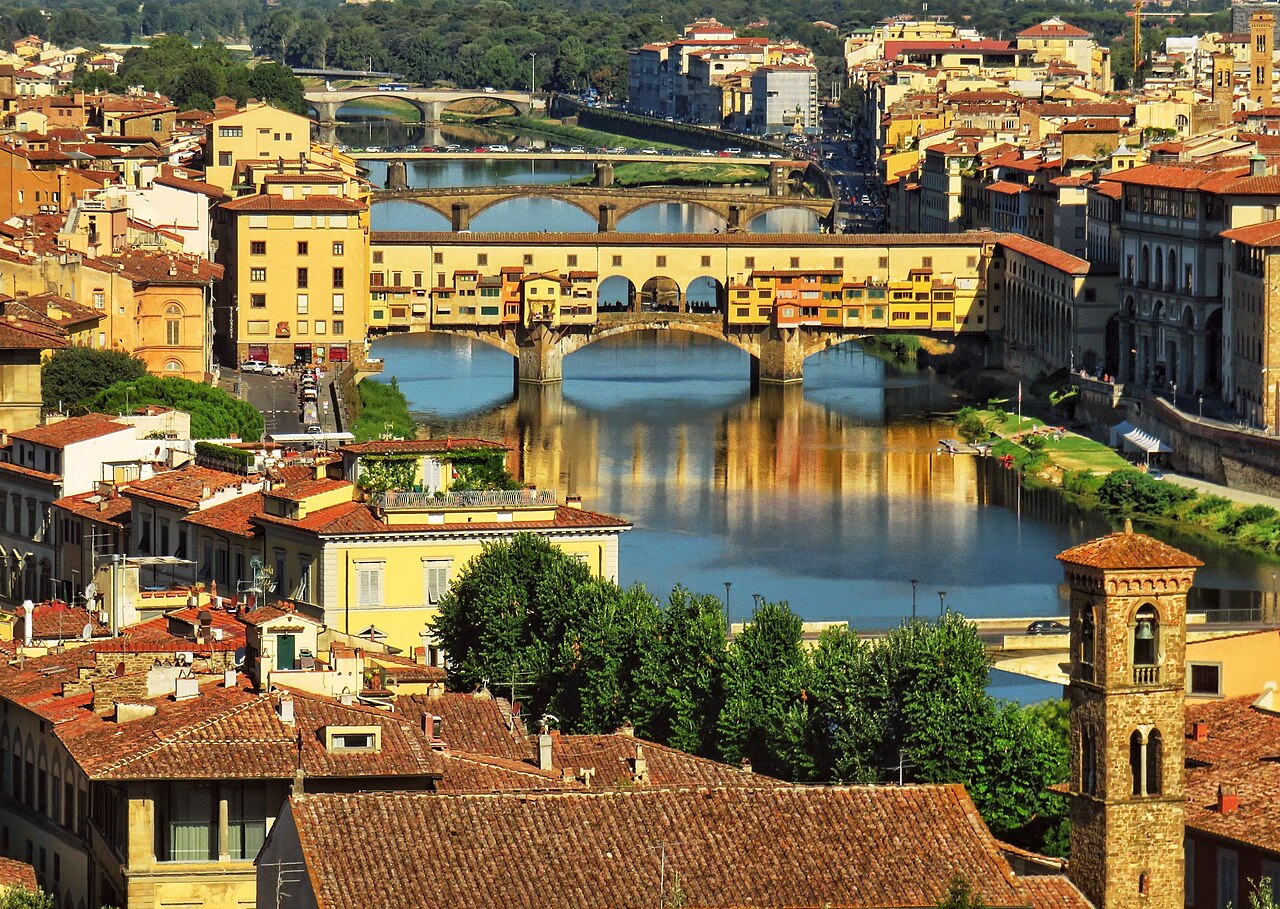
Geography shapes where to look. The Historic Centre of Florence is a compact UNESCO-inscribed district, inscribed in 1982 under criteria (i), (ii), (iii), (iv) and (vi), and it is small enough to cross on foot in half an hour. Prices and crowds thin markedly a few streets back from the cathedral and the river without leaving the inscribed area at all.
The easily missed detail
Florence's eating day is shaped by its museum calendar more than visitors expect. Because both the Uffizi and the Galleria dell'Accademia close on Mondays, Monday lunchtimes in the streets immediately around them are noticeably quieter than Tuesday lunchtimes — the same restaurants, a different volume of trade. If you want the center at its least pressured, that is the day.
A practical rhythm
- Lunch — Stay in the inscribed center but move two or three streets off the cathedral axis.
- Afternoon — Buy Lardo di Colonnata by name; the 2004 registration is what the name guarantees.
- Dinner — Match a Tuscan wine denomination to the dish rather than ordering by price.
What could complicate the plan
Two fixed dates empty the center's rhythm: the Uffizi is closed on 1 January and 25 December, and much of the surrounding trade follows the same holiday pattern. The US Department of State lists Italy at Level 2, exercise increased caution, which matters mainly for insurance and for ordinary street-crime awareness in a dense, heavily visited district. Bear in mind too what the 2004 registration does and does not do: it fixes where Lardo di Colonnata may be made and how, and says nothing about which of the village's curers you should buy from.
What to do next
The Florence when-to-visit answer in this group explains the Monday closures and the Uffizi's advance-booking premium; the Florence things-to-do answer covers the dome climb and who the Opera advises against attempting it.
Sources
- European Commission, Commission Regulation (EC) No 1856/2004 of 26 October 2004 — registration of Lardo di Colonnata and its dates
- UNESCO World Heritage Centre, Historic Centre of Florence — inscription year and criteria
- Gallerie degli Uffizi — Monday closure and 1 January / 25 December closures
- US Department of State, Italy travel advisory — advisory level